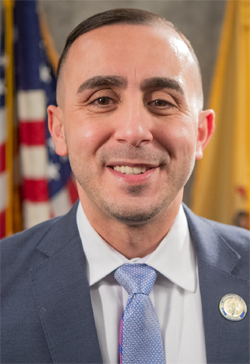
This bill allows New Jersey courts to reduce sentences for first- or second-degree crimes when mitigating factors outweigh aggravating ones and justice requires it. Under the new rule, a judge could sentence a defendant to a term appropriate for a crime one degree lower than the one they were convicted of. Additionally, if a reduced or noncustodial sentence is given, there is a ten-day waiting period before the sentence becomes final, allowing the prosecution time to appeal. The legislation restores language previously removed by a 2025 law and applies retroactively to that earlier date.
This bill provides an additional $358.8 million in funding for New Jersey state agencies and local governments for fiscal year 2026. The money is allocated to various departments, including support for domestic violence housing, prison consolidation savings, school infrastructure, and mosquito control. Specific provisions also authorize a supplemental appropriation for the Cannabis Regulatory Fund and allow nonprofit organizations to host the state's AI supercomputer. Overall, the legislation amends the existing FY2026 Appropriations Act to distribute these funds across education, health, public safety, and other state services.
This bill expands protections for victims of human trafficking and other sexual crimes by removing the statute of limitations for prosecuting these offenses. It establishes specialized human trafficking response teams and increases training requirements for professionals who may encounter trafficking situations. The legislation also appropriates $1 million to the Commission on Human Trafficking to support these initiatives. Additionally, the bill includes provisions to allow victims to testify via closed-circuit television in court to reduce trauma during legal proceedings.
This bill (S 2565) expands access to closed-circuit television testimony for victims and witnesses specifically in human trafficking cases. It allows courts to order such testimony after finding clear evidence that testifying in person would cause severe emotional distress, with safeguards ensuring the victim/witness testifies under oath, faces cross-examination, and their demeanor remains observable. The law permits victims, prosecutors, defendants, or judges to request this testimony, and includes special confidentiality rules for minors (under 18) regarding audio recordings of their testimony. This directly affects human trafficking victims and witnesses in New Jersey criminal trials, making it easier for them to participate without facing traumatic in-person courtroom settings.
This New Jersey bill eliminates time limits for prosecuting human trafficking crimes, allowing criminal charges to be filed at any time. For civil cases where victims sue traffickers, it extends the filing deadline to 10 years after the crime occurred, or until the victim turns 18 if they were a minor at the time, or two years after discovering the harm. The bill directly affects victims of human trafficking (who gain extended legal options) and individuals accused of trafficking offenses (who face no time limit for prosecution). It modifies existing laws to remove fixed time periods for both criminal prosecutions and civil lawsuits related to human trafficking.
This New Jersey bill (S 1090) creates a new criminal offense called "political violence" for committing specific crimes - such as assault, kidnapping, or homicide - intentionally to interfere with or retaliate against someone because of their political affiliation (e.g., party membership) or political expression (e.g., attending protests or donating to campaigns). It requires law enforcement to provide training on this offense and establishes an independent "Political Violence Review Board" to collect data on cases, analyze potential disparities in how cases are handled based on factors like race or political affiliation, and publish annual reports to the Governor and Legislature. The bill also mandates separate sentencing for political violence and the underlying crime, and prohibits defenses based on mistaken political affiliation. This directly affects individuals committing such acts, law enforcement agencies, and the judicial system in New Jersey.
S 1279 establishes a 25-member "Youth Detention Task Force" to assess New Jersey's current youth detention system and recommend a better approach. The task force will evaluate existing county facilities, Youth Justice Commission-managed sites, or alternatives, considering factors like safety, rehabilitation opportunities, resources, and security. It includes legislative members, state agency heads (like the Attorney General and Youth Justice Commission Director), and public representatives from counties with and without detention facilities. The task force must submit findings and recommendations to the Governor and Legislature within 18 months of its first meeting.
This bill codifies New Jersey's Attorney General's "Strengthening Trust Between Law Enforcement and Immigrant Communities" directive into law. It directly affects all New Jersey state, county, and municipal law enforcement agencies and officers by prohibiting them from: (1) stopping or detaining people based solely on immigration status, (2) asking about immigration status except during specific criminal investigations, and (3) sharing personal information with federal immigration authorities for immigration enforcement purposes. The law clarifies that officers' primary duty is enforcing state criminal laws, not federal immigration law, and emphasizes that this does not prevent enforcing state criminal laws. The goal is to build trust in immigrant communities and ensure law enforcement resources focus on public safety rather than immigration enforcement.
New Jersey's S 3114, the "Law Enforcement Officer Protection Act," requires police officers and other law enforcement personnel to reveal their faces and show official identification before detaining or arresting someone during public interactions. Officers must wear non-concealing uniforms, display a photo ID card, show a numbered badge, or verbally state their name and agency. Exceptions include undercover work, medical masks (with physician approval), smoke protection during emergencies, or when safety or an investigation is at risk. The law applies to all state, county, and municipal officers and takes effect immediately.
This bill (S 3521) codifies New Jersey's Attorney General's "Strengthening Trust Between Law Enforcement and Immigrant Communities" directive into law. It prohibits state, county, and municipal law enforcement officers from stopping, questioning, arresting, or detaining individuals based solely on immigration status or federal immigration violations. The law also bans officers from asking about immigration status (except when directly relevant to investigating a specific crime) or sharing personal data like Social Security numbers, license details, or addresses with federal immigration authorities for enforcement purposes. The bill explicitly affirms that law enforcement must focus on state criminal law enforcement, not federal immigration enforcement, to maintain community trust and public safety.