

Maddy summarySB 573 establishes certification standards for facility comfort dogs, their handlers, and the teams they form. It defines a "facility comfort dog" as a specifically trained dog providing emotional support in settings like hospitals, schools, and emergency services (distinct from service dogs), and requires handlers to be emergency response or public safety workers (e.g., police, firefighters, EMTs). The bill sets a framework for certification, including training requirements, to ensure these teams can effectively offer comfort and crisis response in high-stress environments. This applies to organizations such as hospitals, schools, and public safety agencies using comfort dogs for emotional support.
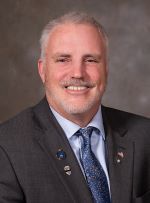
Sen. Howard Pearl
Sponsored bills
Maddy summarySB 531 establishes a task force to study whether creating cosmetology training programming at the Berlin Regional Career & Technical Center and White Mountain Community College in Coos County is feasible. The task force will examine staffing, funding, joint operations with the community college system, public salon opportunities, and timelines for implementation by September 2027. It must report findings to state officials and the Berlin school board by June 2027, with no funding provided for the study. This bill does not create the program but assesses its potential to serve students and address cosmetology education needs in northern New Hampshire.
Maddy summarySB 490 establishes a task force to study the feasibility of building housing on vacant property at Great Bay Community College within the Pease development area. The task force will examine military/student housing models, funding sources, operational plans, and resident needs, specifically for students, faculty, staff, and New Hampshire National Guard personnel. The bill authorizes the college to develop housing on this property, subject to coordination with state agencies. The task force must submit recommendations by December 30, 2026, to the governor and legislature.
Maddy summarySB 586 requires New Hampshire school districts and charter public schools to publish a detailed annual financial audit report by September 1 each year. The report must include receipts, expenditures, assets, liabilities, payroll details, and capital projects. Schools failing to submit the report by the deadline will have state funding withheld until compliance is achieved. This bill takes effect July 1, 2026, and amends existing law to standardize the submission deadline for all school entities.
Maddy summarySB 492 authorizes New Hampshire's Department of Military Affairs and Veterans Services to lease or license property it owns, directly affecting the department and private entities renting that property. The bill requires lessees (unless tax-exempt) to pay local property taxes on the leased property, similar to private owners, and outlines penalties for nonpayment. It creates a dedicated "Department of Military Affairs and Veterans Services Property Fund" to manage revenues from leases, which can be used for purchasing, maintaining, or operating department property and projects. The fund ensures these revenues are kept separate and can cover related expenses like property maintenance, administrative costs, or bond payments.
Maddy summarySB 523 establishes a registration and oversight system for residential builders in New Hampshire who are not already licensed professionals. It requires these builders (defined as individuals, partnerships, or LLCs working on residential properties with $5,000+ annual revenue) to register, complete 8 hours of approved safety and code training, and renew registration biennially. The bill creates a Board of Builder Registration within the Department of Labor, which will set rules, handle complaints, and oversee a nonprofit administrator (RPA) managing applications and education. This directly affects unlicensed residential construction businesses, adding registration requirements and oversight while excluding those already licensed under existing state law.
Maddy summaryHB 1199 allows New Hampshire's Fish and Game Department to establish a permit and fee system for other state agencies requesting its staff, equipment, or expertise to support their work. The bill requires fees to cover actual department costs, including staff salaries/benefits, vehicle/equipment use, and administrative coordination. All collected fees would be deposited into the Fish and Game fund. This policy change directly affects state agencies needing Fish and Game support, creating a formal reimbursement process for services previously provided without cost recovery.
Maddy summarySB 529 requires state-funded building projects in New Hampshire to prioritize lumber harvested in the United States for material specifications, unless design needs necessitate imported sources. It specifically directs contractors to reference U.S.-sourced spruce-pine-fir (SPF) lumber for softwood framing in construction plans. This applies to all state-funded projects, affecting state agencies and contractors working on public buildings. The bill does not mandate exclusive use of U.S. lumber but establishes a preference, with implementation set for 60 days after passage.
Maddy summaryThis bill amends New Hampshire's dog control law to explicitly allow dogs to guard crops without being restrained (e.g., leashed or confined), provided the owner can see, hear, or has reasonable knowledge of the dog's location. It directly affects farmers and agricultural property owners who use dogs for crop protection, such as deterring wildlife. The key provision clarifies that "guarding crops" is a permitted use under existing law, removing ambiguity about owner supervision requirements. The change takes effect January 1, 2027.
Maddy summarySB 445 changes the process for enforcing air pollution permits by requiring hearings before suspending permits and establishing a tiered fine system based on violation severity (ranging from $100 to $4,000). It affects businesses holding air pollution permits and the Department of Environmental Services, clarifying when hearings are needed and how fines are calculated. The bill replaces vague references to "hearings" with specific legal procedures under RSA 541-A and RSA 21-O:11. This modifies administrative enforcement without altering environmental standards or permit requirements.