

Maddy summarySB 187, titled "adopting the dentist and dental hygienist compact," would allow licensed dentists and dental hygienists to practice across state lines without obtaining separate licenses in each state where the compact is adopted. If passed, it would directly affect dental professionals seeking to work in multiple states, particularly those moving for employment or serving patients in border regions. The key provision establishes a standardized licensing framework through the interstate compact, replacing individual state licensing requirements for participating states. The bill is currently pending committee review and has not yet been enacted into law.
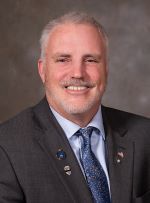
Sen. Howard Pearl
Sponsored bills
Maddy summaryHB 658 raises the reimbursement cap for certain costs related to oil discharge and disposal cleanup under the state's oil cleanup fund. This change directly affects entities seeking reimbursement for cleanup expenses, such as oil spill response contractors or affected businesses. The bill increases the maximum allowable reimbursement amount, with Section 3 taking effect January 1, 2026, and Section 4 becoming effective July 1, 2035. The previous cap expired June 30, 2025, as noted in the bill's effective date language. Governor Ayotte signed the bill into law on August 1, 2025, with Chapter 284.
Maddy summaryHB 672 legalizes off-grid electricity providers in New Hampshire, allowing companies to operate without connecting to the state's main power grid. It directly affects off-grid energy providers and their customers, removing previous legal barriers to their services. The key provision establishes a regulatory framework for these providers to legally offer power through independent systems like solar or wind. The law took effect on August 1, 2025, after being signed by Governor Ayotte.
Maddy summaryHB 142 designates the Sunday closest to September 25 as "Gold Star Mother's Day" in the state. It directly affects state agencies, schools, and local governments, requiring them to recognize the day through official proclamations or observances. The bill establishes a formal state observance of this day, which honors mothers who have lost children while serving in the U.S. military. It became law on August 1, 2025, and takes effect September 30, 2025.
Maddy summarySB 283 changes how local governments calculate floor-area-ratio (FAR) under building ordinances. FAR determines the maximum building size allowed on a lot relative to the lot size. This bill directly affects developers, property owners, and local planning departments by altering the calculation method used in zoning decisions. It takes effect on September 30, 2025, after being signed by the governor on August 1, 2025.
Maddy summarySB 26 allows homebuyers or developers to access part of an escrow deposit before closing to pay for specific construction customizations, such as upgrades or modifications. The Department of Justice must approve each request for these funds. This applies to projects where buyers or builders have paid a deposit held in escrow for custom features. The law became effective on August 1, 2025, after being signed by the governor.
Maddy summarySB 232 clarifies net metering rules for renewable energy generators participating in ISO-NE electricity markets. It allows these generators (such as solar or wind producers) to remain active in energy, capacity, and ancillary services markets without having to withdraw from them to qualify for net metering. Instead, they must transfer all market revenues - earned from selling energy, capacity, or services - to their local utility while maintaining net metering eligibility. The law takes effect August 1, 2025, directly impacting small renewable energy producers who operate within ISO-NE markets.
Maddy summarySB 97 allows parents or guardians to request school transfers for their children within or outside their district. For intra-district transfers, superintendents must approve if the requested school has space; for out-of-district transfers, they must consider the student's academic, physical, personal, or social needs. If a student transfers to a school outside their district, the sending district pays tuition (which may be waived for good cause), and parents cover transportation. The bill also requires school boards to create policies for handling high demand when school capacity is limited.