Issue · Criminal Justice

Criminal Justice (Violent Crime)

Every criminal justice bill, vote, and legislator stance in New Hampshire, automatically classified by Maddy, our AI policy reader.

Total bills
10
2026 Regular Session
Top supporter
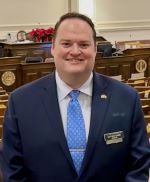
Andrew Prout
80% support rate
Top opponent
Bill Boyd
0% support rate
Ranked legislators
10
5 support · 5 oppose
Key legislators

Who's moving violent crime in New Hampshire

Legislators moving violent crime in New Hampshire
Legislator Party Stance Support rate Votes
Andrew Prout
Andrew Prout House · District Hillsborough 13
R
Strong +
80% 5
Glenn Bailey
Glenn Bailey House · District Strafford 2
R
Strong +
80% 5
Joe Alexander
Joe Alexander House · District Hillsborough 29
R
Strong +
80% 5
John Hunt
John Hunt House · District Cheshire 14
R
Strong +
80% 5
Julie Miles
Julie Miles House · District Hillsborough 12
R
Strong +
80% 5
Bill Boyd
Bill Boyd House · District Hillsborough 12
R
Strong −
0% 5
Mark McLean
Mark McLean House · District Hillsborough 15
R
Strong −
20% 5
Matt Coker
Matt Coker House · District Belknap 2
R
Strong −
20% 5
Allison Knab
Allison Knab House · District Rockingham 12
D
Oppose
25% 4
Bobbi Boudman
Bobbi Boudman House · District Carroll 7
D
Oppose
25% 4
Showing 10 of 10 bills

All criminal justice bills

signed · New Hampshire · Senate Jul 9, 2026

SB 667: relative to the assault of emergency room personnel.

SB 667 amends New Hampshire assault laws to specifically address violence against emergency room personnel. It adds new provisions making it a first-degree assault (RSA 631:1, I(e)) to knowingly cause serious bodily injury to ER staff acting in their duties, and a second-degree assault (RSA 631:2, I(g)) to knowingly cause bodily injury to them. The bill defines "emergency room personnel" broadly to include all hospital ER staff and volunteers providing public services, such as doctors, nurses, clerks, technicians, students, and volunteers. This law directly affects individuals who assault ER workers and increases penalties for such acts by classifying them as specific assault offenses. The bill is scheduled to take effect January 1, 2027.
Sub-Topics Violent Crime
passed both · New Hampshire · Senate Feb 5, 2026

SB 15: relative to incorporating hard labor as a sentencing option for capital murder and serious sexual assaults on children, defining hard labor, establishing medical exemptions and penalties for abuse thereof, providing alternative punitive measures for legitimate medical exemptions, and authorizing jury determination of hard labor in qualifying cases.

This bill establishes a mandatory minimum sentence of 10 years to life imprisonment for anyone who distributes certain controlled drugs (including methamphetamine, PCP, and other Schedule I or II drugs) when death results from the person's use of those substances. It requires that the death must be directly caused by the injection, inhalation, or ingestion of the distributed drug, and prohibits using the decedent's own drug use as a defense. The bill amends the Controlled Drug Act to create this mandatory sentence, clarifying it applies when the distributor's actions are a direct cause of death. It does not prevent other prosecutions for homicide or related drug offenses. The bill would take effect on January 1, 2026.
signed · New Hampshire · House May 28, 2026

HB 59: relative to the assault of a firefighter, emergency medical care provider, or law enforcement officer.

HB 59 creates felony-level assault charges for intentionally or recklessly causing serious injury to firefighters (including volunteer and on-call staff), emergency medical care providers, or law enforcement officers while they are performing their duties. It also establishes felony charges for assaults on law enforcement officers due to their employment, even when off-duty. The bill amends criminal code provisions to require warrantless arrests for these offenses and treats such violations as evidence of dangerousness. The law will take effect January 1, 2026, directly affecting these public safety professionals and their legal protections.
Sub-Topics Law Enforcement Violent Crime Tags Public Safety
failed · New Hampshire · House Feb 19, 2026

HB 1737: relative to reinstating the death penalty for certain offenses against minors under 13 years of age.

HB 1737 would reinstate the death penalty for specific crimes against children under 13 years old in New Hampshire. It defines "capital offenses against a child" as first-degree murder, second-degree murder, or aggravated sexual assault involving a minor under 13, mandating a death sentence for anyone convicted of these crimes who was at least 18 at the time of the offense. The bill requires courts to impose the death penalty without considering mitigating factors and limits appeals to only evidentiary or constitutional errors related to guilt, with the Supreme Court required to resolve all appeals within one year of conviction. This law would apply only to offenses committed after its effective date, not retroactively.
Sub-Topics Courts Violent Crime
died · New Hampshire · House Apr 23, 2026

HB 1633: expanding the information provided to survivors of sexual assault regarding their existing rights.

HB 1633 requires health care providers, law enforcement, and other designated entities to provide sexual assault survivors with clear, written information about their existing rights regarding medical examinations and evidence preservation. The bill defines "sexual assault survivor" broadly to include individuals reporting non-penetrative assault, attempted rape (even without legal terminology), and deceased victims. It mandates the attorney general to post a simplified summary online detailing evidence collection timelines, preservation periods (up to 20 years or the statute of limitations), and survivors' right to request extended preservation of evidence kits. This ensures consistent, accessible information without creating new rights, focusing on transparency in how evidence is handled.
signed · New Hampshire · House Jul 10, 2026

HB 1651: establishing sexual assault orders of protection and relative to sexual assault survivors' rights.

HB 1651 establishes sexual assault protective orders, allowing survivors to file civil petitions in circuit court to obtain court-issued orders for their safety. These orders, modeled after existing protective orders under RSA 173-B, can last up to one year initially and be extended for up to five years with court approval, requiring annual safety reviews. The bill also updates survivors' rights by guaranteeing free preservation of sexual assault evidence kits for up to 20 years (or the statute of limitations, whichever is longer), disclosure of kit results without compromising investigations, and written information about kit handling procedures. It directly affects sexual assault survivors and defendants facing these orders, while clarifying that attorneys may contact survivors under strict conditions for legitimate legal purposes.
signed · New Hampshire · House Jun 1, 2026

HB 1730: enhancing the level of offense for certain sexual offenses.

HB 1730 would make all sexual penetration or contact offenses against minors under age 16 punishable by death, raising the age threshold from 13 to 16 in existing law. It amends New Hampshire statutes to classify these crimes as aggravated felonious sexual assault, adding a death penalty option (RSA 632-A:10-a I-a) and updating legal procedures for capital cases. The bill directly affects individuals convicted of sexual offenses against minors under 16, including those with authority over the victim or with significant age differences. Key mechanisms include changing age thresholds in multiple statutes, inserting death penalty provisions, and revising the chapter heading to "HOMICIDE AND CAPITAL OFFENSES." This proposal would significantly increase penalties for these offenses compared to current law.
Sub-Topics Violent Crime
failed · New Hampshire · House Feb 5, 2026

HB 1333: relative to nonconsensual provision of medication intended to terminate a pregnancy and the homicide of a fetus.

This bill creates a first-degree murder charge for anyone who administers medication intended to terminate a pregnancy without the pregnant woman's knowledge or consent. It also changes when a fetus can be considered a homicide victim, removing the previous 20-week gestation limit and instead defining a "fetus" from conception (or implantation for IVF) until birth. These changes mean that nonconsensual administration of pregnancy-termination medication could now be prosecuted as murder, and killing a fetus at any stage would be treated as homicide under the new definition. The law takes effect January 1, 2027.
Sub-Topics Violent Crime
passed both · New Hampshire · Senate Jun 1, 2026

SB 625: establishing a committee to study options for family members of intentional homicide victims where the department of justice does not file charges in a case, repealing the refugee resettlement program in the department of health and human services, and prohibiting expenditure of state funds on refugee resettlement.

SB 625 allows immediate family members (parents, spouses, or children) of homicide victims to request an evidentiary hearing when the Department of Justice (DOJ) does not file criminal charges or seek a retrial after a hung jury in a homicide case. Families must first request a written explanation from the DOJ for not filing charges, and if they believe probable cause exists, they can petition a superior court to review the DOJ’s decision. The court will assess whether the evidence supports charging a suspect, potentially requiring the DOJ to provide investigative reports for private review and holding a hearing to evaluate witness credibility. If the court finds probable cause, it will recommend prosecution to the DOJ but only inform the family that probable cause exists - not the detailed recommendation.
signed · New Hampshire · House Jun 1, 2026

HB 1172: relative to confidentiality protections for national guard sexual assault prevention and response personnel.

HB 1172 expands New Hampshire's definition of "sexual assault counselor" to explicitly include National Guard sexual assault prevention and response personnel, such as coordinators and victim advocates. This change grants these military and civilian staff the same confidentiality protections already provided to other sexual assault counselors under state law, based on military rules of evidence. The bill, requested by the Department of Military Affairs and Veteran Services, amends RSA 173-C:1 to include these personnel in the existing legal framework for confidential communications. It takes effect on July 1, 2026, directly affecting National Guard staff who support sexual assault victims.
Sub-Topics Violent Crime