

Maddy summaryThe BARRIER Act of 2024 restricts federal financial assistance to organizations that aid or facilitate illegal immigration. It makes entities - including nonprofits, corporations, and others - ineligible for federal funds starting in the first fiscal year after enactment if they provide transportation, shelter, financial support, or legal assistance to individuals entering or remaining in the U.S. without lawful status under immigration law. The law directly affects organizations offering services to people attempting unauthorized entry or living in the country without authorization. It does not change immigration laws but cuts off federal funding for those who assist violations of existing immigration statutes.
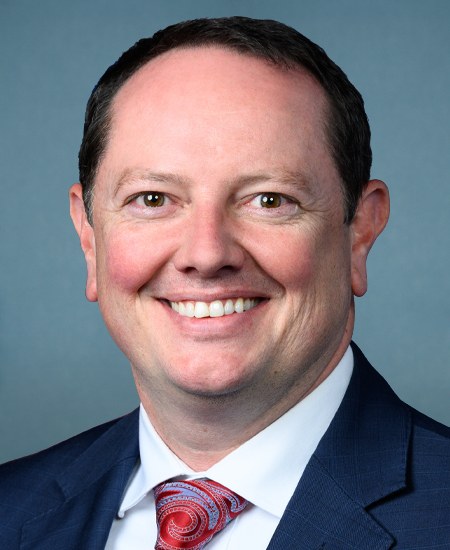
Rep. Eric Burlison
Sponsored bills
Maddy summaryThis bill allows states to require certain Medicaid recipients to work or participate in job training to maintain coverage. Specifically, it permits states to impose work requirements on nondisabled, nonelderly, nonpregnant adults (excluding those with children under 6, pregnant women, or individuals under 19). States must implement these requirements 120 days after the bill's enactment, but must exempt pregnant individuals, parents of young children, and others meeting specific criteria. The policy changes Medicaid eligibility rules for this group, giving states an optional pathway to condition benefits on work activity.
Maddy summaryThis bill removes legal immunity for vaccine manufacturers by allowing individuals injured by vaccines to sue them directly in court after filing a claim with the federal vaccine injury compensation program (VICP). It eliminates time limits for filing VICP claims (previously 24-36 months) and explicitly excludes COVID-19 vaccines from the program's coverage. The changes affect people seeking compensation for vaccine injuries and vaccine manufacturers, who will no longer automatically avoid lawsuits. The bill also repeals provisions that previously restricted legal action after VICP claims.
Maddy summaryHR 9757, the "No More Taxpayer Cash for the Taliban Act," bans U.S. federal funds from being used for direct cash assistance to individuals in Afghanistan or for providing U.S. currency to the United Nations to support such aid. The bill specifically prohibits federal agencies from funding direct cash payments to Afghans and stops the Federal Reserve from selling U.S. currency to the UN for this purpose. It aims to prevent billions of taxpayer dollars (as reported by SIGAR) from indirectly funding the Taliban through mechanisms like aid taxation and currency exchange fees at the Taliban-controlled central bank. The law applies directly to federal departments, the UN, and non-governmental organizations receiving U.S. funds for aid in Afghanistan.
Maddy summaryHJRES 144 is a congressional disapproval resolution targeting a specific rule issued by the Bureau of Alcohol, Tobacco, Firearms, and Explosives (ATF) on April 19, 2024. The resolution seeks to block the ATF's rule that redefined the term "engaged in the business" for firearm dealers, which would have affected how federal licensing requirements apply to certain sellers. If enacted, this resolution would nullify the rule, preventing it from taking effect under procedures in Title 5 of the U.S. Code. The bill directly impacts firearm dealers operating under the current regulatory framework and the ATF's enforcement authority.
Maddy summaryThis bill (HJRES 163) is a congressional disapproval resolution targeting an Environmental Protection Agency (EPA) rule finalized on May 9, 2024. The EPA rule established new emissions standards for greenhouse gases from fossil fuel power plants (both new and existing) and repealed a previous rule called the Affordable Clean Energy Rule. The resolution would block this EPA rule from taking effect by invoking the Congressional Review Act (Chapter 8 of Title 5, U.S. Code). If passed, it would prevent the EPA rule from being enforced, directly affecting fossil fuel power plant operators and the EPA’s regulatory authority over emissions.
Maddy summaryH.J. Res. 117 is a joint resolution that would disapprove an Environmental Protection Agency (EPA) rule concerning the reconsideration of National Ambient Air Quality Standards for particulate matter. The EPA rule, published on March 6, 2024, was part of the agency’s process to review these standards, which set limits for harmful air pollutants. This resolution invokes a congressional disapproval procedure under federal law to block the rule from taking effect. If enacted, the rule would have no force or effect, preserving the existing air quality standards for particulate matter.
Maddy summaryHRES 1463 is a resolution (not a legislative bill) censuring Representative Bennie Thompson for actions the resolution claims incited violence against former President Trump. It specifically references Thompson’s introduction of H.R. 8081 (the "DISGRACED Former Protectees Act," which sought to remove Trump’s Secret Service protection) and quotes staff comments and statements by Thompson and other cosponsors that the resolution labels as inciting violence. If passed, the resolution would require Thompson to appear in the House chamber for a public reading of the censure by the Speaker. This is a procedural House action with no legal effect beyond formal rebuke, not a policy change.
Maddy summaryHR 9657, the Detain and Deport Gang Members Act of 2024, would make it easier to detain and deport immigrants who are members of or associated with gangs that meet a new definition of "criminal gang." The bill defines a criminal gang as a group of five or more people whose primary purpose is committing serious crimes including drug trafficking, violent offenses, human trafficking, or immigration crimes. Under this bill, such immigrants would be considered inadmissible (unable to enter the U.S.), subject to mandatory detention, and deportable. The bill also creates a process for the Secretary of Homeland Security to designate groups as criminal gangs, with review procedures, and amends asylum and other immigration benefits to exclude those associated with such gangs.
Maddy summaryHJRES 203 is a congressional resolution seeking to block a National Labor Relations Board (NLRB) rule that would have changed procedures for union representation elections in the construction industry. The rule, published in August 2024, aimed to modify how employers prove majority support for unions and handle election bars during bargaining relationships. This resolution invokes the statutory disapproval process under federal law to prevent the rule from taking effect. If enacted, it would stop the NLRB from implementing these specific election procedures, directly affecting construction employers, unions, and workers involved in representation votes.