

Maddy summaryThis bill exempts certain less-than-lethal projectile devices from federal sales taxes and National Firearms Act restrictions. It directly affects manufacturers, importers, and producers of these devices, which are defined as non-lethal tools (like rubber bullets or beanbag rounds) designed not to cause serious injury and unable to be easily converted to use standard firearm ammunition. Key mechanisms include a 90-day classification process for manufacturers seeking exemption, an annual public list of approved devices, and annual congressional reports on devices excluded from the exemption. The policy change applies to devices meeting specific safety criteria, such as projectile velocity limits and design features preventing misuse as conventional weapons.
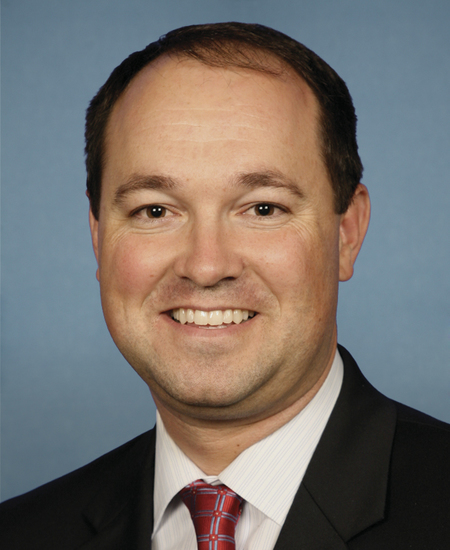
Rep. Marlin A. Stutzman
Sponsored bills
Safeguard American Voter Eligibility Act or the SAVE America Act This bill requires individuals to provide documentary proof of U.S. citizenship when registering to vote, and requires photo identification to vote, in federal elections. Specifically, the bill prohibits states from accepting and processing an application to register to vote in a federal election unless the applicant presents documentary proof of U.S. citizenship. The bill specifies what documents are considered acceptable proof of U.S. citizenship, such as identification that complies with the REAL ID Act of 2005 that indicates U.S. citizenship. Further, the bill (1) prohibits states from registering an individual to vote in a federal election unless, at the time the individual applies to register to vote, the individual provides documentary proof of U.S. citizenship; and (2) requires states to establish an alternative process to demonstrate U.S. citizenship. Each state must take affirmative steps on an ongoing basis to ensure that only U.S. citizens are registered to vote, which shall include establishing a program to identify individuals who are not U.S. citizens using information supplied by certain sources. Additionally, states must remove noncitizens from their official lists of eligible voters. The bill (1) provides for a private right of action for certain violations, and (2) establishes criminal penalties for certain offenses. Individuals voting in federal elections must present an eligible photo identification document. An individual who votes by absentee ballot must submit a copy of their identification document with both the request for, and the submission of, the absentee ballot.
Maddy summaryThis bill requires providers receiving federal funds to provide detailed, FDA-approved drug warnings about chemical abortions to patients at least 24 hours before the procedure. It mandates that providers highlight warnings and adverse reactions from the drug label, read them to patients, and obtain written confirmation. Non-compliant providers risk losing federal funding, and patients can sue for damages if providers fail to follow these requirements. The law specifically excludes medical emergencies like ectopic pregnancies or miscarriage treatment from its definition of "chemical abortion."
Maddy summaryHR 7235, the "Protecting Motherhood Act," requires all federal agencies to stop using the term "birthing person" in official documents and instead use specific terms like "female," "mother," "pregnant woman," or "woman." It directly affects federal agencies that produce regulations, forms, or communications, mandating the use of these defined terms when referring to individuals based on biological sex. The bill provides detailed definitions for terms like "female" (based on biological sex at conception) and "pregnant woman" (an adult human female carrying a child). The law takes effect 30 days after enactment. This is a procedural change focused solely on terminology in government documents, with no direct impact on healthcare access or services.
Maddy summaryHR 7051, the American Dream Act, allows individuals aged 65 or older to exclude taxable gains from selling their home to a first-time homebuyer under specific conditions. The bill applies when the home sells for $500,000 or less, the buyer is a first-time homebuyer purchasing it as their primary residence, and the buyer provides a sworn statement confirming these details. The exclusion is only available for sales occurring after December 31, 2026, and expires after December 31, 2031. This policy directly affects seniors aged 65+ selling their primary residence and first-time homebuyers purchasing it as their main home.
Maddy summaryHR 909, the Crime Victims Fund Stabilization Act of 2025, modifies how funds from the False Claims Act are deposited into the Crime Victims Fund. It specifies that from 2025 through 2029, certain False Claims Act proceeds (specifically those for qui tam plaintiff payments and government damage reimbursements) cannot be deposited into the fund. This change directly affects the composition of the Crime Victims Fund by excluding these specific revenue streams during the specified period. The bill does not create new benefits or alter victim services; it only adjusts fund allocation rules for existing False Claims Act revenues.
Maddy summaryHR 6876, the "Protecting Children from Foreign Mutilation Act," imposes visa bans on foreign medical professionals or facilities that provide certain gender-affirming treatments to U.S. minors under 18. It targets foreign physicians or clinics performing "chemical or surgical mutilations" (defined as puberty blockers, hormones, or surgeries altering physical sex characteristics for transgender youth), excluding medically necessary care for intersex conditions or injuries. The bill requires the President to revoke visas for qualifying foreign providers and mandates a report to Congress on enforcement within 180 days. It explicitly excludes detransition treatments and medically necessary care for conditions like intersex variations or trauma. The law applies solely to foreign providers, not U.S. healthcare.
Maddy summaryHR 6734, the Auto Data Privacy and Autonomy Act, gives car, truck, and farm/construction vehicle owners direct control over data generated by their vehicles. It prohibits manufacturers from accessing or sharing vehicle data (including location and personal information) without the owner’s explicit, written consent, and bans selling such data to specific foreign governments like China, Russia, or North Korea. Owners gain free, real-time access to all vehicle data through standard interfaces (like the car’s port or wireless), with no fees for decryption or third-party access, and can delete data or adjust settings via an open application interface. The law requires manufacturers to provide this access without restricting how owners use the data or forcing them to pay for it.
Miracle on Ice Congressional Gold Medal Act This act provides for the award of Congressional Gold Medals to the members of the 1980 U.S. Olympic men's ice hockey team in recognition of the team's achievement at the 1980 Winter Olympic Games.
Maddy summaryHR 6509, the SAFE Drugs Act of 2025, limits how often pharmacies and healthcare providers can create custom drug formulations that copy standard medications. It restricts compounding any drug essentially identical to a commercially available product to no more than 20 times per month for individual patients. The bill also requires pharmacies compounding such drugs for out-of-state patients more than 20 times monthly to report details to the FDA, while exempting hospital pharmacies. These changes aim to improve safety oversight of non-standard drug compounding by setting clear limits and reporting rules.