

Maddy summaryHRES 930 is a symbolic resolution designating December 8, 2025, as "Jimmy Lai Day" to honor Jimmy Lai's advocacy for free press, religious freedom, and democracy in Hong Kong. It calls on the People's Republic of China and Hong Kong authorities to release Jimmy Lai and other Hong Kong prodemocracy advocates detained under Hong Kong's National Security Law. The resolution does not create new laws or policies but expresses congressional support for Lai's work and condemns the imprisonment of those advocating for Hong Kong's freedoms. It directly affects U.S. diplomatic messaging toward China, not Hong Kong's legal system or residents.
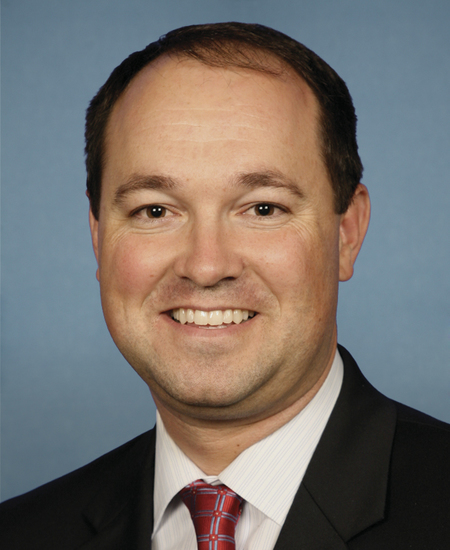
Rep. Marlin A. Stutzman
Sponsored bills
Maddy summaryHR 6466, the Forced Abortion Prevention and Accountability Act, prohibits non-consensual administration of abortion drugs (like mifepristone or misoprostol) to pregnant women without their informed consent. It criminalizes this act with penalties up to 25 years in prison and allows victims to sue for triple damages, psychological/physical injury compensation, and attorney fees. The bill directly affects pregnant women who might face coerced procedures and medical providers or others who administer such drugs without consent. Key provisions include criminal penalties for the act itself, enhanced penalties for serious injury or death, and a civil remedy framework for victims seeking compensation.
Maddy summaryHR 6372, the D.C. Shield Law Repeal Act, repeals the Human Rights Sanctuary Amendment Act of 2022 (D.C. Law 24-257), which had modified District of Columbia protections for certain immigrant residents. The bill restores the previous legal framework that existed before the 2022 amendment took effect. This directly affects D.C. law and its implementation regarding immigrant rights within the District.
Maddy summaryThis bill would amend the Anti-Terrorism Act of 1987 to designate the Muslim Brotherhood as a terrorist organization and prohibit its operations within the United States. It would require the President to designate the Muslim Brotherhood as a foreign terrorist organization under immigration law and impose new visa restrictions, including immediate revocation of current visas, for individuals identified as members. The bill mandates annual reports from the Secretary of State identifying Muslim Brotherhood branches worldwide and determining which should be designated as terrorist organizations under existing laws. These provisions would directly affect Muslim Brotherhood members, branches, and affiliated organizations seeking entry to or operating within the United States.
Maddy summaryThis bill amends federal labeling rules for beef products sold in the U.S. It requires clear country-of-origin labeling for beef (including ground beef), expanding existing rules that previously covered lamb and venison. The key change increases penalties for non-compliance: $5,000 per pound of beef sold without required labeling, compared to $1,000 per violation for other meats. These rules directly affect meat producers, processors, and retailers selling beef products. The bill also ensures U.S. labeling authority cannot be overridden by international trade rulings.
Maddy summaryThis bill prohibits federal funds from being used to cover any abortion-related expenses for individuals classified as "illegal aliens" under immigration law. It specifically blocks taxpayer money from paying for travel, lodging, meals, childcare, translation, doula care, or patient education services connected to abortion access. The law directly affects non-citizens who are inadmissible or deportable under specific immigration statutes (as defined in the Immigration and Nationality Act). It applies to all federal programs and funds, restricting assistance for abortion services beyond the procedure itself.
Maddy summaryThe Congressional Budget Office Scheduling Reform Act (HR 6140) requires the Congressional Budget Office (CBO) to publish an annual schedule of major recurring reports by December 31 each year. This schedule must include key reports like the budget baseline, deficit reduction options analysis, accuracy of budget projections, and reports on unauthorized appropriations. The CBO must update the schedule as needed during the year. This law directly affects the CBO's reporting process and provides Congress with clearer timelines for accessing critical budget information. The bill aims to increase transparency around when these reports will be released.
Maddy summaryHR 6161, the SEC Data Protection Act, requires the Securities and Exchange Commission (SEC) to establish policies protecting sensitive nonpublic data provided by investment advisers. The bill mandates that within one year of enactment, the SEC create rules addressing when it requests such data, safeguarding it based on sensitivity, restricting access to authorized staff, and preventing unauthorized use or disclosure. These policies must be developed through a notice-and-comment rulemaking process. The law directly affects investment advisers who share proprietary information with the SEC, ensuring their data is handled securely under new federal standards.
Maddy summaryHRES 866 is a non-binding House resolution condemning the systematic persecution of Christians in Nigeria by groups like Boko Haram and Fulani militants, and criticizing Nigeria's government for failing to protect Christian communities or acknowledge the violence. It calls on the U.S. government to support President Trump in using diplomatic, economic, and security tools to pressure Nigeria to end impunity for attacks, protect Christians, return displaced persons, and repeal blasphemy laws. The resolution specifically demands action against religiously motivated violence, including the release of those imprisoned for their faith, and urges coordination with international partners for humanitarian aid. It does not create new laws but expresses congressional support for U.S. policy actions targeting Nigeria's religious freedom violations.
Maddy summaryHRES 858 is a resolution by the U.S. House of Representatives to impeach Chief Judge James E. Boasberg of the U.S. District Court for the District of Columbia. It alleges he abused his authority by issuing "frivolous" nondisclosure orders that prevented Members of Congress from being notified of legal process and covered conservative organizations and individuals. These orders, the resolution claims, violated constitutional protections for Congress and a federal law (2 U.S.C. § 6628) safeguarding Senate communications. The resolution would send the impeachment charge to the U.S. Senate for trial, seeking removal from office.