

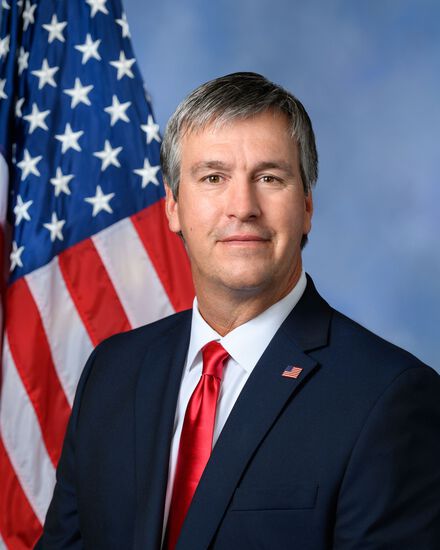
Maddy summaryThe Great American Healthcare Plan is a comprehensive bill that modifies tax rules for Health Savings Accounts, expands access to health insurance through new marketplace pools, and strengthens price transparency for hospitals and medical providers. It allows individuals to use HSAs for wellness expenses like healthy food and gym memberships, lets parents and children access each other's HSA funds, and requires hospitals to publicly list their standard charges and negotiated rates. The legislation also mandates that administrative service providers share detailed pricing data with health plans and creates a mechanism for pharmacists and nurses to dispense certain low-risk prescription drugs under expanded access.
Sponsored bills
Maddy summaryThis resolution expresses support for designating April 2026 as "Second Chance Month" to raise awareness about barriers faced by people with criminal records. The bill does not create new laws or change existing policies but serves as a symbolic gesture to highlight challenges in employment, housing, and education for formerly incarcerated individuals. It calls on communities, employers, and organizations to promote awareness of these obstacles and encourage efforts to help people reintegrate into society. The resolution honors the bipartisan First Step Act of 2018 and the Second Chance Act of 2007, which provide reentry services to incarcerated individuals.
Maddy summaryThis resolution requires Members of Congress who must reimburse the Treasury for payments related to sexual harassment or discrimination claims to publicly disclose the details of those reimbursements in the House chamber. It mandates that the Office of Congressional Workplace Rights report these cases to the Clerk, who will then read the Member's name, the reimbursement amount, and related information aloud during a House session. Members who fail to comply within 30 days face restrictions on committee assignments and leadership duties, while former Members are barred from entering the House building until they complete reimbursement and undergo the public disclosure process. The measure also establishes that failures to comply with these requirements can be investigated separately by the House Ethics Committee.
Maddy summaryThis bill requires the President to develop a National Veterans Strategy every four years to coordinate government, nonprofit, and private sector efforts aimed at improving veterans' well-being across health, economic, education, and social areas. The President must establish specific metrics to measure veteran success in these areas and consult with a wide range of stakeholders including federal agencies, state and local governments, veterans service organizations, and the general public. The bill also includes a provision allowing Congress to disapprove the strategy within 60 days of submission, and mandates annual reports on implementation progress along with quadrennial reviews to assess effectiveness and update the strategy as needed.
Maddy summaryThe EQUALS Act of 2025 extends the probation period for most federal employees in the competitive service from one year to two years, while setting a one-year probation for preference-eligible employees (such as veterans). It also establishes a two-year "trial period" for employees in the excepted service (e.g., certain security roles), with a one-year period for preference eligibles. The bill requires federal agencies to formally evaluate employees during this period and certify in writing whether continued employment serves the public interest before the probation ends, with specific notice deadlines for employees and supervisors. Exceptions include supervisors, the U.S. Postal Service, and Congress.
Maddy summaryThis bill (HR 7084) restricts U.S. port access for vessels arriving from specific Western Hemisphere ports that have been seized or expropriated by foreign governments from U.S. owners. It applies only to ports in countries with U.S. free trade agreements, where the port or its exclusive access land (owned by a U.S. person) was nationalized without proper compensation. The President must designate such ports if a foreign government seizes U.S. property under a free trade agreement, and may deny entry to vessels transiting those designated ports until the dispute is resolved. This policy change directly affects U.S. vessel operators and foreign governments involved in property disputes, requiring the President to remove designations once compensation is provided or the dispute is resolved.
Maddy summaryThis bill amends the Foreign Agents Registration Act to require additional disclosure information on registration forms. It mandates that agents must specify whether their foreign principals are supervised, directed, owned, controlled, financed, or subsidized by covered nations or foreign governments acting on their behalf. The change directly affects foreign agents registered under the existing law by expanding the transparency requirements for their funding sources and government connections. This legislative update aims to provide clearer public information about foreign influence operations without altering the core registration obligations.
Maddy summaryThis bill creates a publicly accessible database to track private vendors that supply, support, or maintain components of election systems used in federal elections. It requires states and local election officials to submit information about these vendors within 30 days after each federal election, including vendor identity, contract terms, and ownership details such as parent companies and foreign interests. The legislation prohibits federal funding for election administration in any state that fails to comply with these reporting requirements. The database aims to increase transparency by making vendor information available to the public, with provisions to withhold certain details for security reasons. These changes would take effect for federal elections held in 2026 and subsequent years.
Maddy summaryThis resolution formally recognizes the 100th anniversary of the Sporting Arms and Ammunition Manufacturers' Institute (SAAMI), a trade organization founded in 1926. The bill commends SAAMI for developing industry standards that ensure firearms and ammunition are safe, reliable, and interchangeable. It acknowledges the organization's work in coordinating with government bodies, international standards groups, and industry stakeholders to maintain consistent safety practices. This measure is a ceremonial resolution that does not change any laws or regulations but serves to honor SAAMI's century of leadership in the firearms industry.
Maddy summaryThis bill, the 287(g) Cooperation Act of 2026, requires state and local law enforcement agencies to sign a formal agreement with the Department of Homeland Security to remain eligible for federal Community Oriented Policing Services grants. The law mandates that agencies must have this written memorandum of agreement in place within 180 days of the bill's enactment, or they will be ineligible to receive funding for the program. The Attorney General and Secretary of Homeland Security must establish procedures to verify that agencies have completed this agreement before approving any grant awards. The changes apply to grant applications starting with fiscal year 2027 and all subsequent years.