Issue · Technology

Technology

Every technology bill, vote, and legislator stance in Nevada, automatically classified by Maddy, our AI policy reader.

Total bills
10
119th Congress
Top supporter
Catherine Cortez Masto
84% support rate
Top opponent
Mark E. Amodei
32% support rate
Ranked legislators
6
5 support · 1 oppose
Key legislators

Who's moving technology in Nevada

Legislators moving technology in Nevada
Legislator Party Stance Support rate Votes
Catherine Cortez Masto
Catherine Cortez Masto Senate
D
Strong +
84% 230
Jacky Rosen
Jacky Rosen Senate
D
Strong +
82% 230
Dina Titus
Dina Titus House · District 1
D
Support
79% 237
Susie Lee
Susie Lee House · District 3
D
Support
77% 260
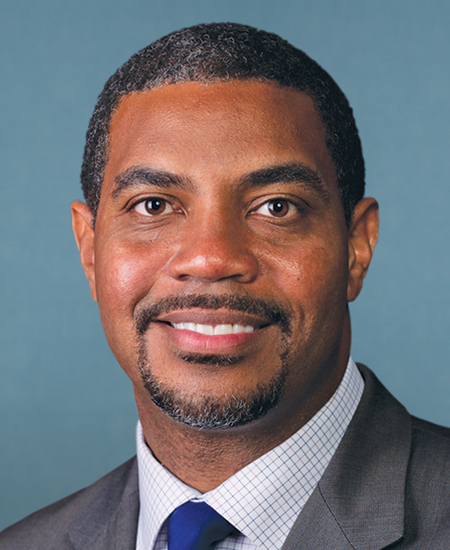
Steven Horsford
Steven Horsford House · District 4
D
Support
76% 259
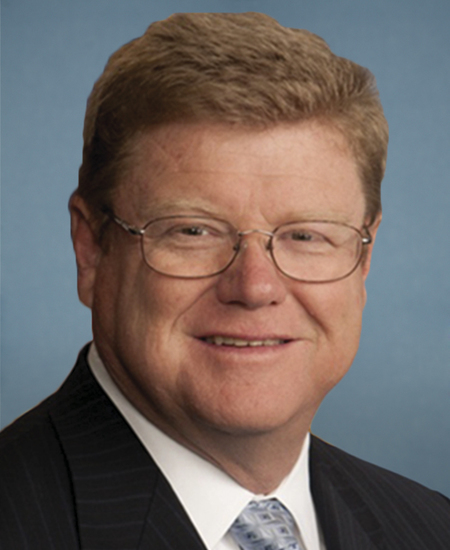
Mark E. Amodei
Mark E. Amodei House · District 2
R
Oppose
32% 255
Showing 10 of 10 bills

All technology bills

in committee · United States · House Jul 22, 2026

HR 9856: Prediction Markets Are Gambling Act

This bill, titled the Prediction Markets Are Gambling Act, prohibits the listing, clearing, or trading of contracts related to sports events or casino-style games on regulated financial exchanges. It directly affects platforms and entities that currently operate prediction markets by banning them from offering bets on outcomes like professional sports matches or casino games such as roulette and blackjack. The law achieves this by amending the Commodity Exchange Act to explicitly define these activities as prohibited agreements, while also clarifying that state laws regulating such contracts remain unaffected. Essentially, the legislation removes the ability for federally registered markets to facilitate gambling on sports and traditional casino games.
in committee · United States · House May 20, 2026

HR 8915: NO FAKES Act of 2026

The NO FAKES Act of 2026 grants individuals and their heirs a new property right to control the creation and use of digital replicas of their voice or visual likeness, preventing unauthorized use in computer-generated media. This right lasts for the individual's lifetime plus 10 years after death, with potential extensions for continued commercial use, and applies to both living and deceased people. Online platforms and companies distributing such content must register with the Copyright Office, remove unauthorized replicas upon receiving valid notices, and face civil penalties of up to $750,000 per work if they fail to comply or knowingly distribute unauthorized replicas. The law also preempts most existing state laws protecting voice and likeness rights, though it preserves protections for sexually explicit content and election-related uses.
in committee · United States · Senate Apr 30, 2026

S 4456: AI OVERWATCH Act

The AI OVERWATCH Act establishes new export controls on advanced integrated circuits destined for specific countries of concern, including China, Russia, Iran, North Korea, and Cuba. It requires companies to obtain a specific license for each export of high-performance chips, prohibiting the use of general licenses and mandating detailed certifications to Congress regarding national security and defense impacts. The bill defines these restricted chips by their technical processing power and creates a "trusted United States person" program that allows certain domestic entities to bypass licensing requirements if they meet strict security and ownership standards. Additionally, the legislation requires the government to develop an "American Artificial Intelligence Victory Strategy" outlining how to maintain U.S. leadership in AI against foreign competitors.
in committee · United States · Senate Jul 22, 2026

S 4429: Connected Vehicle Security Act of 2026

The Connected Vehicle Security Act of 2026 restricts the importation, sale, and use of connected vehicles and related technology from China, Russia, Iran, and North Korea to protect national security. Starting in 2027, the bill generally bans these vehicles if they originate from or are controlled by these countries, with separate restrictions on software and hardware taking effect in 2030. The Secretary of Commerce is authorized to issue specific exemptions for items that do not pose a security risk and must publish a list of approved products. The law also requires companies to submit declarations confirming their vehicles comply with the rules and imposes heavy fines for violations.
Sub-Topics Electric Vehicles
introduced · United States · Senate May 8, 2025

S 1668: End Crypto Corruption Act of 2025

S 1668 prohibits senior U.S. government officials - including the President, Vice President, Members of Congress, and Senate-confirmed appointees - from issuing, sponsoring, or endorsing cryptocurrencies, tokens, or stablecoins for profit. It also bans acquiring similar financial interests through derivatives or investment funds, while allowing normal public market trading. Violations face civil penalties of up to 10% of the financial interest's value or profits gained, and criminal charges if losses exceed $1 million or personal financial gain occurs. The law applies during official service and for one year after leaving office.
passed · United States · House Jul 17, 2025

HR 1919: Anti-CBDC Surveillance State Act

HR 1919, the "Anti-CBDC Surveillance State Act," prohibits the Federal Reserve from developing, testing, or issuing any central bank digital currency (CBDC) or similar digital assets. It specifically bans the Fed from offering direct financial products to individuals, maintaining individual accounts, or issuing CBDCs directly or indirectly through intermediaries like banks. The bill also blocks the Fed from using any digital asset for monetary policy and clarifies that physical currency's privacy protections remain intact. This policy directly affects the Federal Reserve System's ability to create or manage digital monetary tools.
in committee · United States · House Aug 5, 2025

HR 4894: Deceptive Practices and Voter Intimidation Prevention Act of 2025

HR 4894, the Deceptive Practices and Voter Intimidation Prevention Act of 2025, prohibits the intentional spread of false information about voting procedures, eligibility, or penalties within 60 days of an election. The bill specifically targets deceptive communications through social media, text messages, and AI-generated content designed to prevent voters from casting ballots, including false claims about voting locations, registration status, or legal consequences. It creates a private right of action for individuals harmed by these deceptive practices and authorizes the Attorney General to issue corrective information to counter false claims. The law directly affects voters, election officials, social media platforms, and anyone spreading false voting information, with penalties including fines and imprisonment for violations.
in committee · United States · House Dec 18, 2025

HR 6879: RESTRICT Act

The RESTRICT Act (HR 6879) requires U.S. companies to obtain a license before exporting advanced computer chips to countries listed in a specific export control group (as of January 2025) and to regions like Hong Kong and Macau. It also blocks licenses for exports to entities primarily located in countries of concern (including those same nations plus Hong Kong and Macau). U.S. companies may avoid the license requirement if they meet strict conditions, such as limiting foreign ownership to 10% and implementing security measures to prevent misuse. The law expires five years after enactment.
in committee · United States · Senate Mar 13, 2025

S 1053: FIGHT China Act of 2025

The FIGHT China Act of 2025 restricts U.S. investments in Chinese companies with ties to China's military or surveillance sectors. It prohibits U.S. persons from engaging in transactions involving "prohibited technologies" such as advanced semiconductors (with specific technical specifications), AI systems, quantum computing, and hypersonic weapons, while requiring notification for certain "notifiable technology" investments. The bill mandates that U.S. investors divest from companies on the Non-SDN Chinese Military-Industrial Complex Companies List within one year of enactment. It establishes a process for identifying Chinese entities subject to these restrictions, with annual reports to Congress required for seven years.
in committee · United States · Senate Dec 17, 2025

S 3555: Comprehensive Outbound Investment National Security Act of 2025

The Comprehensive Outbound Investment National Security Act of 2025 restricts U.S. investments in certain technologies in countries of concern, primarily China, by prohibiting investments in "covered national security transactions" involving specific technologies. It targets technologies including advanced semiconductors, artificial intelligence systems, quantum information technologies, high-performance computing, and hypersonic systems that could enhance military or surveillance capabilities. The bill requires U.S. persons to notify the government about certain transactions involving "notifiable technologies" and establishes civil penalties for violations, including potential divestment requirements. The law would expire seven years after enactment and mandates annual reports to Congress about implementation and enforcement.