

Maddy summaryThe EBOLA Act directs the President to rejoin the World Health Organization within 30 days and immediately collaborate with the agency to address the ongoing Ebola outbreak in Central and Eastern Africa. This legislation authorizes funding to cover the financial obligations required to restore U.S. membership and to support global response efforts aimed at preventing the virus from spreading internationally. The bill is based on the finding that infectious disease outbreaks pose significant threats to national security and public health, and that participation in the WHO is essential for effective disease monitoring and coordination.
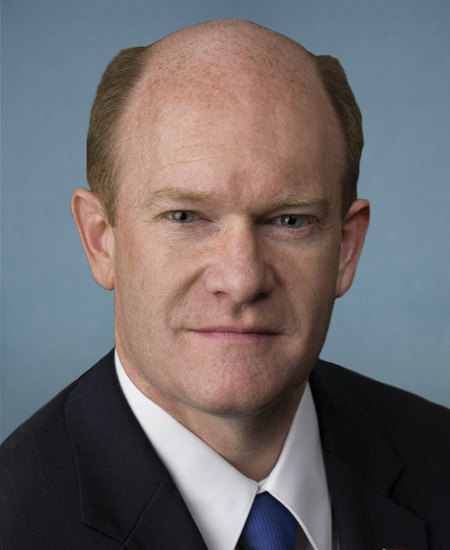
Sen. Christopher A. Coons
Sponsored bills
Maddy summaryThe Investing in State Energy Act of 2026 requires the federal government to provide application guidance and publish funding allocations for state energy programs within 60 days of funds becoming available. Additionally, the bill mandates that financial assistance payments be sent to states and tribes within 30 days after they submit complete conservation plans. This legislation also increases funding for state energy initiatives by adding $100 million for each of the fiscal years from 2027 through 2031. These changes aim to streamline the process for states and tribes to receive and utilize federal energy conservation funds more quickly.
Maddy summaryThe NO FAKES Act of 2026 establishes a new property right for individuals to control the creation and use of their digital voice and visual likeness replicas, extending protection to both living people and their heirs for up to 70 years after death. The bill requires companies and platforms that distribute these digital replicas or sell tools to create them to obtain explicit authorization from the right holder, while also setting up a notification system for online services to remove unauthorized content. Additionally, the law preempts existing state laws regarding digital likeness rights and includes specific penalties and safe harbor protections for platforms that comply with the new requirements.
Maddy summaryThis resolution designates July 15, 2026, as Glioblastoma Awareness Day to raise public attention about this aggressive and deadly form of brain cancer. The bill honors patients and families affected by the disease while encouraging greater awareness of the urgent medical needs and research opportunities surrounding it. It also expresses support for collaborative efforts among government, private, and nonprofit organizations to develop better treatments and invests in ongoing research initiatives.
Maddy summaryThe Latonya Reeves Freedom Act of 2026 strengthens the Americans with Disabilities Act to ensure individuals with long-term care needs have a federally protected right to live in their own homes or integrated community settings rather than institutions. It mandates that states and insurance providers offer community-based services, provide maximum control over care choices to individuals, and establish enforceable plans to transition people out of institutional facilities. The bill also creates new enforcement mechanisms, including a task force to study barriers to community living, requirements for public participation in planning, and the ability for individuals to sue for damages if they are denied these community-based options.
Maddy summaryS 1782, the Charlotte Woodward Organ Transplant Discrimination Prevention Act, prohibits hospitals and transplant centers from denying organ transplants or related services solely because of a person’s disability. It requires these covered entities to make reasonable modifications to policies - such as considering a patient’s support network or providing communication aids - to ensure access for qualified individuals with disabilities who meet medical eligibility. The bill allows exceptions only if a physician determines a disability is medically significant to the transplant, but does not permit denial based on inability to independently manage care with available support. This applies to all stages, including evaluation, listing, and post-transplant care, while ensuring it doesn’t override stronger protections under existing disability laws like the ADA.
Maddy summaryThe SABER Act of 2026 expands the permissible uses of the Ukraine Support Fund to allow the Ukrainian government to purchase defense articles and services specifically for responding to and recovering from Russian aggression. This legislative change directly affects the administration of U.S. foreign aid by modifying existing statutes to include these new categories of spending. The bill removes previous restrictions that limited the fund's use, thereby providing Ukraine with greater flexibility to address the consequences of the ongoing conflict.
Maddy summaryThis Senate resolution reaffirms the importance of the United States protecting refugees and displaced persons globally and within the country. It highlights specific statistics on displacement crises and criticizes current administration actions, such as an indefinite suspension of refugee admissions and cuts to foreign aid. The bill calls on government officials to restore the Refugee Admissions Program, lift bans on entry, and provide humanitarian support to vulnerable populations. While it does not change existing laws, it serves as a formal statement of support for refugee rights and urges the executive branch to resume resettlement efforts.
Maddy summaryThe Lifeline for First Responders Act creates a new grant program to support the mental health and wellness of emergency medical services and first responder agencies. Funded by $7.5 million annually from 2028 to 2032, these grants are distributed to fire services, EMS agencies, and dispatch centers for specific purposes. The program allows recipients to use the funds for stress reduction, suicide prevention, confidential counseling, family support, and related training. Managed by the National Highway Traffic Safety Administration, the initiative aims to provide resources for behavioral health and stigma reduction within these critical service sectors.
Maddy summaryThis bill directs the Secretary of Homeland Security to grant Temporary Protected Status to nationals of Haiti. Under this provision, eligible Haitian immigrants would be allowed to live and work in the United States without fear of deportation until March 20, 2029. The legislation overrides other existing laws to ensure this designation remains in effect for the specified period.