

Maddy summaryThe America the Beautiful Act reauthorizes the National Parks and Public Land Legacy Restoration Fund through 2033, increasing its annual funding from $1.9 billion to $2 billion. It requires that projects funded by the Legacy Restoration Fund must secure at least 15% of their costs from public donations, which will be solicited through public awareness campaigns, donation locations at recreation sites, and during the purchase of recreation passes. The bill also mandates new reporting requirements for deferred maintenance and disposal of assets no longer serving public interest, while ensuring donations are credited to the Fund and allocated to specific projects.
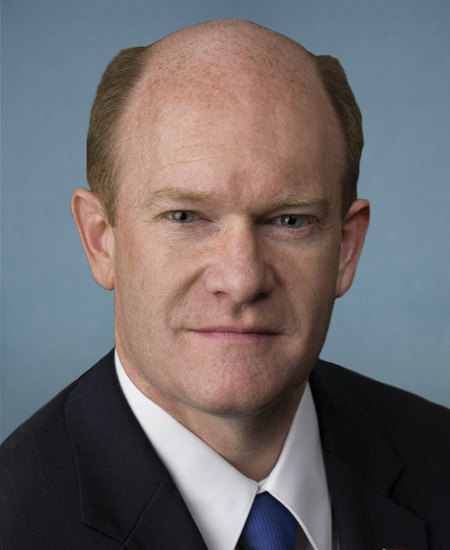
Sen. Christopher A. Coons
Sponsored bills
Maddy summaryThe Land of the Free Act of 2026 amends federal immigration law to remove a specific ground for deportation related to protected speech activities. By striking a particular subsection of the Immigration and Nationality Act, the bill aims to prevent individuals from being deported solely for engaging in constitutionally protected expression. This change directly affects immigrants who might otherwise face removal proceedings based on their speech. The legislation does not alter other deportation criteria or create new categories of removable offenses.
Maddy summaryThis bill abolishes the Anti-Weaponization Fund, a financial reserve created by the Attorney General during the Trump v. Internal Revenue Service legal case. It also declares an order issued on May 19, 2026, regarding the release of certain claims as invalid and without effect. The legislation directly impacts the Department of Justice by removing this specific fund and reversing the associated administrative directive.
Maddy summaryThe Make More in America Act of 2026 expands the Export-Import Bank's authority to provide loans, guarantees, and other financial support specifically for U.S. manufacturing projects that are intended for export. This new program targets strategic industries such as renewable energy, semiconductors, shipbuilding, and advanced robotics, with a goal of creating at least 30 percent of the Bank's annual financing for these domestic projects. To ensure accountability, the bill requires recipients to meet prevailing wage standards, commit to workforce training, and adhere to strict timelines, with funds subject to clawback if these conditions are not met. Additionally, the legislation increases the Bank's overall lending authority, establishes a new interagency committee to coordinate federal investment strategies, and tightens rules on who is eligible for Bank support.
Maddy summaryThe Tribal Warrant Fairness Act amends two federal laws to explicitly include Indian Tribes in existing law enforcement and security protocols. It requires the U.S. Marshals Service to consider "Tribal fugitive matters" upon request by an Indian Tribe and updates the Presidential Threat Protection Act to include "Indian Tribes" and "Tribal law" alongside local and state entities. These changes ensure Tribal governments are treated equally with local and state authorities in federal processes. The bill directly affects Indian Tribes, the U.S. Marshals Service, and agencies under the Presidential Threat Protection Act by modifying how they handle Tribal matters. This is a technical update to existing statutes without creating new programs or funding.
Maddy summaryThe Carla Walker Act establishes two competitive grant programs to fund forensic DNA analysis and equipment for public law enforcement and medical examiner offices. It provides $5 million annually (2025-2029) for eligible entities like state police, prosecutors' offices, medical examiners, and coroners to purchase equipment or conduct whole-genome sequencing (testing 100,000+ genetic markers) to solve cold cases or identify unknown remains when standard DNA databases fail. Grants cannot cover staffing, travel, or general equipment but require compliance with DOJ’s 2019 forensic genealogy policy and mandate detailed annual reports on case outcomes. The law aims to improve investigative capabilities through specialized forensic genetic genealogy while maintaining strict oversight and reporting requirements.
Maddy summaryS 825 requires the Justice Department to develop a report within 150 days on programs providing evidence-based mental health care for public safety officers, including police, firefighters, EMTs, and 911 dispatchers. The report must outline how to deliver trauma-informed care, peer support, and family services through in-person or telehealth options, while ensuring confidentiality for officers seeking help. It also needs to detail administrative efficiency across states and territories, draft necessary grant conditions, and estimate annual funding needs. This bill does not fund programs but sets a framework for future action based on the high rates of PTSD and suicide among these frontline workers.
Maddy summaryS 736, the Lieutenant Osvaldo Albarati Stopping Prison Contraband Act, amends federal law to increase penalties for providing prohibited items (like phones) to prison inmates. It adds a maximum 2-year prison term for knowingly supplying phones to inmates, specifically targeting violations related to phone trafficking. The bill also requires the Bureau of Prisons to review and update its policies within one year of enactment to better prevent inmate access to prohibited objects and enhance safety for both incarcerated individuals and staff. These changes directly affect prison staff, correctional facilities, and individuals involved in supplying contraband to inmates.
First Rhode Island Regiment Congressional Gold Medal Act This bill provides for the award of a single Congressional Gold Medal to the First Rhode Island Regiment, collectively, in recognition of their dedicated service during the Revolutionary War.
Maddy summaryThis Senate resolution formally acknowledges and apologizes for the decades of discrimination and wrongful termination faced by lesbian, gay, bisexual, and transgender individuals who served in the U.S. military, Foreign Service, and federal civil service. The measure highlights historical policies, such as the "Don't Ask, Don't Tell" rule and the "Lavender Scare," which forced hundreds of thousands of service members to leave their jobs or hide their identities, while also noting recent executive actions that have rescinded protections for gender identity. While the resolution reaffirms a commitment to equal rights and respect for all LGBT government employees, it explicitly states that it does not create any legal claims or settlements for affected individuals.