

Maddy summaryThis bill requires Minnesota health insurance companies to pay outpatient behavioral health providers (like therapists and substance use treatment centers) at least 143% of the Medicare rate for covered services. It directly affects providers offering mental health and substance use disorder treatment in outpatient settings. The key provision sets a new minimum payment standard based on the annual Medicare rate published by the Centers for Medicare and Medicaid Services. This change applies to private insurance plans but excludes coverage for state public health programs under chapters 256B or 256L.
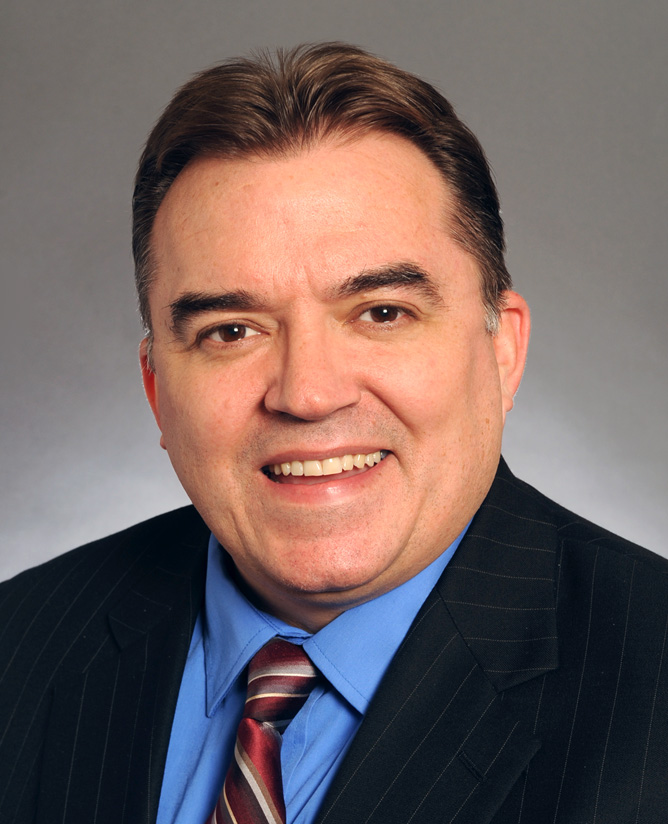
Sen. John Hoffman
Sponsored bills
Maddy summaryThis Senate resolution honors Bret Heitkamp, a former city administrator in Champlin, Minnesota, on the occasion of his retirement in May 2025. The document formally acknowledges his long-term contributions to local development, including overseeing significant infrastructure projects and community growth along Highway 169. It also recognizes his service on various municipal boards and task forces dedicated to public facilities and emergency services. Finally, the resolution instructs the Secretary of the Senate to create an official copy of the document and send it directly to Heitkamp as a gesture of appreciation.
Maddy summaryThis bill exempts sales tax on construction materials for two new water mains connecting east-west under U.S. Highway 169 in Brooklyn Park. The exemption applies to purchases made between November 30, 2025, and December 31, 2028, specifically for infrastructure supporting Brooklyn Park’s biotech innovation district. Refunds will be processed through Minnesota’s existing tax refund system, with funding provided from the state general fund. It directly affects Brooklyn Park’s water infrastructure project and contractors purchasing eligible materials during the specified timeframe.
Maddy summaryThis bill provides a refundable sales tax exemption for construction materials used in a regional athletic facility in Brooklyn Park, Minnesota. It exempts materials purchased between November 30, 2025, and January 1, 2029, from state sales tax, with the tax collected and then refunded through the state's general fund. The exemption applies to materials for construction, reconstruction, upgrades, expansion, or renovation of the facility. The bill also appropriates funds from the general fund to cover these refunds.
Maddy summaryThis bill modifies consent requirements for electronic monitoring in nursing homes and assisted living facilities. It requires written resident consent before installing monitoring devices in private rooms, with specific safeguards: facilities must explain device types, sharing rules, and the right to decline recording. If a resident lacks capacity, their representative may consent only after confirming the resident was asked about monitoring and their medical professional assessed their understanding. Roommates must also provide written consent for shared rooms, and residents can withdraw consent at any time. (Bill: SF 1918, Minnesota Statutes 144.6502, subd. 3)
Maddy summaryThis bill clarifies which hydroelectric power projects qualify under Minnesota's renewable energy standard. It specifies that hydroelectric facilities with a capacity of 100 megawatts or more must have been operational as of February 8, 2023, to count toward the standard. This directly affects electric utilities that rely on large hydroelectric projects for compliance with renewable energy requirements. The change ensures only existing large hydro facilities - not new installations - can be counted toward the renewable energy standard.
Maddy summarySF 3249 appropriates $100,000 from Minnesota's general fund for the 2025 annual meeting of the Mississippi River Cities and Towns Initiative (MRCTI), held September 16-18 in the Twin Cities. The funds cover costs for hosting mayors from cities along the Mississippi River corridor to discuss interstate policies on disaster resilience, infrastructure, environmental restoration, and water security. This one-time appropriation directly supports the MRCTI's coordination of the meeting, which also engages federal partners and international stakeholders on watershed sustainability. The bill does not alter existing policies but provides funding for this specific event.
Maddy summarySF 3250 prohibits certain taxes during government shutdown periods in Minnesota. It amends Minnesota Statutes to prevent wage tax deductions (under section 290.92) and consumption taxes (under sections 295, 296A, etc.) from being imposed on wages paid or transactions occurring during a "shutdown period" or a short grace period after it ends. A "shutdown period" is defined as the time when appropriations for executive, legislative, or judicial branches haven't been enacted for the upcoming biennium, starting July 1 of an odd-numbered year. The bill directly affects employers who withhold wage taxes and businesses/individuals subject to consumption taxes during these defined shutdown windows.
Maddy summarySF 3266 authorizes the Minnesota Commissioner of Health to conduct a feasibility study for a state-run web platform designed to help seniors (50+) coordinate with healthcare providers, insurers, and state agencies. The study must examine the platform's required capabilities, creation costs, and ongoing maintenance fees funded through provider fees. It requires consultation with stakeholders including health insurers, aging services providers, senior advocates, and the public. The study results must be reported to legislative committees by February 1, 2026, before any decision on building the platform. This bill does not create the platform but assesses its feasibility.
Maddy summarySF 2598 allows remote reassessments (via video or phone) for Minnesotans receiving specific disability waiver services, replacing some in-person requirements. It directly affects individuals enrolled in developmental disabilities, community access, brain injury, alternative care, and elderly waiver programs under Minnesota Statutes sections 256B.092, 256B.49, 256B.0913, and related programs. Key provisions require informed consent from recipients or their representatives before remote assessments, mandate an in-person reassessment after remote ones (replacing one or two consecutive assessments depending on the program), and require documentation of consent. The bill takes effect January 1, 2026, or upon federal approval.