

Maddy summaryMinnesota Senate File 1180 modifies how traffic fine revenue is distributed between local governments and state highway funds. The bill changes the current split so that two-thirds of most traffic fines collected by local officers go directly to their law enforcement budgets (with at least half used for policing), while one-third goes to the state highway user tax fund. It also adjusts the split for fines issued by State Patrol troopers (one-third to local entities, two-thirds to the highway fund) and updates surcharge distributions, directing $25 from certain traffic violations to the general fund instead of highway funds. These changes affect local law enforcement agencies, state highway programs, and the Minnesota grade crossing safety account. The bill does not create new traffic laws but alters revenue allocation for existing fines.
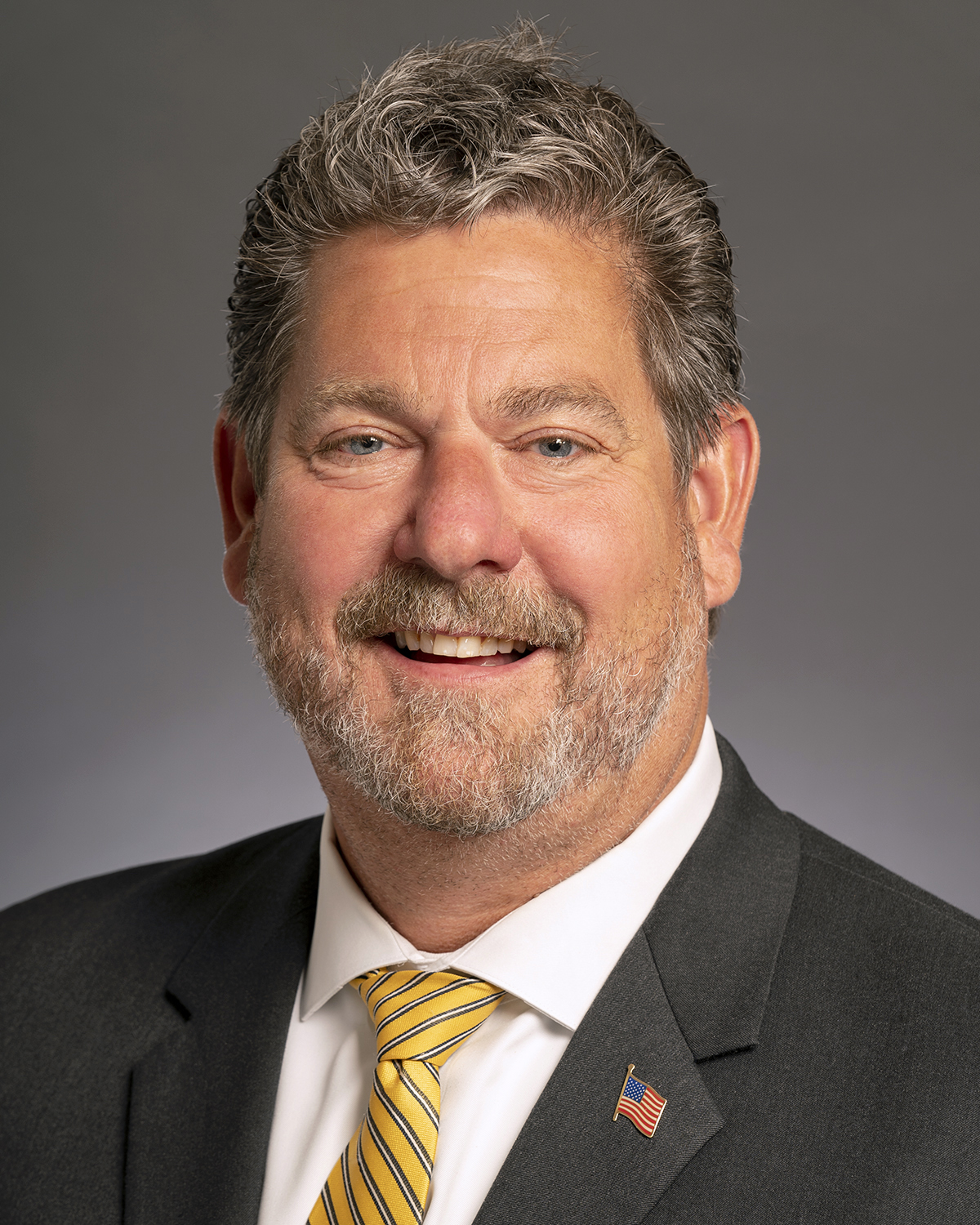
Sen. John Jasinski
Sponsored bills
Maddy summaryThis bill changes Minnesota's deer hunting rules by allowing straight-wall cartridge ammunition to be used statewide for taking deer, rather than only in the current "shotgun use area" defined by specific boundary lines. It directly affects deer hunters across Minnesota who use this type of ammunition. The key provision amends Minnesota Statutes section 97B.318 to remove the geographic restriction, making straight-wall cartridges legal everywhere in the state during the regular firearms deer season. This is a specific policy change to the existing hunting regulations, not a new rule.
Maddy summaryThis bill increases minimum fines for drivers operating vehicles without insurance. For a first offense, fines rise from $200-$300 to $550 if it occurs within 10 years of a prior violation, and to $850 for two or more prior violations within that timeframe. It applies to both drivers and vehicle owners who fail to provide proof of insurance when required by law. The changes take effect August 1, 2025, and aim to strengthen enforcement of insurance requirements for all vehicle operators.
Maddy summarySF 1164 creates a new "full-service provider account" to receive specific fees from vehicle transactions. It modifies how $8 vehicle registration renewal fees and $12 transaction fees are distributed, directing portions to this new account (e.g., $4.00 per renewal fee and $4.25 per other transaction fee). The bill also adds a $5 surcharge on mail-in vehicle registration renewals, splitting $2.50 to the new provider account and $2.50 to the operating account. This affects vehicle owners paying fees, full-service providers (like dealerships), and the Minnesota Department of Public Safety managing fee collections. The changes take effect October 1, 2025.
Maddy summaryThis bill requires Minnesota's Division of Driver and Vehicle Services to update its website to show real-time availability for road skills examinations. It mandates that the website display the next available exam dates and times at each location and include a feature allowing applicants to enter an address to find the closest available appointments sorted by distance. The changes apply to all applicants needing a class D road skills test for driver's license issuance. The policy modifies existing website requirements under Minnesota Statutes section 171.13 to improve transparency and accessibility of scheduling. The changes take effect August 1, 2025.
Maddy summaryThis bill establishes rules for cost sharing on Minnesota's trunk highway projects. It requires the state transportation commissioner to ensure local governments aren't obligated to pay for costs within a highway's right-of-way that result directly from the project (such as utility relocations), regardless of whether the work benefits non-trunk highways. The bill also appropriates funds from the general fund for these non-trunk highway project costs in fiscal years 2026 and 2027. It applies to projects starting construction after July 1, 2025, with exceptions for projects already in the state transportation program before that date. The policy directly affects local governments and the state Department of Transportation in funding highway improvements.
Maddy summarySF 1104 appropriates $300 million from bond proceeds to fund Minnesota's "Corridors of Commerce" program, which focuses on improving key transportation routes for commerce. The bill authorizes the state to sell bonds up to $300 million, with proceeds deposited into the trunk highway fund to finance this program. The commissioner of transportation can use up to 17% of the funds for program administration. This bill directly affects state transportation planning and funding for designated commercial corridors, without creating new policy requirements for businesses or residents.
Maddy summarySF 762 increases criminal penalties for introducing contraband into Minnesota correctional facilities. It raises the felony penalty for bringing prohibited items (like drugs or weapons) into jails or prisons beyond the current maximum two-year sentence. The law applies to anyone who introduces contraband without facility staff consent, including inmates and visitors. Dangerous weapons already carry a maximum five-year sentence under existing law, and this bill expands the scope of the penalty increase to cover additional contraband types. The change directly affects facility security and those who violate rules regarding prohibited items.
Maddy summaryThis bill establishes specific speed limits on Steele County State-Aid Highway 12 within the city of Medford, Minnesota. It sets a 45 mph limit between 6th Street Southeast and Steele County State-Aid Highway 1, and a 35 mph limit between 5th and 6th Streets Southeast. The bill requires the county engineer to install appropriate signage displaying these new speed limits. The policy directly affects drivers traveling on this segment of Highway 12 in Medford.
Maddy summarySF 737 establishes mandatory minimum fines for drivers who fail to stop for school buses. It directly affects drivers who violate Minnesota's school bus stop arm law, imposing fines of at least $500 for first offenses, $700 for repeat violations within ten years, and $950 for two or more prior violations. The bill also defines specific scenarios as gross misdemeanors - passing a bus on the right side (passenger door) or when children are outside on the street/sidewalk - with stricter penalties. The law would take effect on August 1, 2025, applying to violations occurring on or after that date.