

Maddy summaryHF 1559 appropriates $1.25 million for each of fiscal years 2026 and 2027 from Minnesota’s arts and cultural heritage fund to support community festivals. The Minnesota Humanities Center will distribute these grants to community organizations, cities, and counties for event programming, staffing, outreach, transportation, facilities, and signage. Up to $200,000 of the total can reimburse county sheriff departments for public safety costs at these events. The bill specifically prioritizes funding for named festivals including the Somali Museum Annual Celebration, Twin Cities Jazz Fest, Hmong Festival, and Rondo Days in St. Paul.
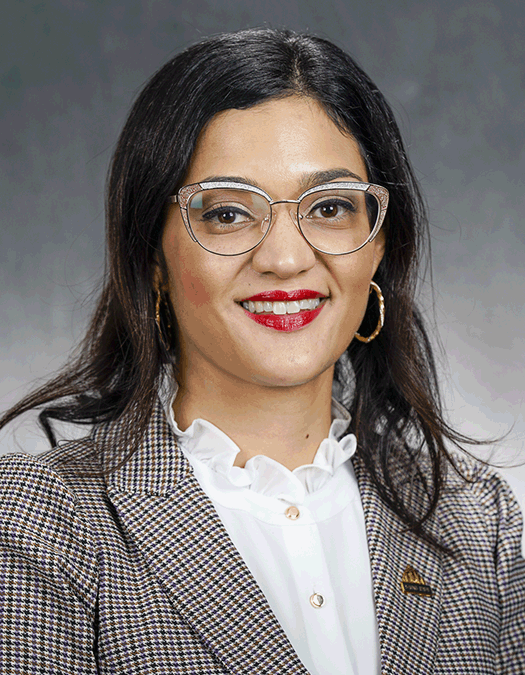
Rep. María Isa Pérez-Vega
Sponsored bills
Maddy summaryHF 1586 appropriates $800,000 from Minnesota's arts and cultural heritage fund for a commemorative project honoring Gordon Parks. The bill directs the Minnesota Humanities Center, working with Soul Touch Productions, to create an art installation and related programming celebrating Parks' life and legacy. This funding specifically supports cultural programming focused on Parks' contributions as a photographer, filmmaker, and civil rights advocate. The bill does not create new policy but allocates existing state funds for a specific cultural initiative.
Maddy summaryHF 1601 allows counties, cities, and towns in Minnesota to ban or restrict dangerous weapons, ammunition, or explosives on their owned or leased buildings and land. Local governments must post specific signage (with mandated size and wording) to enforce these restrictions, with exceptions for licensed law enforcement officers on duty and those with explicit permission from the local chief law enforcement officer. Possessing weapons in prohibited areas would become a misdemeanor offense. The law takes effect August 1, 2025, and applies to violations occurring on or after that date. It directly affects local government property users and provides a clear legal mechanism for communities to set their own safety rules.
Maddy summaryHF 1537 appropriates $44 million from state bond proceeds to fund Minnesota's Port Development Assistance Program under Chapter 457A of state law. The funds must be used for publicly owned port infrastructure improvements, such as docks or equipment. The commissioner of management and budget will issue up to $44 million in state bonds to provide this funding, following established bond procedures. This bill directly affects Minnesota ports seeking capital improvements for public use.
Maddy summaryHF 1424 modifies foster care rules for relatives in Minnesota. It expands the definition of "related" caregivers to include important friends with significant relationships to the child or family, requiring these relatives to obtain foster care licenses (unless they're parents or legal guardians). The bill also mandates that all foster care providers - both related and unrelated - complete annual training on preventing sudden infant death and abusive head trauma for children under five. Additionally, it updates background check procedures for domestic partners of relative caregivers and modifies the Minnesota Family Investment Program (MFIP) funding structure. These changes aim to strengthen safety standards while providing clearer pathways for relatives and trusted community members to care for children in foster care.
Maddy summaryHF 1307 appropriates $5.7 million from state bonds to fund a new recreation facility at the Jimmy Lee Recreation Center in St. Paul's Rondo community. The bill authorizes the state to issue bonds and provides the funds for predesign, design, and construction of the new facility, directly serving residents of the Rondo neighborhood. The money comes from the bond proceeds fund, following Minnesota's bonding procedures under statutes 16A.631-16A.675. This is a capital investment bill focused on physical infrastructure for a specific community facility.
Maddy summaryHF 115 appropriates $650,000 from the arts and cultural heritage fund for the Minnesota Children's Museum in fiscal years 2026 and 2027. The funding is intended to support new hands-on learning opportunities and expanded community outreach programs across Minnesota. This bill directly provides financial resources to the museum for specific educational initiatives. It is a straightforward funding measure with no additional policy provisions or requirements beyond the specified appropriation.
Maddy summaryHF 1028 increases state funding for Minnesota school districts through multiple adjustments to education finance formulas. It raises the general education basic formula allowance, special education cross subsidy aid, English learner cross subsidy aid, school unemployment aid, and safe schools revenue. The bill modifies how compensatory revenue eligibility is calculated and allows school boards to renew voter-approved operating referendums more than once. These changes, effective for fiscal year 2027 and later, directly affect all Minnesota public school districts by altering their state funding calculations and administrative powers. The bill does not create new programs but adjusts existing funding mechanisms and eligibility rules.
Maddy summaryHF 776 appropriates $1.5 million for fiscal year 2026 and $1.5 million for fiscal year 2027 from the general fund to support Minnesota's Family Assets for Independence program. The funding is directed to the commissioner of children, youth, and families to implement the initiative under section 142F.20. This bill provides ongoing financial support for the program but does not change eligibility or program structure. It directly affects the state's administration of the Family Assets for Independence initiative.
Maddy summaryHF 1097 appropriates $200,000 from Minnesota's arts and cultural heritage fund to the nonprofit organization 30,000 Feet. The funding supports youth and community artists in developing artistic skills, creating community art projects, and producing performances centered on African American history and culture. The bill directly affects the nonprofit organization and the artists it serves through its grant program. It provides concrete financial support for specific arts initiatives without altering broader policy or regulations.