

Maddy summaryHF 1742 establishes a three-year pilot program to certify direct support professionals who assist Minnesotans with disabilities or older adults with daily living needs. The bill requires a 80-hour training curriculum (over 8 weeks) meeting state standards, provides scholarships with a $20/hour work stipend, and creates a "certified direct support professional" credential. Providers using certified workers in covered programs (like community-based services for people with disabilities) would receive an enhanced payment rate of 118.75% of the standard medical assistance rate, pending federal approval. The pilot will be evaluated to assess workforce impact, economic benefits in Anoka and Dakota Counties, and potential for statewide expansion.
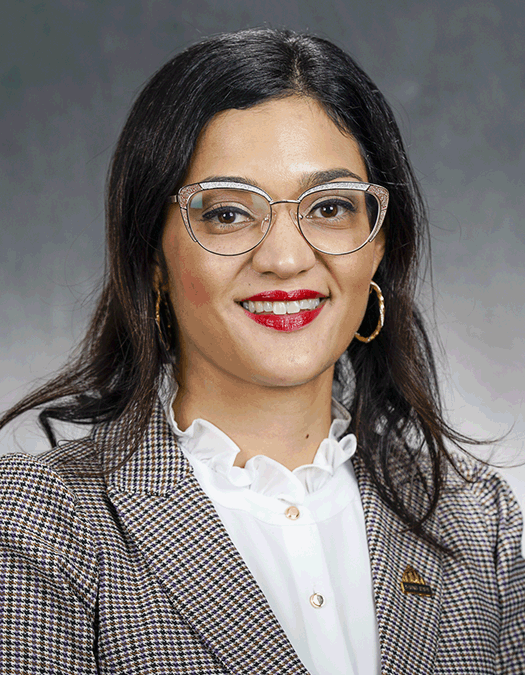
Rep. María Isa Pérez-Vega
Sponsored bills
Maddy summaryHF 1640 appropriates $150,000 for fiscal year 2026 and $150,000 for fiscal year 2027 from Minnesota's arts and cultural heritage fund to preserve the oral histories of Hmong veterans who served in the U.S.-sponsored Secret War in Laos during the Vietnam War era. The funds are directed to Special Guerrilla Units Veterans and Families of USA, Inc. to collect, document, archive, and preserve these histories while creating public educational resources. This bill directly supports Hmong veterans and their families in Minnesota by safeguarding their wartime experiences and cultural heritage. The program aims to teach future generations about the Hmong community's history and contributions in Minnesota through documented oral histories and accessible programming.
Maddy summaryHF 106 appropriates $750,000 from the general fund for fiscal year 2026 and another $750,000 for fiscal year 2027 to provide a grant to Neighbors, Inc. The bill directs these funds specifically for Neighbors, Inc. to deliver social services outreach, trainings, capacity building, support services, programming, and administrative support. This funding directly affects Neighbors, Inc. as the recipient organization and the communities they serve through these expanded services. The legislation creates a concrete, two-year financial commitment for these specific program activities.
Maddy summaryHF 1160 appropriates funds from the general fund for a one-time grant to Union Gospel Mission Twin Cities, a 501(c)(3) nonprofit organization. The grant will support the design and construction of a new women and children's family shelter and transitional housing at 376 Western Avenue in St. Paul, as well as capital improvements at the men's campus at 435 University Avenue East in St. Paul. The appropriation is designated for fiscal year 2026 and remains available until the projects are completed or abandoned. This bill directly provides funding for specific facility projects at the nonprofit's St. Paul locations.
Maddy summaryHF 1639 appropriates $550,000 for fiscal year 2026 and $550,000 for fiscal year 2027 from the state's workforce development fund to the International Institute of Minnesota. The funds must be used to provide workforce training for immigrants and refugees (referred to as "New Americans") in industries facing labor shortages. This one-time funding supports job skills development in high-demand sectors without creating new permanent programs.
Maddy summaryThis bill appropriates $250,000 from the general fund for a one-time grant to Equaspace in fiscal year 2026. The funds will provide workspace and wrap-around services - including IT support, HR assistance, accounting, fundraising, and executive director support - to small and startup nonprofit organizations. The grant is specifically intended to help these nonprofits access essential operational resources through Equaspace’s programs. The funding is limited to the stated purposes and does not create ongoing program requirements.
Maddy summaryHF 1739 appropriates $1 million from the general fund for fiscal year 2026 to fund workforce programs for individuals in recovery through the nonprofit Generation Hope. The bill requires the funds to support four specific mechanisms: workforce training in high-demand industries, record expungement assistance to reduce employment barriers, personalized career coaching and job placement services, and partnerships with employers to connect participants to sustainable jobs. This one-time appropriation directly affects individuals in recovery seeking employment, aiming to address systemic barriers through concrete support services. The bill does not create new laws but allocates specific funding for targeted job placement initiatives.
Maddy summaryHF 1600 appropriates $750,000 for fiscal year 2026 and $750,000 for fiscal year 2027 from the state general fund to provide a one-time grant to Comunidades Organizando el Poder y la Acción Latina (COPAL). The funding is designated for COPAL to support capacity building, worker center programming, youth workforce development, GED classes, career planning, educational resources, health services, training programs, and job navigation assistance. This bill directly affects COPAL as the recipient organization, enabling it to expand services for immigrant and Latinx communities in Minnesota. The appropriation is specific to these defined programs and does not create new state requirements or alter existing laws.
Maddy summaryHF 1512 appropriates funding from the general fund for competitive research grants focused on sudden unexplained death in childhood (SUDC). The bill directs Minnesota's commissioner of health to award these grants to eligible Minnesota-based research facilities, universities, and health systems studying SUDC causes, risk factors, and prevention strategies. It requires annual reports starting in 2026 detailing grant recipients, funding amounts, research purposes, and findings until 2030. This one-time appropriation allows up to 5% of funds for administrative costs and ensures unexpended balances remain available until June 2029.
Maddy summaryHF 1566 requires landlords in Minnesota to make reasonable safety modifications for tenants with children who have autism, specifically when hazards like lakes, rivers, or other water bodies are near rental properties. Tenants must request these accommodations, and landlords can ask for documentation unless the child's condition is obvious. Landlords cannot retaliate against tenants making such requests and must adjust policies or property features to protect the child, unless the change would fundamentally alter the property. This bill directly affects tenants with autistic children and their landlords in rental housing.