

Maddy summaryHF 1518 appropriates $1 million from the general fund for a one-time agricultural training program targeting Black youth in rural Minnesota. The bill requires the commissioner of agriculture to establish training at historical Black-owned farms, covering traditional and modern farming, sustainable agriculture, entrepreneurship, and mentorship. It directly affects Black youth interested in farming careers by providing skill development opportunities at these specific locations. The key provision is the dedicated funding to create this program, with no ongoing annual appropriations specified.
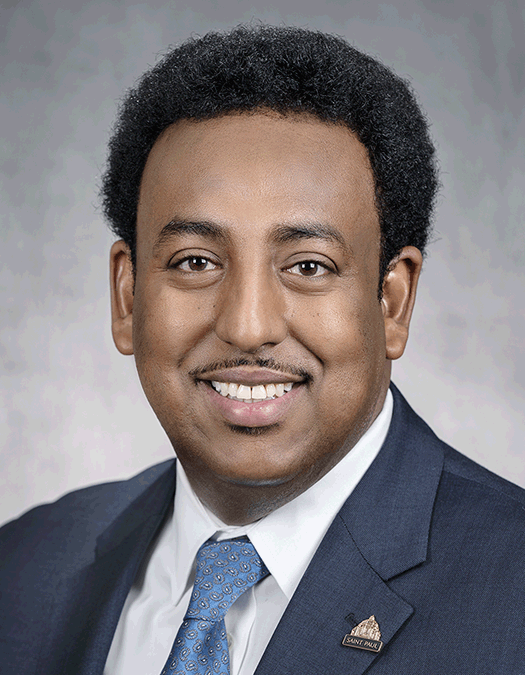
Rep. Samakab Hussein
Sponsored bills
Maddy summaryHF 2764 requires Minnesota public schools (including charter schools participating in the National School Lunch Program) to offer at least one plant-based meal option daily starting with the 2026-2027 school year. A "plant-based meal" is defined as one without any animal products (meat, dairy, eggs, fish), and schools must provide this option within four weeks of a student's written request. Schools must also make the request process clear to students and parents, comply with federal nutrition standards, and report annually on implementation to the Department of Education. The bill applies to all public schools serving lunches through the National School Lunch Program.
Maddy summaryHF 2509, the Youth Civic Engagement Act, establishes a state grant program to support civic activities for Minnesota youth aged 14-24. The bill directs the Secretary of State to award grants to eligible organizations (like schools, nonprofits, and community centers) for specific initiatives including civic education curricula, youth-led projects, mentorship programs, and events such as designated "Youth Civic Engagement Day" (the third Friday in October). Grant funds may cover costs like program materials, participant stipends, and outreach to underserved communities. The bill appropriates unspecified funds for fiscal years 2026-2027 to support these activities, aiming to increase youth participation in voting, community service, and public decision-making.
Maddy summaryHF 1517 appropriates $2.5 million from the general fund for the Minnesota Black Farmers Association to purchase modern farming equipment, including skid steers and John Deere tractors with attachments. The funding is specifically designated for a cooperative of Black veteran farmers in Minnesota. The commissioner of agriculture must award a grant to the Association to support this equipment purchase for the cooperative's use. This bill directly affects Black veteran farmers through their cooperative by providing access to updated agricultural technology.
Maddy summaryHF 2480 authorizes Minnesota housing and redevelopment authorities to create new public corporations specifically to purchase, own, and operate properties converted under the federal Rental Assistance Demonstration (RAD) program. These corporations can access funding through the Minnesota Housing Finance Agency (MHFA) to preserve and improve these public housing properties. The bill amends several housing statutes to define the legal structure, powers, and funding mechanisms for these entities, effective July 1, 2025. It directly affects housing authorities managing RAD properties by providing a new administrative framework for their long-term stewardship.
Maddy summaryHF 2171 is a symbolic resolution, not a law. It asks Congress to recognize Minnesota's historical ratification of the Child Labor Amendment (ratified by Minnesota in 1933), which would authorize federal regulation of child labor for those under 18. The resolution has no legal effect, as the amendment remains unratified nationally (requiring 38 states, but only 27 have ratified) and federal child labor laws are already in place following the 1941 Supreme Court case *United States v. Darby Lumber Co.*
Maddy summaryThis bill modifies Minnesota's high-rise sprinkler system grant program to provide $10 million in funding for the Minnesota Housing Finance Agency. It directly affects owners of eligible high-rise affordable housing buildings (75+ feet tall or 7+ stories, with at least two-thirds of units affordable to households earning 50-60% of area median income). The program allows grants/loans up to $2 million per building for sprinkler installation, requiring a 25% match for nonprofits and 50% for for-profits. The funding comes from a one-time transfer of $10 million from the general fund to the housing development fund, then appropriated to the agency for this specific program.
Maddy summaryHF 1514 appropriates $400,000 annually from the general fund for the Veterans Resilience Project to provide eye movement desensitization and reprocessing (EMDR) therapy. It directly serves veterans, veterans' spouses, active military service members, and their spouses diagnosed with PTSD or trauma. The bill requires the project to submit annual reports by January 15 to the commissioner of veterans affairs and relevant legislative committees, detailing program spending, participants served, and services provided. This funding and reporting mechanism ensures targeted mental health support for military-connected individuals while maintaining transparency.
Maddy summaryHF 1471 requires local governments in Minnesota (such as cities or towns) to provide renters with a copy of the Attorney General's existing landlord-tenant guide whenever they issue or renew a rental license. This applies whether the license is issued in person (requiring a physical copy) or electronically (requiring a link to the guide online). The bill directly affects landlords who obtain rental licenses and local governments that administer the licensing process. It ensures renters have immediate access to clear information about their rights and responsibilities under Minnesota law.
Maddy summaryHF 1516 appropriates $5 million from Minnesota's general fund for a one-time grant to an organization developing a support program specifically for Black veterans. The program must provide services including mental health care ($1.5M), job training ($1M), homeownership assistance ($700K), educational support ($500K), and administrative outreach ($1M). This bill directly affects Black veterans in Minnesota by creating targeted access to these specific support services through a state-funded grant. The commissioner of veterans affairs is required to award the grant to an eligible organization to operate the program. The funding is allocated for fiscal year 2026 only.