

Maddy summaryHF 2401 modifies Minnesota's rules for real estate appraisers seeking continuing education credit for out-of-state courses. It specifically creates a process for appraisers to get credit for synchronous (live, real-time) courses approved by another state's regulator, requiring them to apply within 60 days of completion with a certificate of completion. The commissioner must grant the same number of credits as the out-of-state authority approved, and may charge a fee for this application. This directly affects Minnesota-licensed appraisers who complete qualifying courses in other states.
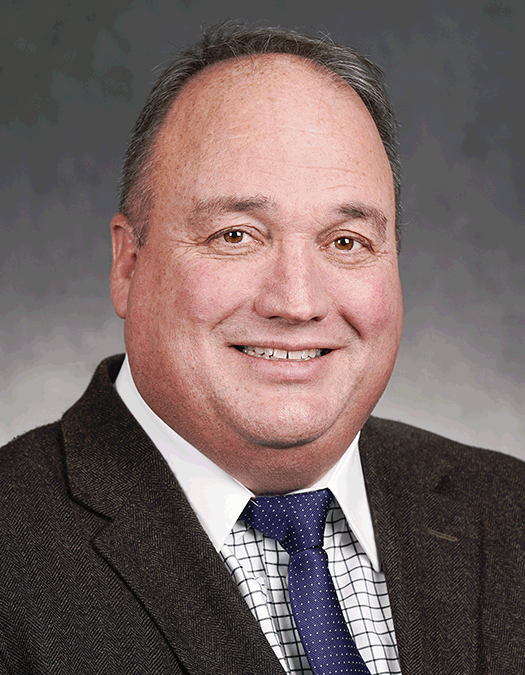
Rep. John Huot
Sponsored bills
Maddy summaryHF 1678 expands access to essential community supports for older Minnesotans and people with dementia by lowering the age threshold from 65 to 60 and removing asset limits for eligibility. The bill increases annual funding for caregiver respite services grants by $2 million each year (fiscal years 2026-2027) and maintains a $400 monthly service cap. It directly affects individuals needing community-based care who don’t qualify for nursing facilities, allowing access to services like adult day care, homemaker support, and respite care. The changes require no asset assessment and mandate annual reassessment for continued eligibility.
Maddy summaryHF 2215 creates a state-run low-cost auto insurance program called the "Minnesota Lifeline Insurance Program" for low-income residents who meet specific eligibility criteria. The Commissioner of Commerce must establish this program, requiring a facility to develop and operate it, set affordable rates based on claims data and administrative costs, and offer online applications through a dedicated website. The bill appropriates state funds for the program, mandates annual reports to the legislature detailing participation and costs, and requires rates to cover claims, expenses, and investment income while remaining accessible. This program directly affects low-income Minnesotans who struggle to afford standard auto insurance, providing them with a state-supported alternative.
Maddy summaryHF 2014 modifies notice requirements for conventional mortgage loans in Minnesota. It requires lenders to provide borrowers with a complete copy of loan documents at signing or soon after, and to send detailed written foreclosure notices that include the default type, required cure steps, a 30-day deadline to fix the issue, and information about reinstatement rights. The bill applies to lenders and borrowers in Minnesota, but compliance is optional for loans dated between August 1, 2024, and July 31, 2025 (with retroactive effect starting July 31, 2024). This changes how lenders must communicate default and foreclosure processes, but does not alter loan terms or interest rates.
Maddy summaryHF 2301 allows retired peace officers (with a combined age and years of service totaling at least 85) to join Minnesota's state public employee health insurance program, which previously excluded retirees. It also creates a new program enabling college degree holders to complete peace officer training requirements through a streamlined process. The bill appropriates funding to support both the expanded insurance eligibility and the new training program. These changes directly affect retired law enforcement officers meeting the age/service criteria and college-educated individuals seeking to become peace officers. The legislation amends Minnesota Statutes 2024, section 43A.316, to add these provisions.
Maddy summaryHF 2385 allocates $40 million for fiscal year 2026 and $40 million for fiscal year 2027 from the state general fund to the University of Minnesota's Board of Regents. The funds are specifically designated to support research in four industry sectors: biomanufacturing, precision agriculture, hypersonics, and green energy/green iron. This bill directly affects the University of Minnesota by providing targeted funding to advance innovation in these priority economic areas. The legislation creates a concrete funding mechanism to direct state resources toward research in these specific emerging industries.
Maddy summaryHF 2454 establishes a Minnesota law enforcement grant program to help recruit and retain officers by covering tuition and fees at public colleges for eligible individuals. It directly affects current Minnesota law enforcement officers, their dependent children, and dependent children of officers who suffered a total and permanent duty disability while serving. The grant covers 100% of tuition and fees after other aid is deducted, renewable each semester if eligibility continues (e.g., maintaining enrollment in criminal justice programs and meeting academic standards). Funds are appropriated by the state to administer the program through the Office of Higher Education.
Maddy summaryHF 2506 establishes a new premium subsidy program administered by MNsure, providing a 20% subsidy on monthly gross premiums for eligible individuals purchasing individual health insurance plans in Minnesota. This directly affects Minnesota residents enrolled in individual market plans who are not receiving federal advance premium tax credits or public coverage, as well as health insurance carriers that receive payments from MNsure. The program begins January 1, 2026, with MNsure paying health carriers directly for each eligible individual's coverage, excluding the subsidy from eligibility calculations for other state programs. The bill also ends the existing Minnesota Premium Security Plan (MPS) after December 31, 2025, and appropriates funds to support the new subsidy program.
Maddy summaryHF 2394 increases penalties for concealing a dead body under Minnesota Statutes section 609.502, specifically for cases classified under subdivision 1, clause (1). The bill raises the maximum fine from $5,000 to $20,000 and increases the potential prison sentence from up to three years to up to 20 years. This change directly affects individuals convicted of concealing a dead body under these circumstances. The amendment takes effect August 1, 2025, applying to crimes committed on or after that date.
Maddy summaryThis bill amends Minnesota Statutes section 626.19, subdivision 3, to explicitly authorize law enforcement agencies to use drones (unmanned aerial vehicles) during the lawful pursuit of a fleeing suspect. It directly affects police departments and the public, as it expands drone use for suspect chases beyond existing emergency or disaster scenarios. The key provision adds a specific exception to the list of permitted drone uses, allowing agencies to deploy drones "in risk of, or for purposes of, the lawful pursuit of a fleeing suspect." This change clarifies and formalizes an existing practice under Minnesota law.