

Maddy summaryHF 806 extends time limits for two existing tax increment financing (TIF) districts in Edina, Minnesota. It specifically modifies the 72nd & France 2 and 70th & France TIF districts by extending their initial five-year planning period to ten years and their subsequent revenue use period to eleven years. The bill also allows Edina’s city government or redevelopment authority to further extend the 70th & France district’s duration by ten years (instead of five years for the other district). These changes directly affect how Edina manages TIF revenue from property value growth in these designated areas. The bill makes no new tax policies but adjusts timelines for existing TIF programs.
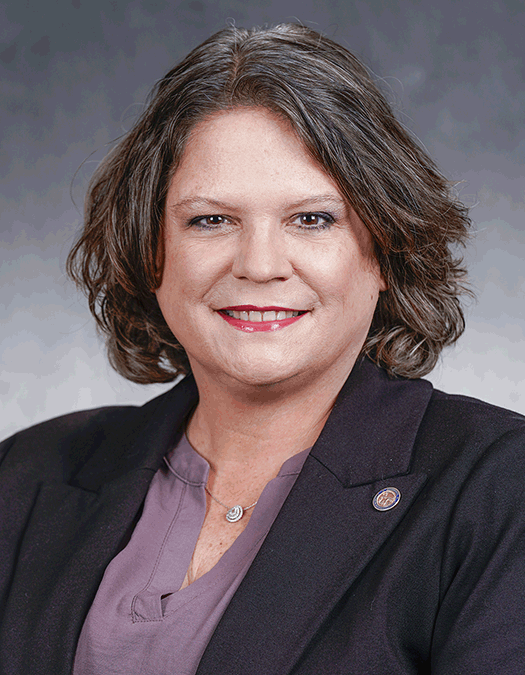
Rep. Cheryl Youakim
Sponsored bills
Maddy summaryHF 237 provides a refundable sales and use tax exemption for construction materials used in two specific park projects in Edina: Fred Richards Park (per its master plan) and Braemar Park (per its master plan). Businesses purchasing qualifying materials for these projects between January 1, 2024, and December 31, 2029, will pay the tax upfront but receive a refund from the state treasury. The exemption applies retroactively to purchases made after December 31, 2023, though refunds won’t begin until after June 30, 2025. This directly affects construction companies and contractors working on these Edina park developments, reducing their initial costs for eligible materials.
Maddy summaryHF 245 allocates $10.5 million from state bond proceeds to fund capital improvements at the Edina Aquatic Center in Edina, Minnesota. The funding covers major projects like replacing outdated mechanical/electrical systems, upgrading utility infrastructure, renovating the site, and implementing energy conservation upgrades. The state will issue up to $10.5 million in bonds to provide this funding, as authorized under Minnesota bonding statutes. This bill directly affects the City of Edina, which will receive the grant to maintain and modernize the aquatic facility.
Maddy summaryHF 262 prohibits employers from paying people with disabilities less than the state minimum wage, effective August 1, 2025 for new hires and August 1, 2027 for all current employees, ending the use of federal or state special certificates that allow subminimum wages. It requires providers of home and community-based services to report data on individuals currently paid subminimum wages by August 1, 2027, including personal details and employment metrics. The bill appropriates $38,000 in fiscal year 2026 and $75,000 in fiscal year 2027 to enhance the MnCHOICES system with employment-related resources. These changes directly affect employers, service providers, and people with disabilities working in supported employment programs across Minnesota.
Maddy summaryThis bill (HF 139) increases annual cost-of-living adjustments for retirees in Minnesota's Public Employees Police and Fire Retirement Plan and State Patrol Retirement Plan. It raises the standard adjustment from 1% to up to 1.5% annually (based on federal Social Security COLA), and shortens the required waiting period from 36 months to 12 months for full benefits. Retirees receiving benefits for less than 12 months will now get a pro-rated increase based on months served. The changes take effect for adjustments starting January 1, 2026, and apply automatically unless retirees opt out in writing.
Maddy summaryHF 210 appropriates $2.1 million from state bond proceeds to fund a regional public safety garage and storage facility in Eden Prairie. The bill directly affects the city of Eden Prairie and surrounding communities by providing funds to design, build, and equip a facility for housing fire, police, and other public safety vehicles and equipment. The key mechanism involves the state issuing bonds up to $2.1 million to cover the costs, with the funds administered through the commissioner of public safety. This is a funding measure focused on infrastructure for public safety services, not a new policy.
Maddy summaryHF 246 appropriates $5.3 million from state transportation bond proceeds to fund the design, engineering, and construction of a new interchange at Highway 100 and Vernon Avenue/West 50th Street in Edina. The bill authorizes the state to issue bonds up to this amount, with bond proceeds credited back to the transportation fund. Any surplus land created by the project must be dedicated by Edina for a fire station, municipal campus, or both. This bill directly affects the city of Edina by providing funding for a specific infrastructure project.
Maddy summaryThis bill establishes new regulations for landlords in Minnesota who use shared meters to bill tenants for electricity and natural gas in residential buildings. It requires that all submeters installed on or after January 1, 2025, meet specific accuracy standards set by the American National Standards Institute. The law also mandates that landlords must investigate tenant complaints about inaccurate meters and refund any overcharges, while allowing landlords to collect undercharges only for the previous six months. Additionally, the bill prohibits landlords from charging tenants for the costs of installing, maintaining, or repairing these meters unless the damage was caused by the tenant's willful or negligent actions.
Maddy summaryThis bill establishes new rules for ticket sales in Minnesota to increase transparency and prevent deceptive practices. It requires ticket sellers and online marketplaces to clearly display the total price, including all fees, and to provide buyers with proof of purchase and refund policies within 24 hours. The legislation also prohibits specific behaviors such as selling duplicate tickets, using unauthorized domain names, or bypassing online security measures to buy multiple tickets. The commissioner of commerce is given the authority to request data on how violations occur and to enforce these rules, with the law taking effect on January 1, 2025.
Maddy summaryThis bill establishes the Minnesota Cooperative Housing Act to create a specific legal framework for housing cooperatives serving seniors, low and moderate-income individuals, and designated members. It provides clear definitions for cooperative structures and outlines operational rules, including how membership interests are treated and how conflicts with existing landlord-tenant laws are resolved. The legislation also introduces modern voting methods, such as electronic or telephonic ballots, to facilitate member participation in cooperative governance. By codifying these provisions into a new chapter of state law, the bill aims to streamline the organization and management of these housing entities while ensuring they operate within established legal boundaries.