

Maddy summaryHF 1361 appropriates $8 million from state bond proceeds to fund improvements at CHS Field in St. Paul. The city of St. Paul will receive the grant to cover predesign, construction, and equipment for upgrades meeting Major League Baseball standards, including a new locker room, enhanced visitor amenities, and environmental remediation of contaminated soil. The state will issue bonds up to $8 million to fund this appropriation, following Minnesota's bond sale procedures. This bill directly affects CHS Field's operations and the city's ability to modernize the stadium.
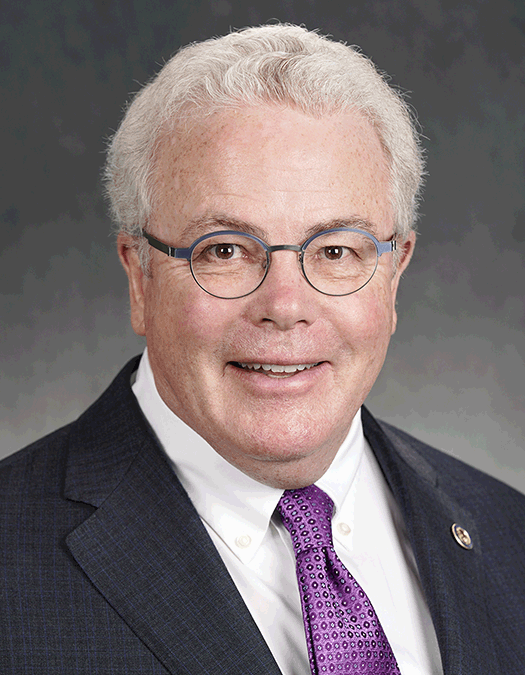
Rep. Ned Carroll
Sponsored bills
Maddy summaryHF 2472 removes the expiration date for the local lodging tax imposed by the city of Plymouth, Minnesota. Currently, this tax (up to 3% on lodging) would end either 10 years after its start or December 31, 2030, under existing law. The bill amends section 25 of the city’s tax authority to eliminate this sunset provision, making the tax permanent. This directly affects Plymouth’s ability to continue collecting and using lodging tax revenue for public recreational facilities and community marketing, as outlined in the current law.
Maddy summaryHF 2468 appropriates $500,000 for fiscal year 2026 and $500,000 for fiscal year 2027 from the general fund to support mental health initiatives in Minnesota's construction industry. The funds, available until June 30, 2027, are designated for outreach, education, stigma reduction programs, and worksite strategies to prevent suicide. They can be used for grants to industry groups and developing resources targeting construction workers. This bill directly affects construction industry workers by funding concrete mental health support services through state-administered programs.
Maddy summaryHF 2005 requires the Minnesota State Building Code commissioner to adopt specific rules for straw bale construction and hempcrete construction. This procedural bill mandates rulemaking to establish standards for these alternative building methods but does not set the rules themselves. The bill directly affects builders, developers, and inspectors who may use these materials in construction projects. It focuses on creating a regulatory framework for these sustainable building techniques within Minnesota's building code.
Maddy summaryHF 953 requires all licensed Minnesota hospitals and birth centers to provide new parents with written materials before a baby's discharge. These materials, developed and approved by the state health commissioner, teach parents how to recognize signs of physical abuse in infants and how to report suspected abuse. The bill directly affects hospitals/birth centers (via mandatory education) and new parents (as recipients of the materials). It focuses on concrete policy changes: standardized, commissioner-approved resources for early intervention, not on outcomes or advocacy.
Maddy summaryHF 1762 proposes adding a new constitutional amendment to Minnesota's state constitution. If approved by voters, it would guarantee all persons equal rights under state law and prohibit discrimination based on race, color, national origin, ancestry, disability, or sex - including protections for pregnancy decisions, gender identity, gender expression, and sexual orientation. The amendment would apply to all state actions and agencies, requiring any discriminatory state action to be the "least restrictive means" of achieving a "compelling governmental interest." The proposed amendment must be submitted to voters in the 2026 general election, with implementation starting January 1, 2027, if ratified.
Maddy summaryHF 819 establishes the Minnesota Sustainable Foraging Task Force to develop science-based recommendations for foraging regulations on state lands. The task force, composed of 16 diverse members including Indigenous knowledge holders, scientists, conservation representatives, and foraging advocates, must gather data on foraging impacts, review current rules, and create guidelines balancing public access with ecological protection. It is required to produce a report with specific, actionable recommendations - including a permitting model allowing volunteer options - by December 1, 2026. The bill directly affects Minnesotans who forage on public lands and aims to guide future regulations through data-driven, inclusive processes.
Maddy summaryHF 1586 appropriates $800,000 from Minnesota's arts and cultural heritage fund for a commemorative project honoring Gordon Parks. The bill directs the Minnesota Humanities Center, working with Soul Touch Productions, to create an art installation and related programming celebrating Parks' life and legacy. This funding specifically supports cultural programming focused on Parks' contributions as a photographer, filmmaker, and civil rights advocate. The bill does not create new policy but allocates existing state funds for a specific cultural initiative.
Maddy summaryHF 511 authorizes the city of Plymouth to impose a local sales and use tax of up to 0.5% on retail purchases, subject to voter approval at a general election. The revenue must fund specific projects: $45 million for Plymouth Ice Center improvements, $40 million for the Community Center, and $35 million for regional sports complexes. The city may issue bonds up to $120 million to finance these projects, with repayment secured by the tax revenue. The tax expires after 20 years or once project costs are fully covered, whichever comes first.
Maddy summaryHF 512 authorizes the city of Plymouth to establish up to two redevelopment districts in its city center area (as defined in its 2024 zoning map) using modified tax increment financing rules. It directly affects Plymouth by waiving a standard requirement, excluding a specific provision, and extending key timeframes from five years to ten years for planning and eleven years for fund use. The bill allows Plymouth to use tax increment financing more flexibly for local redevelopment projects within these designated areas. This special rule expires December 31, 2031.