

Maddy summaryHF 1342 amends Minnesota child care licensing law to exempt unrelated individuals providing nonresidential care to two separate families (where each family is internally related) from needing a state license. This change adds a specific exemption to existing rules that already cover related caregivers. The bill directly affects informal caregivers - such as neighbors or friends - providing structured care for two distinct families without formal licensing. It does not alter requirements for care provided to unrelated individuals or for residential settings. The policy change simplifies licensing for this specific scenario under current statutory language.
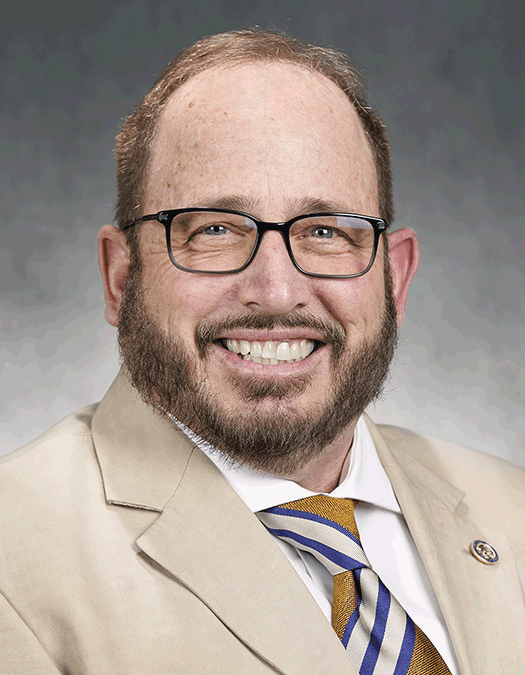
Rep. Roger Skraba
Sponsored bills
Maddy summaryThis bill provides $150,000 in state funding for the city of Delano to celebrate its 150th anniversary in 2026. The money, drawn from Minnesota's arts and cultural heritage fund, is specifically designated for Delano's sesquicentennial events and programming. It directly supports the city in organizing cultural activities like art exhibits, music performances, and heritage events to mark this milestone. The funding is a one-time appropriation for the city's anniversary celebrations.
Maddy summaryHF 2384 establishes a grant program to help counties clean up blighted properties and address environmental contamination on tax-forfeited or tax-foreclosed properties they own or hold in trust. The bill appropriates funds for fiscal years 2026-2027, allowing counties to apply for grants to cover remediation costs, testing, monitoring, and fixing unsafe conditions. Counties must submit detailed applications proving property ownership, contamination evidence, blight documentation, and a remediation plan. The Pollution Control Agency will award grants, prioritizing counties' ability to fund projects without grants and ensuring statewide distribution.
Maddy summaryHF 489 appropriates $25.8 million for 2026 and $26.9 million for 2027 from Minnesota's parks and trails fund to support state parks, recreation areas, and trails. It allocates $12.9 million annually for regional park and trail grants outside the Minneapolis metro area, requiring projects to align with the Greater Minnesota Regional Parks Strategic Plan. The bill also provides $652,000 annually for coordination between agencies and web-based park information, while extending project funding deadlines for specific initiatives like the Cannon Valley Trail and Spirit Mountain Recreation Area through 2027. This funding directly affects state park operations, regional park commissions, and local projects receiving grants under Minnesota Statutes § 85.535.
Maddy summaryHF 1361 appropriates $8 million from state bond proceeds to fund improvements at CHS Field in St. Paul. The city of St. Paul will receive the grant to cover predesign, construction, and equipment for upgrades meeting Major League Baseball standards, including a new locker room, enhanced visitor amenities, and environmental remediation of contaminated soil. The state will issue bonds up to $8 million to fund this appropriation, following Minnesota's bond sale procedures. This bill directly affects CHS Field's operations and the city's ability to modernize the stadium.
Maddy summaryHF 723 appropriates $500,000 for fiscal year 2026 and $500,000 for fiscal year 2027 from the general fund to the commissioner of natural resources. This funding supports the Greater Minnesota Regional Parks and Trails Commission in carrying out its duties under Minnesota Statutes section 85.536. The bill directly affects the commission and its ability to manage regional parks and trails across Greater Minnesota. It provides specific, concrete funding amounts for two consecutive budget years without altering existing park policies or programs.
Maddy summaryHF 442 provides a refundable sales tax exemption for construction materials used in specific housing projects in St. Louis County. It applies to apartment developments with 20+ units, condominiums with 40+ units, or townhome projects with 40+ units, covering materials purchased between July 1, 2025, and June 30, 2027. Developers pay the sales tax upfront but receive a refund through the state’s general fund, mirroring existing procedures for similar housing projects. This policy directly affects developers building qualifying multi-unit housing in St. Louis County during the specified timeframe. The exemption ends on June 30, 2027, with no changes to existing tax rates for other projects.
Maddy summaryThis bill requires Minnesota's wildlife commissioner to establish an annual open season for wolf hunting after wolves are delisted from federal protection under the Endangered Species Act. It directly affects state wildlife managers, hunters, and livestock owners by creating a mandatory yearly process for setting hunting seasons. Key provisions include requiring the commissioner to consult with the agriculture commissioner and USDA's animal health agency before determining seasons, and to review data on wolf attacks on livestock and human conflicts. The bill mandates public comment opportunities for all proposed seasons, ensuring transparency in the annual decision-making process.
Maddy summaryHF 2448 prohibits counties, cities, and towns in Minnesota from banning the sale of flavored tobacco products, such as those with fruit, chocolate, mint, or candy flavors. It amends Minnesota Statutes to state that local governments may not enact ordinances that ban these products or create regulations making their sale impossible within their boundaries. The bill specifically defines "flavored products" as tobacco or nicotine products with non-tobacco tastes distinguishable before or during consumption. This law overrides any existing or future local ordinances attempting to restrict or ban such sales, while allowing local governments to maintain other tobacco sales regulations. The bill takes effect the day after final enactment.
Maddy summaryHF 2447 establishes a dedicated account for financial assurance funds collected from gas development permits. It requires the commissioner of natural resources to deposit these funds into an account managed by the State Board of Investment, with earnings credited back to the account. The funds can only be used for financial assurance purposes related to specific gas permits under chapters 93 and 103I of Minnesota Statutes. This bill directly affects gas development permit applicants and the commissioner's office, creating a new mechanism for handling and investing these required funds.