

Maddy summaryHF 2449 prohibits the sale or transfer of specific semiautomatic military-style assault weapons in Minnesota, including models like AK-47s, AR-15s, and Uzis, as well as firearms with certain features (e.g., folding stocks, pistol grips). The bill authorizes a state-funded buyback program for these weapons and appropriates money for implementation. It directly affects owners of the defined firearms, requiring them to stop selling or transferring these weapons and offering a process to return them for compensation. The law amends Minnesota Statutes to establish these prohibitions and buyback mechanisms, effective upon enactment.
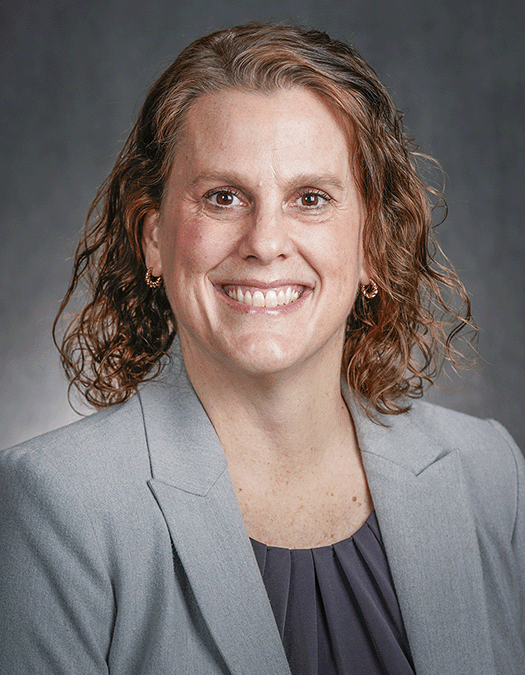
Rep. Kari Rehrauer
Sponsored bills
Maddy summaryHF 1161 creates a new funding mechanism for Minnesota school districts with significant seasonal property (like lakeshore areas). It establishes "seasonal tax base replacement aid" that adjusts a district's local tax levy based on the ratio of seasonal property value to total property value, with the adjustment capped between 50% and 100%. The bill appropriates funds to cover this aid, reducing districts' required tax levies without lowering them below zero, starting with taxes payable in 2026. This directly affects school districts that rely on seasonal property taxes for local funding.
Maddy summaryHF 1143 modifies the expiration dates for certain state aid accounts and adjusts related appropriations. It adjusts how funds are handled for specific aid programs by changing when account balances expire and modifying budget allocations. The bill directly affects state agencies managing these aid programs and their funding streams. It passed unanimously and took effect on July 1, 2025, but the context provided does not specify which exact aid programs or appropriation details were modified.
Maddy summaryHF 11 establishes a new fifth tax bracket for individual income tax to cover losses from reduced federal Medicaid funding. It directly affects high-income earners in Minnesota by adding a new tax rate tier, with the specific rate set to match the amount of Medicaid funding lost due to federal changes. The bill’s key mechanism is creating this new tax bracket, which would generate revenue to offset the shortfall in state Medicaid funding. The bill was reported to the House on March 10, 2025, and is currently moving through the legislative process.
Maddy summaryThis resolution urges the President and Congress to fully fund Medicaid and oppose any cuts to the program. It does not change current funding levels or create new laws, as it is a non-binding statement of support. The bill directly addresses federal lawmakers, calling for them to maintain Medicaid's current structure and funding. It focuses on advocating for continued support of Medicaid, which provides healthcare for low-income individuals and families.
Maddy summaryHF 2059 requires Minnesota local governments with over 5,000 residents to create automated online platforms for approving residential solar permits. These platforms must instantly issue permits for small solar systems (up to 200-amp capacity on single- or two-family homes) without manual review, processing at least 75% of typical applications. Local governments must submit an initial compliance report within 60 days of adopting the platform and annual reports starting in 2027 detailing permit usage and progress toward the 75% processing goal. The bill directly affects municipal permitting offices and residential solar customers by streamlining the approval process for rooftop solar installations.
Maddy summaryHF 3339 reinstates a citizen advisory board for Minnesota's Pollution Control Agency (MPCA), which was eliminated by the legislature in 2015. The bill amends Minnesota Statutes to require the governor to appoint eight citizen members who must reflect the state's racial, gender, and geographic diversity, including at least one Tribal Nation member, three members from environmental justice communities, one small farmer, and one labor union member. This board will review specific agency decisions - such as permits, environmental impact statements, and rule changes - and provide public input on environmental policies. The change directly affects how the MPCA makes decisions, adding a layer of public oversight previously removed.
Maddy summaryHF 457 proposes a refundable tax credit of up to 30% of qualifying conversion costs for developers converting underutilized buildings in Minnesota. Eligible projects must convert buildings first placed in service at least 15 years ago, either by changing to a new commercial use (not previously intended for that purpose) or by restoring at least 50% of vacant space to income-producing use, while retaining 75% of external walls and internal structure. Applicants must apply for an allocation certificate before starting work and can choose a credit, a grant, or both. The credit is claimable in the year the project is completed, with annual reporting required to the state.
Maddy summaryThis bill makes Minnesota's temporary aid program for cities with qualifying low-income rental properties permanent. It requires annual funding from the general fund to pay cities based on a formula comparing their tax capacity for these properties in 2023 versus prior years. The aid amount is calculated using the city's 2024 tax rate multiplied by a "modified tax capacity" figure. The program will apply to aid payments starting in 2027.
Maddy summaryHF 3306 requires Minnesota public school districts to include culturally responsive water safety instruction in the health curriculum. Specifically, districts with swimming pools must provide at least eight weeks of swim instruction for all grade 3 students, led by staff trained to address barriers like financial costs for swimwear or hair care, historical fears of swimming, and lack of pool access. The bill mandates this instruction be designed to reduce drowning risks while addressing systemic barriers. Parents may opt their child out if the student has a physical inability or water-related trauma preventing participation. The requirement takes effect for the 2026-2027 school year.