

Maddy summaryHF 485 amends Minnesota law to allow the Public Utilities Commission to issue certificates of need for new nuclear power plants with a maximum capacity of 300 megawatts. This change permits the construction of smaller-scale nuclear facilities, which were previously prohibited under existing statute. The bill specifically modifies Minnesota Statutes section 216B.243 to add this exception while maintaining the ban on larger nuclear projects. It directly affects nuclear developers seeking to build these smaller plants and the commission responsible for reviewing such applications.
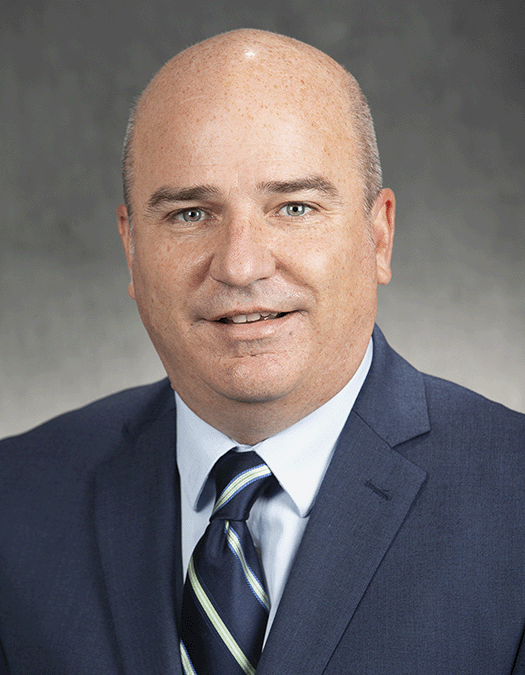
Rep. John Burkel
Sponsored bills
Maddy summaryThis bill creates a sales tax exemption for preowned motor vehicles in Minnesota, meaning buyers would not pay the standard sales tax when purchasing a used car. The legislation defines a preowned vehicle as any motor vehicle that has been previously sold, titled, registered, or transferred to someone else and operated before the current sale. The exemption applies to sales and purchases made after June 30, 2026, and would directly affect private individuals and businesses buying used vehicles in the state. The bill amends existing tax statutes to add this new exemption category alongside other existing tax exemptions for specific groups and vehicle types.
Maddy summaryHF 845 modifies Minnesota's net metering rules for small-scale renewable energy systems. It allows customers with systems under 40 kilowatts to choose between receiving compensation based on the utility's avoided costs or the average retail electricity rate. The bill clarifies key terms like "designated meter" and "contiguous property" to streamline billing for these systems. This directly affects residential and small business customers with solar panels or similar renewable installations who generate excess electricity for the grid.
Maddy summaryThis bill increases funding for the Minnesota Department of Agriculture by approximately $350,000 over two years, primarily to support various agricultural programs and services. The legislation appropriates money for soil health assistance grants, compensation for livestock and crop damage caused by wolves and elk, laboratory equipment replacement, meat inspection services, and grants to counties for agricultural inspectors. Key provisions include setting spending limits on individual grant recipients, allowing administrative cost allocations, and establishing eligibility requirements for county funding. The bill modifies existing appropriations in the 2025 budget and allocates funds for fiscal years 2026 and 2027.
Maddy summaryThis bill modifies Minnesota's renewable energy requirements for state-funded construction projects by removing the mandate that renewable energy sources must be located on the building site. It directs the Department of Administration and Department of Commerce to develop sustainable building guidelines for new state buildings and major renovations, requiring these structures to exceed the state energy code by at least 30 percent. The changes apply to any new building project where predesign work is completed after the bill's enactment.
Maddy summaryThis bill prohibits Minnesota state funds from being used to pay for, reimburse, or facilitate any protests or demonstrations related to political causes or issues. It directly affects state agencies and departments by restricting their ability to allocate money for protest-related expenses, including logistical support or financial assistance to protesters. The legislation would require state officials to ensure no public money supports activities aimed at advocating for or against specific political positions. This change would apply to all state-funded programs and grants, preventing the use of taxpayer money for protest facilitation regardless of the protest's topic or perspective.
Maddy summaryHF 16 prohibits Minnesota cities, counties, or local governments from passing laws that block law enforcement from sharing immigration status information with federal authorities. It requires county attorneys to notify federal immigration agencies when someone without legal status is arrested for a violent crime. The bill overrides any local "noncooperation" policies that would restrict this information sharing or federal immigration enforcement. It applies to all local law enforcement and government entities in Minnesota, ensuring consistent cooperation with federal immigration enforcement on specific matters.
Maddy summaryHF 13 would amend Minnesota Statutes section 609.06 to eliminate the requirement that individuals must attempt to retreat before using reasonable force in self-defense or defense of others. The bill specifically removes the "duty to retreat" provision, allowing people to use force without first trying to avoid confrontation if they reasonably believe it is necessary. This change would directly affect Minnesotans using force to defend themselves or others in situations where they perceive an immediate threat. The bill was introduced but not passed, as it was laid on the table during the 2025 legislative session.
Maddy summaryThis bill establishes hiring requirements for the executive director of Minnesota's Lessard-Sams Outdoor Heritage Council, a 12-member advisory body focused on wetlands, prairies, forests, and wildlife habitat. The legislation creates an interview panel that must include equal representation from the two largest political parties to recommend candidates to the full council, which retains final approval authority. It also clarifies that the Legislative Coordinating Commission can hire nonpartisan staff and consultants to support the council's operations. The bill amends existing statutes to formalize these hiring procedures while maintaining the council's current structure and member appointment processes.
Maddy summaryThis bill requires publicly funded state and local correctional facilities in Minnesota to check the immigration status of certain noncitizens and notify U.S. Immigration and Customs Enforcement when they are housed there. The law applies to individuals in pretrial confinement, those convicted of felonies, and people committed to mental health institutions, mandating that facility officers immediately report nationality, conviction details, commitment duration, citizenship country, and last entry information to federal immigration authorities. Additionally, the bill requires a one-time review of all felony inmates in public facilities by July 1, 2026, to identify any noncitizens and report their status to federal officials. This policy change directly affects correctional facilities, sheriffs, and county officials who manage public institutions, while requiring them to share specific inmate information with U.S. immigration officers.