

Maddy summaryHF 5 modifies Minnesota's tax structure by repealing the retail delivery fee and establishing an "unlimited Social Security subtraction," allowing taxpayers to subtract all their Social Security benefits from state taxable income. It redirects transportation funding by creating a "transportation advancement account" and requires specific distribution percentages: 36% to metropolitan counties, 28% to county highway funds, 23% to larger cities, 34% to small cities, 15% to town roads, and 1% to food delivery support. The bill also mandates tax analysis and reporting requirements for transportation funding impacts and modifies several tax statutes, including those governing Social Security benefit subtractions. These changes directly affect Minnesota taxpayers, local governments, and transportation agencies, effective July 1, 2025.
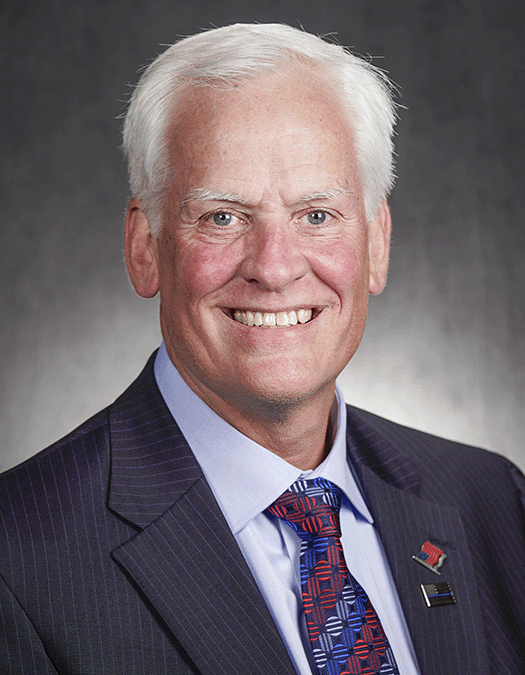
Rep. Tom Sexton
Sponsored bills
Maddy summaryHF 1669 increases the annual funding limit for Minnesota's tax credit supporting sustainable aviation fuel producers. It raises the allocation cap from $2.1 million to $10 million per year for fiscal years 2026 through 2029. This change directly affects businesses producing or using sustainable aviation fuel within Minnesota by expanding the available tax credit. The bill amends Minnesota Statutes section 41A.30 to adjust these funding limits, allowing more financial support for this clean energy initiative. The credit remains available until fiscal year 2030, with unallocated funds expiring after that date.
Maddy summaryHF 12 restricts participation on female-designated sports teams in Minnesota K-12 schools to students identified as female at birth, based on specific medical criteria. It requires students in disputes about sex to provide a physician's statement confirming their sex using three factors: reproductive anatomy, natural testosterone levels, and chromosome analysis. The bill directly affects public and private schools offering girls' sports teams and students seeking to join them. It amends Minnesota education law to take effect July 1, 2025.
Maddy summaryHF 1434 requires commercial websites sharing material harmful to minors (defined as content with sexual depictions lacking artistic value for minors) to verify users are 18+ if 25% or more of the site’s pages contain such material. It mandates age verification using approved methods like commercial databases, prohibits retaining user identifying information, and creates a private right of action for parents to sue violators. The Minnesota Attorney General can enforce the law through civil actions, and commercial entities face $25,000 penalties per violation. This bill directly affects websites meeting the 25% harmful content threshold and targets operators of commercial platforms accessible to Minnesota residents.
Maddy summaryHF 2113 exempts small Minnesota employers with 50 or fewer employees from the state's paid leave requirement. This bill amends Minnesota Statutes 2024, section 268B.01, to explicitly exclude such employers from the paid leave mandate. Small businesses that currently meet the 50-employee threshold will no longer be required to provide paid leave under this law. Employers with 50 or fewer employees may still choose to opt into the paid leave program if they wish. The bill directly affects small business owners and their employees in Minnesota.
Maddy summaryThis bill requires drivers to stop at least 20 feet away from a school bus displaying flashing red lights while children are boarding or exiting. It directly affects all drivers approaching school buses on Minnesota roads, mandating they remain stopped until the red lights cease flashing. The bill also adds a new provision warning drivers that amber lights indicate red lights will soon activate, requiring them to prepare to stop. These changes aim to improve safety for children near school bus stops. The bill is currently pending passage after committee approval.
Maddy summaryThis bill modifies how Minnesota reimburses not-for-profit certified community behavioral health clinics (CCBHCs) for services covered by medical assistance. It establishes a new per-day bundled payment system based on each clinic's specific costs and visit volume, replacing previous payment methods. The bill requires the state to update these rates every two years and includes a quality incentive payment, while also setting up a 60-day appeals process for clinics that disagree with rate adjustments. Additionally, it coordinates payments with managed care plans and outlines procedures for adjusting rates when a clinic's scope of services changes significantly.
Maddy summaryThis bill makes Minnesota's paid family and medical leave program optional for both employers and employees. It allows employers to opt out of the program by submitting a form to the state, with the option to change their decision once every 12 months. Employees of opting-out employers can still participate as self-employed individuals, while all employees retain the ability to opt out individually using a state form. The changes modify existing requirements in Minnesota Statutes chapter 268B to provide this flexibility.
Maddy summaryThis bill establishes a special license plate program for curling enthusiasts in Minnesota, allowing vehicle owners to display "Curl in Minnesota" plates. To qualify, applicants must own a standard passenger vehicle, pay regular registration fees, and contribute at least $30 annually to the Minnesota Curling Association. The collected funds will be used to cover administrative costs and support the maintenance of curling facilities across the state. The program becomes effective on January 1, 2027, and plates can be transferred to another eligible vehicle registered to the same owner.
Maddy summaryThis bill requires Minnesota's legislative auditor to perform a cost-benefit analysis comparing sustainable building standards with traditional construction methods for state-funded projects. The analysis must evaluate four specific green building guidelines: LEED ratings, ASHRAE standards, Energy Star requirements, and the International Green Construction Code. The auditor will submit findings to legislative committee chairs and ranking minority members by January 15, 2027. The bill also allocates one-time funding from the state general fund to cover the cost of conducting this study in fiscal year 2027.