

Maddy summaryThis bill allows Minnesota vehicle owners to pay a prorated registration tax for vehicles not operated on public roads after registration expires. It directly affects owners of unused vehicles who let their registration lapse but don't drive the vehicle for part of the year. The tax is calculated as the full annual fee multiplied by the number of unused months divided by 12. Owners must certify in writing that the vehicle wasn't operated during the unused period when re-registering. This creates a new provision in Minnesota law to adjust registration costs based on actual usage time.
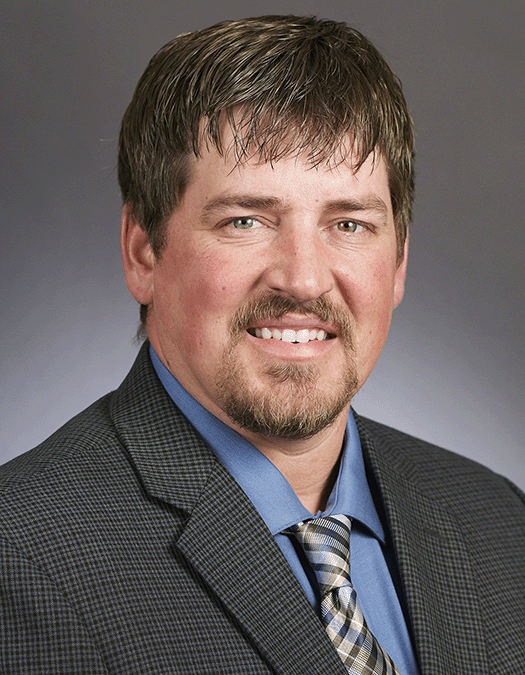
Rep. Nathan Nelson
Sponsored bills
Maddy summaryHF 1003 appropriates $500,000 from the workforce development fund to Independent School District 294 in Houston for its Minnesota Virtual Academy career pathways program, in partnership with Operating Engineers Local 49. The program provides up to five semesters of courses leading to eligibility for the Operating Engineers apprenticeship program. It requires targeted outreach to students of color, Indigenous students, low-income students, and other underserved groups, and mandates an annual report to legislative committees detailing participant demographics, program spending, and recommendations for statewide improvements. This bill specifically supports one school district's program, not a statewide initiative.
Maddy summaryHF 2010 raises Minnesota's age of consent for criminal sexual conduct from 16 to 18 years old in cases where the offender is 22 or older. The bill amends Minnesota Statutes 609.344 and 609.345 to remove consent as a defense and criminalize sexual contact between minors aged 16-17 and partners 22+ years old. It specifically targets situations where the age gap exceeds 36 months (3 years) and the offender holds authority over the minor. The law takes effect August 1, 2025, imposing criminal penalties for violations that previously might have been treated as consensual.
Maddy summaryHF 2384 establishes a grant program to help counties clean up blighted properties and address environmental contamination on tax-forfeited or tax-foreclosed properties they own or hold in trust. The bill appropriates funds for fiscal years 2026-2027, allowing counties to apply for grants to cover remediation costs, testing, monitoring, and fixing unsafe conditions. Counties must submit detailed applications proving property ownership, contamination evidence, blight documentation, and a remediation plan. The Pollution Control Agency will award grants, prioritizing counties' ability to fund projects without grants and ensuring statewide distribution.
Maddy summaryHF 2425 provides one-time funding from the state general fund for Minnesota counties to implement new human services systems and modernize information technology. It allocates money for counties to cover costs related to service delivery transformation (Section 1) and IT infrastructure projects, including systems that interface with the Department of Human Services (Section 2). The bill also funds specific improvements to the social services information system for the Department of Children, Youth, and Families (Section 3), with funds available until June 30, 2027. Counties will receive grants based on factors like the number of people served, and the commissioner must consult with county associations when distributing funds. This bill directly affects all Minnesota counties operating human services agencies.
Maddy summaryHF 1677 appropriates a specific amount from the general fund for Minnesota's Developing Markets for Continuous-Living Cover Crops Program. The bill directs the Commissioner of Agriculture to use these funds to support market development for soil-protecting cover crops (plants grown to prevent erosion and improve soil health) and requires two annual reports detailing fund usage and program achievements by February 1, 2026, and 2027. The funding is a one-time appropriation available until June 30, 2028, with up to 6.5% allowed for administrative costs. This bill directly affects the Minnesota Department of Agriculture, which administers the program, and supports farmers adopting continuous-living cover crop practices.
Maddy summaryThis bill requires Minnesota's wildlife commissioner to establish an annual open season for wolf hunting after wolves are delisted from federal protection under the Endangered Species Act. It directly affects state wildlife managers, hunters, and livestock owners by creating a mandatory yearly process for setting hunting seasons. Key provisions include requiring the commissioner to consult with the agriculture commissioner and USDA's animal health agency before determining seasons, and to review data on wolf attacks on livestock and human conflicts. The bill mandates public comment opportunities for all proposed seasons, ensuring transparency in the annual decision-making process.
Maddy summaryHF 2447 establishes a dedicated account for financial assurance funds collected from gas development permits. It requires the commissioner of natural resources to deposit these funds into an account managed by the State Board of Investment, with earnings credited back to the account. The funds can only be used for financial assurance purposes related to specific gas permits under chapters 93 and 103I of Minnesota Statutes. This bill directly affects gas development permit applicants and the commissioner's office, creating a new mechanism for handling and investing these required funds.
Maddy summaryHF 2468 appropriates $500,000 for fiscal year 2026 and $500,000 for fiscal year 2027 from the general fund to support mental health initiatives in Minnesota's construction industry. The funds, available until June 30, 2027, are designated for outreach, education, stigma reduction programs, and worksite strategies to prevent suicide. They can be used for grants to industry groups and developing resources targeting construction workers. This bill directly affects construction industry workers by funding concrete mental health support services through state-administered programs.
Maddy summaryHF 1169 directs Minnesota's Commissioner of Children, Youth, and Families to create a plan by January 2026 to reduce paperwork in child protection cases. The plan must involve counties, local agencies, Tribal governments, and include specific changes, an implementation timeline, and ongoing input procedures to benefit foster care providers, tribes, counties, and child placement agencies. The bill also provides funding to improve the Social Services Information System and appropriates money for these efforts. This focuses on streamlining administrative processes without changing child protection standards.