

Maddy summaryHB 4830 amends Michigan's Drain Code to update compensation and expense reimbursement rules for board members reviewing drain projects. It requires their pay and mileage to match county commissioners' rates (or be set by the drain commissioner if commissioners aren't paid per diem), with all costs covered by the drainage district. This affects local drain commissioners and drainage districts responsible for funding these boards. The bill focuses on procedural adjustments to board member payments, not changes to drain project requirements.
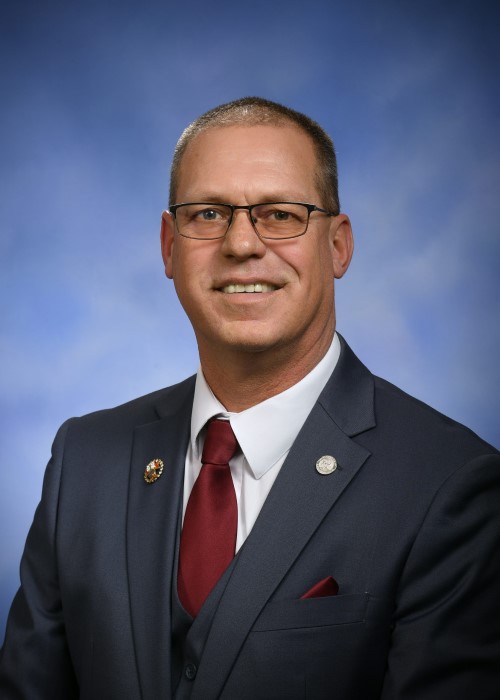
Rep. Greg Alexander
Sponsored bills
Maddy summaryHB 4831 amends Michigan's Drain Code to update procedures for changing drainage district boundaries, affecting counties, landowners, and municipalities liable for drainage assessments. It requires petitions signed by landowners (or municipalities) to add/remove counties from a district, followed by a drainage board meeting where boundaries are reviewed and cost-sharing between counties is determined. The bill specifies notice requirements for landowners and municipalities, and outlines how revised boundaries must be documented and filed with county officials. This procedural update streamlines boundary adjustments for public health, convenience, or welfare needs without altering drainage funding or service obligations.
Maddy summaryHB 4803 amends Michigan's concealed carry law to expand exemptions from license requirements for specific military personnel. It waives the need for a concealed pistol license for active-duty members of the U.S. Army, Air Force, Navy, or Marine Corps while on duty, National Guard members during duty or drills, and Canadian law enforcement officers. The bill also adds exemptions for National Guard military police in "title 32 status" and clarifies existing exemptions for military-related activities. These changes directly affect eligible military personnel, law enforcement, and security personnel who carry concealed weapons during official duties. The bill modifies existing law (MCL 28.432a) without altering the core licensing system for the general public.
Maddy summaryThis bill proposes a constitutional amendment requiring immediate removal from office for any elected public officer convicted of a felony during their term. It would amend Michigan's state constitution to automatically vacate the position upon a felony conviction, bypassing current processes that may allow officers to remain in office pending appeals. The change directly affects elected officials like state legislators, mayors, and county commissioners who face felony convictions while serving. The amendment must be approved by voters at the next general election to take effect.
Maddy summaryHB 4047 creates a new legal cause of action allowing individuals to sue media organizations that falsely depict them engaging in sexual conduct. The law directly affects media companies publishing such false content and individuals whose reputations were harmed by the inaccurate depictions. It establishes specific procedures for filing these lawsuits within the civil court system. The bill became law on August 26, 2025, after approval by the Governor.
Maddy summaryHB 4048 adds a new sentencing guideline for distributing intimate deepfake sexual images with aggravating circumstances, classifying it as a Class F felony punishable by up to 3 years in prison. This directly affects individuals convicted of disseminating such deepfakes, particularly those with prior offenses under Michigan law. The bill amends sentencing guidelines in Chapter XVII of the Michigan Penal Code to specifically address this crime, establishing a clear penalty framework for courts to apply. It became effective immediately upon the Governor's approval on August 26, 2025.
Maddy summaryThis resolution (HR 156) declares August 2025 as "Water Quality Month" in Michigan. It does not create new laws or policies but symbolically recognizes the importance of Michigan's water resources, including the Great Lakes, to the state's identity, economy, and environment. The resolution encourages public awareness and community efforts to protect water quality, without imposing any requirements or funding changes. It directly affects all Michiganders by designating a month for statewide recognition of water stewardship.
Maddy summaryHB 4783 amends Michigan's Natural Resources and Environmental Protection Act to grant the Upper Peninsula Natural Resources Commission authority over fish management decisions in the Upper Peninsula. The bill transfers decision-making power from the state Department of Natural Resources to this regional commission for waters including Lake Superior, the St. Marys River, and all inland waters in the Upper Peninsula. Key provisions revise definitions and processes related to fish classification and management, specifically updating sections that govern trout streams and other water bodies. This change directly affects the commission's role in regulating fishing practices and protecting fish species within the designated Upper Peninsula waters.
Maddy summaryHB 4789 expands Michigan's "Right to Try Act" to specifically cover personalized experimental treatments based on a patient's genetic data (like gene therapies or custom vaccines). It allows eligible patients with advanced, life-threatening, or severely debilitating illnesses - who have exhausted all FDA-approved treatments - to access these individualized treatments after obtaining written consent from their physician and providing detailed risk disclosures. The bill clarifies that manufacturers aren't required to provide such treatments but may charge for production costs, and it prohibits health insurers from denying coverage solely for recommending these treatments. This affects patients with serious conditions who qualify under the new definition of "individualized investigational treatment" and their healthcare providers.
Maddy summaryHB 4786 creates the Upper Peninsula Natural Resources Commission under Michigan's Natural Resources and Environmental Protection Act. The commission, appointed by the governor from lists provided by UP legislators, will make rules specifically about game and sport fish management that affect only the Upper Peninsula. Members serve two-year terms without pay but receive expense reimbursement. This bill requires three related bills (HB 4783, 4784, and 4785) to also pass before taking effect.