

Maddy summaryHB 4784 gives Michigan's Upper Peninsula Natural Resources Commission (UP Commission) new authority to manage wildlife specifically in the Upper Peninsula. It authorizes the UP Commission to establish the first hunting seasons for moose and wolves in the region, while requiring all decisions to follow scientific wildlife management principles. The bill also grants the UP Commission exclusive authority over game species that primarily affect the Upper Peninsula or have minimal impact outside the region. This change directly affects the UP Commission's management decisions, hunters pursuing moose or wolves in the UP, and wildlife conservation efforts focused on the Upper Peninsula. The law mandates public hearings and scientific review before implementing hunting regulations.
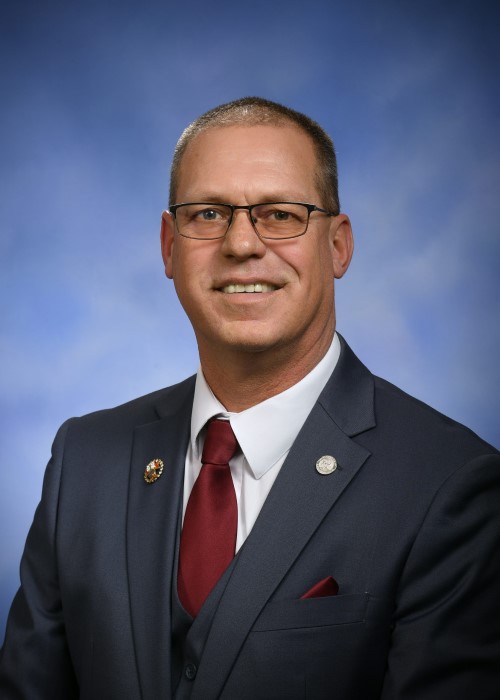
Rep. Greg Alexander
Sponsored bills
Maddy summaryHB 4785 creates the Upper Peninsula natural resources commission (UP commission) by amending Michigan's Natural Resources and Environmental Protection Act to define it as a new entity. The bill also amends section 40102 to authorize the UP commission to issue orders regarding deer or elk feeding, a specific wildlife management issue. This commission will provide a regional decision-making body for natural resource matters in the Upper Peninsula, particularly concerning wildlife impacts on local ecosystems. The bill is tied to three other related bills (HB 4784, HB 4786, and HB 4783), requiring all to pass together.
Maddy summaryThis constitutional amendment (HJR K) proposes allowing either Michigan legislative house to suspend a member's salary or expense allowance by a two-thirds vote when the member acts unethically or is excessively absent from regular sessions. It amends Article IV, Sections 12 and 16 of the state constitution to establish this process, requiring the house to document the suspension reason in its journal with voting records. The change directly affects state legislators who face disciplinary action for misconduct or attendance issues. If approved, this would give legislative bodies a formal mechanism to withhold compensation for specific violations, rather than relying solely on expulsion.
Maddy summaryHB 4081 allows counties and municipalities in Michigan to set higher limits than the current state cap on the number of separate land parcels created when dividing a single property. It amends state law (MCL 560.108) that previously limited most land divisions to 12 parcels. The bill directly affects local governments, developers, and property owners by giving communities more flexibility to manage land use and development density. This change removes the state-imposed cap, enabling local authorities to establish their own parcel limits based on community needs.
Maddy summaryHB 4748 prohibits interference with lawful hunting or fishing in Michigan by banning specific disruptive acts. It explicitly forbids using devices like drones to alter animal behavior, blocking hunters, recording individuals with intent to harass, or tampering with equipment. Violations carry fines up to $2,500 or up to one year in jail for repeat offenses, plus potential revocation of hunting/fishing licenses. This law directly affects hunters, anglers, and anyone engaging in activities that disrupt others’ lawful wildlife pursuits.
Maddy summaryHB 4756 amends Michigan's Capitol Historic Site Act to allow licensed individuals (including those with out-of-state permits) to carry concealed pistols inside the state capitol building. It specifically requires that such individuals present their concealed pistol license to capitol security officers or legislative sergeants at arms upon request. This bill directly affects licensed gun carriers who currently face restrictions within the capitol building. The change removes the existing prohibition on concealed carry in the capitol, aligning with the commission's role in managing the site without restricting licensed carry.
Maddy summaryThis is a ceremonial resolution, not a substantive bill. It declares July 26, 2025, as "National Disability Independence Day" in Michigan to commemorate 35 years since key federal disability rights progress. The resolution encourages all Michigan residents to recognize and celebrate the contributions and achievements of people with disabilities. It directly affects Michigan residents by symbolically acknowledging the state's disability community and their ongoing journey toward accessibility and inclusion. The resolution has no binding policy changes or funding provisions.
Maddy summaryThis House Resolution (HR 147) formally declares August 7, 2025, as Purple Heart Day in Michigan. It commemorates the anniversary of the Purple Heart medal's founding (August 7, 1782) and honors military personnel wounded or killed in combat. The resolution directs the state to recognize Purple Heart recipients' sacrifices and expresses appreciation through the Michigan Department of Military and Veterans Affairs. As a ceremonial resolution, it has no legal effect but serves to publicly honor veterans.
Maddy summaryThis resolution (HR 146) symbolically declares August 3-9, 2025, as National Health Center Week in Michigan. It recognizes Michigan's community health centers, which serve over 675,000 residents across 450+ sites and provide primary care, behavioral health, and other services. The resolution honors these centers' role in improving health outcomes, supporting local economies ($1.7 billion impact), and addressing healthcare access barriers statewide. As a procedural resolution, it does not create new policy or alter existing law.
Maddy summaryHB 4721 creates tax credits for biodiesel sales and production in Michigan, effective 2025-2030. Retail fuel dealers receive credits of $0.02-$0.07 per gallon for selling biodiesel blends (6-9%, 10-19%, or 20%+), while biodiesel producers get $0.02 per gallon. Total credits are capped at $16 million annually for retailers and $2 million for producers, with excess claims distributed proportionally. The bill directly affects Michigan fuel retailers and biodiesel producers by reducing their income tax liability based on specific blend volumes sold or produced.