

Maddy summaryHB 5061 requires bars and restaurants serving alcohol to provide mandatory server training to all employees within 60 days of hire. The training covers identifying intoxication signs, responsible ID verification, handling over-service, and legal consequences of violations - specifically addressing how to prevent sales to visibly intoxicated patrons or minors. It creates a "responsible vendor" designation for licensees that complete the training and maintain a clean record, with supervisors trained on every shift during service hours. This bill directly affects all licensed establishments serving alcohol in Michigan, aiming to reduce prohibited sales through standardized education. The title's reference to "bouncers" appears incorrect; the bill focuses on server training, not positional asphyxiation prevention.
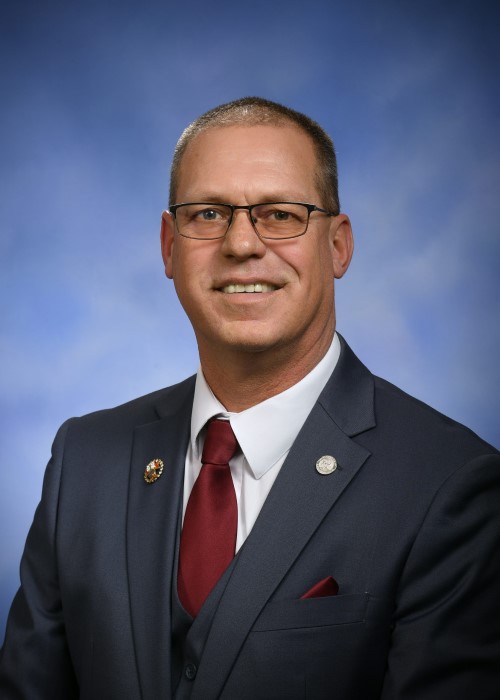
Rep. Greg Alexander
Sponsored bills
Maddy summaryThis resolution symbolically declares September 22-26, 2025, as Farm Safety and Health Week in Michigan. It recognizes the state's agricultural workforce (including approximately 44,000 farms) and aligns with the national observance focused on safety practices like equipment handling, rural roadway safety, and youth protection on farms. As a ceremonial resolution, it does not create new laws or directly affect any individuals or entities. The declaration serves to honor agricultural workers and promote safety awareness during peak farming season.
Maddy summaryHB 4971 amends Michigan's Use Tax Act to clarify that promotional merchandise (including items like baby diapers) transferred to out-of-state customers via redemption offers qualifies for resale exemptions. It specifically updates Section 4(c)(i) to include promotional merchandise shipped outside Michigan as exempt from use tax, directly affecting retailers and businesses selling such items to out-of-state customers. The key mechanism expands existing resale exemptions to cover promotional goods sent to customers in other states, aligning with how businesses handle cross-state promotions. This change does not create new exemptions but clarifies existing rules for promotional sales. (Note: The bill title mentions "baby diapers," but the actual amendment applies broadly to all promotional merchandise, not specifically diapers.)
Maddy summaryHB 4972 adds baby diapers to Michigan's list of sales tax-exempt items under the General Sales Tax Act (MCL 205.54a). The bill specifically exempts the sale of tangible personal property (like diapers) from sales tax when sold to consumers. This change directly affects retailers selling diapers and consumers purchasing them, as they will no longer pay state sales tax on these items. The exemption aligns with existing tax rules for certain essential goods but specifically targets diapers as a new category. The bill amends Section 4a(1)(a) of the General Sales Tax Act to include this provision.
Maddy summaryHB 4664 prohibits blocking state highways during assemblies of individuals, amending Michigan's existing traffic law (MCL 257.676b). It directly affects protesters or assembly participants who obstruct highway traffic, making such obstruction a misdemeanor offense. The key provision adds a specific penalty for blocking highways while engaging in group assemblies, moving beyond general traffic violations. This law clarifies that highway obstruction during protests is a criminal act, not merely a traffic infraction.
Maddy summaryThis resolution declares September 19, 2025, as POW/MIA Recognition Day in Michigan. It commemorates Michigan's service members missing in action or held as prisoners of war since World War II, honoring their sacrifice and the state's commitment to finding and repatriating them. The resolution does not create new laws or obligations but serves as a ceremonial observance.
Maddy summaryHB 4349 allows Michigan cities to contract with private companies for the maintenance or improvement of private roads within their boundaries. This change directly affects cities seeking to partner with outside contractors for road work on privately owned streets, removing a prior restriction. The bill amends the Municipal Home Rule Act (MCL 117.1-117.38) by adding Section 5l, granting cities this new authority. The legislation passed unanimously in the House with immediate effect on September 17, 2025.
Maddy summaryHB 4906 requires consumer debt collection agencies operating in Michigan to maintain a separate trust account for client funds, depositing all collected money within three banking days. Agencies based in Michigan must keep this account within the state, while out-of-state agencies may choose to hold it in Michigan or their home state. The trust account must be clearly labeled, kept distinct from the agency’s regular business accounts, and can only be used to pay clients or cover costs advanced for their accounts. This bill directly affects collection agencies handling consumer debt in Michigan by standardizing where and how client funds must be held.
Maddy summaryHB 4900 modifies Michigan's continuing education requirements for chiropractors renewing their licenses. It mandates that chiropractors complete two two-day approved conferences every two years, covering topics related to chiropractic practice. The bill also requires that part of this training include specific modules on pain and symptom management and certain legal provisions added in 2009. Additionally, it allows chiropractors to use courses from the Federation of Chiropractic Licensing Board or equivalent programs to meet the conference requirement, with the board setting rules for equivalency.
Maddy summaryHB 4916 amends Michigan's licensure requirements for architects, professional engineers, and surveyors by updating the wording of Section 2004 in the Occupational Code. The bill clarifies existing standards without changing the core requirements: applicants must still provide proof of education, pass exams, demonstrate professional experience, and maintain good moral character. For example, architects must show completion of a professional degree and pass a licensing exam, while engineers and surveyors must document 8 years of experience (including up to 5 years of education) and pass relevant exams. This is a technical language update to the current law, not a policy change affecting the qualifications or process for these professions. The bill is pending in the Education and Workforce Committee after introduction on September 11, 2025.