

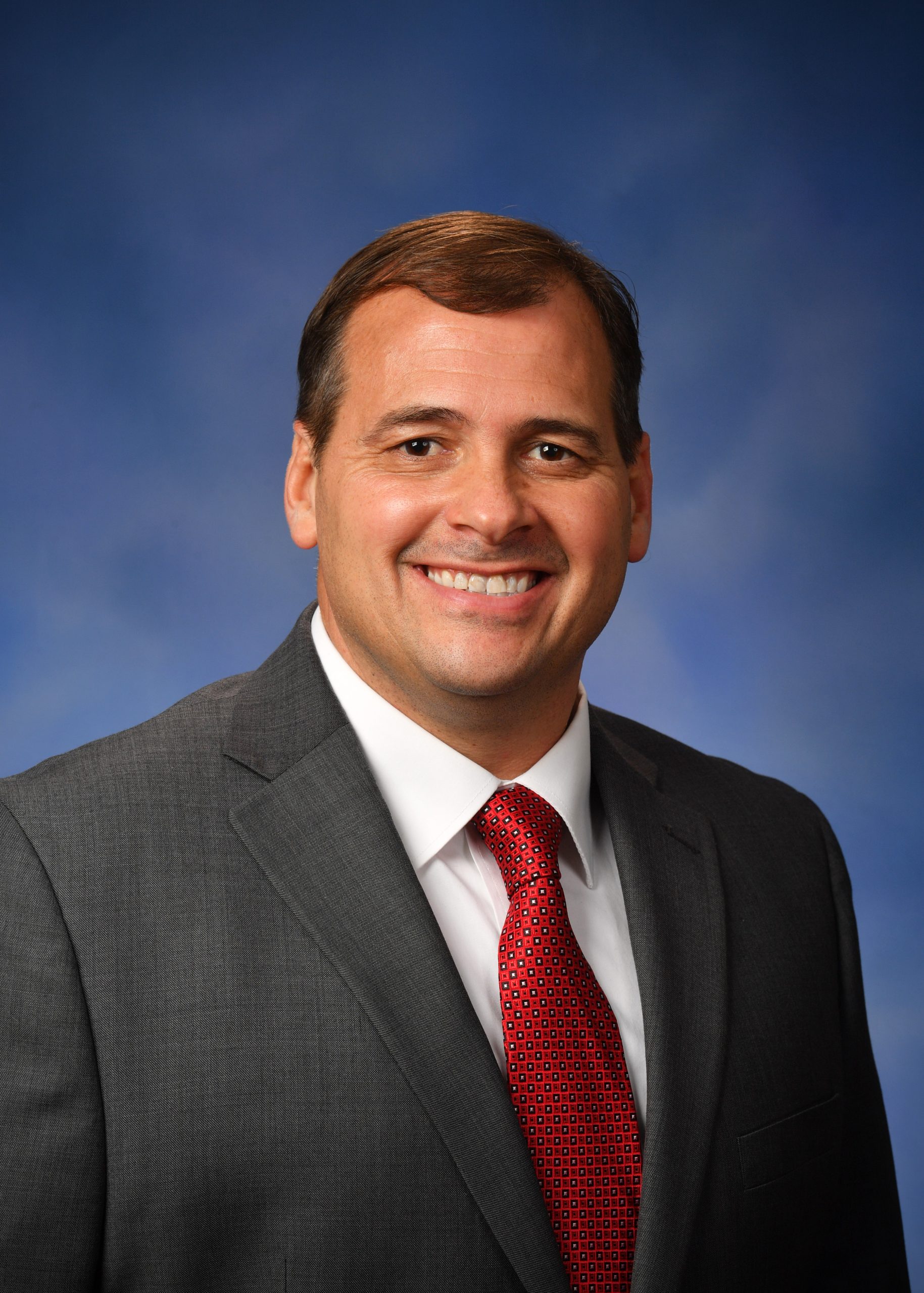
Photo of Timmy Beson
R Michigan House · District 96 On the 2026 ballot

Rep. Timmy Beson

Compare
Total votes
2,872
all sessions
Attendance
99%
20 missed
Near the chamber average
With party
95%
of cast votes
Near the chamber average
Bipartisan score
3%
crosses aisle rarely
Near the chamber average
Sponsored
635
bills & resolutions
Near the chamber average
Committees
1
assignment
635 bills and resolutions

Sponsored bills

Total
635
Primary
31
Co-sponsor
604
This page
635
matching current filters
Primary HB 5164
In committee · Michigan House · Lead sponsor
Crimes: firearms; transporting or possessing a firearm in or upon motor vehicle; modify. Amends sec. 227d of 1931 PA 328 (MCL 750.227d).

Maddy summaryHB 5164 modifies Michigan law to regulate transporting firearms and certain air guns in moving vehicles. It prohibits carrying a firearm (other than a pistol) or a pneumatic gun expelling metal BBs/pellets over .177 caliber in a moving vehicle unless the weapon is unloaded and stored in one of four ways: disassembled, in a case, in the trunk, or inaccessible from inside the vehicle. Violating this would be a misdemeanor punishable by up to 90 days in jail or a $100 fine. The bill directly affects drivers transporting these items in vehicles while operating them, with no exception for pistols.

In committee Nov 4, 2025 0 co-sponsors
Co-sponsor HR 195
Passed · Michigan House · Co-sponsor
A resolution to oppose the proposed Michigan Health Education Standards Framework and urge the Michigan Department of Education to redraft or the Michigan State Board of Education to reject these standards.

Maddy summaryHR 195 is a resolution opposing Michigan's proposed Health Education Standards Framework. It urges the Michigan Department of Education to redraft the standards or the Michigan State Board of Education to reject them, specifically requesting the exclusion of content related to gender identity, gender expression, and sexual orientation from health education standards. The resolution cites parental rights and existing law requiring local control and opt-out provisions for sex education as justification. It directly targets state education officials, not students or schools, and serves as a non-binding request for policy revision.

Passed Nov 4, 2025 1 co-sponsor
Co-sponsor HB 4254
Passed · Michigan House · Co-sponsor
Animals: care and treatment; conducting of research or training activities on dogs in a manner that causes pain or distress; prohibit. Amends secs. 2674, 2675 & 2678 of 1978 PA 368 (MCL 333.2674 et seq.); adds secs. 2670 & 2675a & repeals secs. 2672 & 2673 of 1978 PA 368 (MCL 333.2672 & 333.2673).

Maddy summaryHB 4254 prohibits public bodies (like state agencies, universities, or local governments) from using dogs in research or training activities that cause pain or distress. It specifically bans methods that would cause death, injury, fear, trauma, or invasive procedures (such as surgery), with exceptions for veterinary training with owner consent and routine procedures like spaying/neutering. The bill establishes civil fines of $1,000-$5,000 per dog per violation for noncompliance, enforced by county prosecutors or the attorney general. Named "Queenie's Law," it amends Michigan's Public Health Code to add these protections for dogs used in experimental purposes.

Passed Oct 30, 2025 1 co-sponsor
Co-sponsor HB 4509
Passed · Michigan House · Co-sponsor
Health occupations: audiologists; audiologist and speech language pathologist licensure compact; provide for. Amends secs. 16801 & 17601 of 1978 PA 368 (MCL 333.16801 & 333.17601) & adds secs. 16187, 16804 & 17603a.

Maddy summaryHB 4509 creates a licensure compact for audiologists and speech-language pathologists in Michigan, allowing professionals licensed in participating states to practice across state lines without obtaining separate Michigan licenses. This directly affects audiologists and speech-language pathologists seeking to work in multiple states, particularly those in states that have joined the compact. The bill amends Michigan law to establish reciprocal licensing agreements, adding new provisions (sections 16187, 16804, and 17603a) to facilitate this process. It does not change patient care standards but streamlines professional mobility for these healthcare providers. The bill passed unanimously in the Michigan House with immediate effect on October 30, 2025.

Passed Oct 30, 2025 1 co-sponsor
Co-sponsor HB 5117
In committee · Michigan House · Co-sponsor
Liquor: licenses; quota for certain on-premises licenses; remove. Amends sec. 533 of 1998 PA 58 (MCL 436.1533).

Maddy summaryHB 5117 removes population-based quotas for "specially designated merchant" liquor licenses in Michigan. It eliminates the requirement that only one such license may be issued per 1,000 residents (or fraction thereof) for certain applicants, including large grocery stores meeting size/sales criteria, pharmacies, and gas station retailers with motor fuel licenses. The bill also clarifies that licenses issued under these exemptions cannot be transferred to new locations. This change directly affects businesses seeking new licenses or renewing existing ones, particularly those operating large retail food establishments or combining alcohol sales with other services.

In committee Oct 28, 2025 1 co-sponsor
Co-sponsor HB 5118
In committee · Michigan House · Co-sponsor
Individual income tax: credit; work opportunity tax credit for qualified employees; provide for. Amends 1967 PA 281 (MCL 206.1 - 206.847) by adding secs. 279 & 679. TIE BAR WITH: HB 5119'25

Maddy summaryHB 5118 would create a Michigan income tax credit for employers hiring residents from specific federal "targeted groups" (like veterans or long-term unemployed individuals). The credit equals 50% of the federal work opportunity tax credit amount, applied to qualified wages paid to Michigan residents certified by the state unemployment agency as part of these groups. It applies to tax years beginning January 1, 2026, and cannot exceed an employer's total tax liability for that year. The bill directly affects Michigan employers (excluding tax-exempt organizations) who hire eligible employees meeting federal and state certification criteria.

In committee Oct 28, 2025 1 co-sponsor
Co-sponsor HB 5119
In committee · Michigan House · Co-sponsor
Individual income tax: withholding requirements; work opportunity withholdings tax credit for certain tax exempt organizations; provide for. Amends 1967 PA 281 (MCL 206.1 - 206.847) by adding sec. 714. TIE BAR WITH: HB 5118'25

Maddy summaryHB 5119 allows tax-exempt organizations in Michigan (like nonprofits) to claim a state tax credit equal to 50% of the federal Work Opportunity Tax Credit (WOTC) they earn for hiring employees from specific targeted groups. The credit applies to wages paid to employees certified by Michigan’s unemployment agency as members of these groups, starting in tax years beginning January 1, 2026. Employers must claim this credit on their annual tax returns, and it can only offset state income tax withholding - any excess credit isn’t refunded. The bill directly affects tax-exempt employers hiring eligible employees, aligning Michigan’s credit with federal WOTC rules.

In committee Oct 28, 2025 1 co-sponsor
Co-sponsor HB 4432
In committee · Michigan House · Co-sponsor
Individual income tax: credit; qualified volunteers credit; create. Amends 1967 PA 281 (MCL 206.1 - 206.847) by adding sec. 282.

Maddy summaryHB 4432 creates a $2,500 refundable state income tax credit for qualified volunteer emergency medical services (EMS) personnel in Michigan, effective for tax years beginning January 1, 2025. To qualify, volunteers must serve at least 10 hours monthly with a life support agency (like EMS organizations), receive no hourly wage or salary, and only be reimbursed for reasonable expenses or receive customary benefits. The credit requires a signed verification statement from the agency confirming the volunteer’s service hours, compliance with training standards, and non-salary compensation. This directly affects unpaid EMS volunteers who meet these criteria, reducing their state tax liability or providing a refund if the credit exceeds their tax bill.

In committee Oct 28, 2025 1 co-sponsor
Co-sponsor HB 4691
Passed · Michigan House · Co-sponsor
Criminal procedure: sentencing; mandatory sentencing for certain crimes in the vehicle code; require. Amends sec. 602a of 1949 PA 300 (MCL 257.602a). TIE BAR WITH: HB 4690'25

Maddy summaryHB 4691 amends Michigan's Vehicle Code to increase penalties for drivers who flee or elude police officers. It creates four tiers of felony sentencing based on the severity of the violation: fourth-degree (up to 2 years for basic evasion), third-degree (1-5 years if collision occurs or in low-speed zones), second-degree (2-10 years for serious injury or prior convictions), and first-degree (5-15 years if death results). The bill specifically defines "serious injury" to include loss of limbs, brain damage, or coma. This directly affects drivers who fail to stop for police in uniform with marked vehicles, with penalties escalating based on outcomes like collisions, injuries, or prior offenses.

Passed Oct 28, 2025 1 co-sponsor
Co-sponsor HB 4690
Passed · Michigan House · Co-sponsor
Criminal procedure: sentencing; mandatory sentencing for certain crimes; require. Amends sec. 479a of 1931 PA 328 (MCL 750.479a). TIE BAR WITH: HB 4691'25

Maddy summaryHB 4690 mandates fixed prison sentences for certain violent or gun-related crimes by amending Michigan's sentencing law (MCL 750.479a). It directly affects defendants convicted of these specific offenses, as judges must now impose predetermined terms instead of exercising discretion. The key provision requires minimum sentence lengths for these cases, removing judicial flexibility in sentencing. This policy change applies to new convictions under the amended law.

Passed Oct 28, 2025 1 co-sponsor
Showing 161 to 170 of 635 bills
Previous 1 … 16 17 18 … 64 Next