

Maddy summaryHB 4873 mandates annual state funding of $610 million for Michigan's Great Start Readiness Program (GSRP), beginning in fiscal year 2026. This program provides early childhood education and care for preschool-aged children, primarily affecting low-income families and communities with limited access to early learning services. The bill requires the legislature to appropriate this specific amount each year, guaranteeing stable funding for GSRP as defined under existing law (MCL 388.1632d). It does not create new eligibility rules but ensures consistent financial support for the existing program.
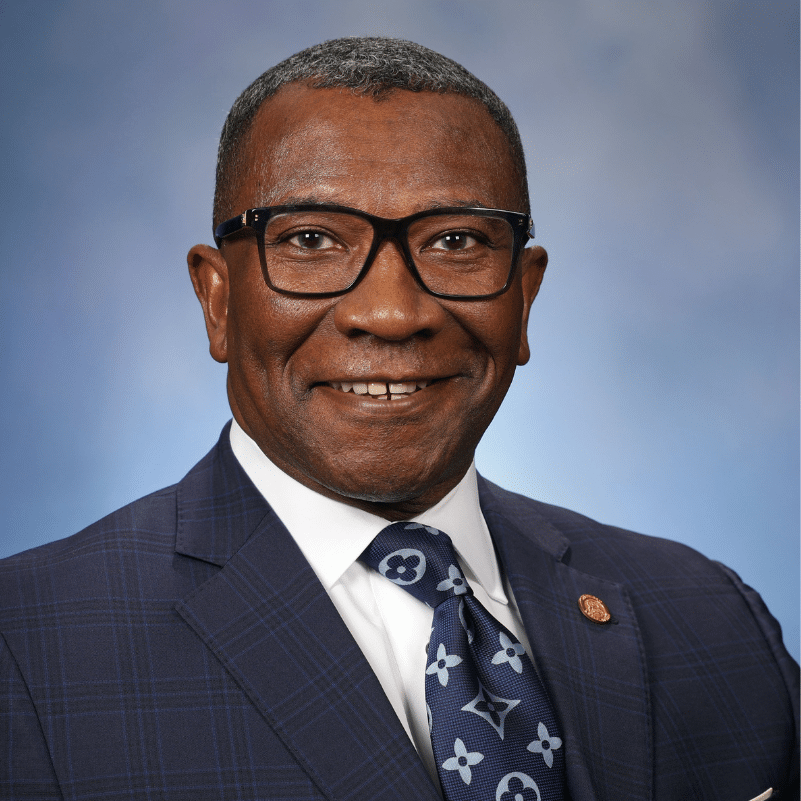
Rep. Amos O'Neal
Sponsored bills
Maddy summaryHB 4871 increases Michigan's funding for free school meals, allocating up to $200 million for the 2024-2025 school year to cover costs not reimbursed by federal programs. It requires participating public schools (serving pre-K-12) to provide free breakfast and lunch to all students, maximize federal reimbursement through the Community Eligibility Provision (CEP), and collect family income data to determine eligibility. Schools must also offer accommodations for dietary needs like gluten-free, vegetarian, and allergy-specific meals upon request. This bill directly affects Michigan public school districts by changing how they receive state funding to support universal free meal programs.
Maddy summaryHB 4868 creates supplemental funding for Michigan school districts to support English language learners (ELLs) starting in the 2026 fiscal year. To qualify, districts must administer the WIDA ACCESS or WIDA Alternate ACCESS proficiency test to ELLs. Funding is distributed based on test scores: 75% of the target foundation allowance for scores 1.0-1.9, 50% for 2.0-2.9, and 35% for 3.0-3.9. This directly affects school districts serving ELLs who meet the assessment requirements under Michigan’s School Code.
Maddy summaryThis resolution (HR 164) addresses the July 2025 detentions of 16 Hmong and Laotian refugees in Michigan by U.S. Immigration and Customs Enforcement (ICE), who were unexpectedly taken into custody during routine check-ins and later deported to Laos without adequate notice or due process. It demands federal transparency regarding the legal basis for these detentions, urges ICE to provide timely legal counsel and family notification for detainees, and calls for case-by-case reviews of individuals with strong Michigan ties. The resolution specifically highlights concerns about rapid transfers across facilities and the lack of a U.S.-Laos repatriation agreement requiring travel documents. It is directed to the U.S. Department of Homeland Security and Michigan’s congressional delegation, seeking improved oversight and humane treatment.
Maddy summaryHB 4811 provides supplemental funding to Michigan state departments and agencies for the 2025 fiscal year, specifically allocating resources for grants supporting finance, human resources, and information technology operations. This bill directly affects state agencies that manage these operational functions by authorizing additional financial support for their day-to-day administrative needs. The key mechanism is creating a supplemental appropriation act that adjusts existing budgets to cover these specific operational grants, ensuring agencies have necessary funding for critical infrastructure and personnel support during the fiscal year ending September 30, 2025.
Maddy summaryHB 4810 is a supplemental appropriations bill that allocates additional state funding for grants supporting finance, human resources, and information technology operations across Michigan state departments and agencies. It creates a new funding mechanism specifically for these operational grants during the 2025 fiscal year (ending September 30, 2025). The bill directly affects state agencies requiring resources for core administrative functions, such as payroll systems, data management, and financial reporting. It does not create new programs but supplements existing budgets to cover these specific operational costs. The bill was introduced on August 26, 2025, and referred to the Appropriations Committee for further review.
Maddy summaryHB 4812 requires Michigan's Department of Corrections to provide prisoners with written materials about voter registration and election processes before their release on parole or after completing their sentences. Specifically, it mandates that the department include details on how to register to vote, vote in person, or request absentee ballots, along with regular election dates. The bill also directs the department to assist prisoners in obtaining essential identification documents (like those needed for driver's licenses or state ID cards) and creates a "reentry success fund" to cover related costs. This applies to all prisoners transitioning from incarceration to community life who are eligible for such identification.
Maddy summaryHB 4820 requires state agencies to first offer surplus motor vehicles to foster youth aged 16 or older in transition programs before selling them to the public. This applies to all surplus vehicles owned by state agencies and uses a voucher system for the initial offer. The bill amends Section 267 of Michigan's Management and Budget Act to implement this requirement. It directly affects eligible foster youth seeking affordable transportation and state agencies handling vehicle disposal.
Maddy summaryHB 4047 creates a new legal cause of action allowing individuals to sue media organizations that falsely depict them engaging in sexual conduct. The law directly affects media companies publishing such false content and individuals whose reputations were harmed by the inaccurate depictions. It establishes specific procedures for filing these lawsuits within the civil court system. The bill became law on August 26, 2025, after approval by the Governor.
Maddy summaryHB 4048 adds a new sentencing guideline for distributing intimate deepfake sexual images with aggravating circumstances, classifying it as a Class F felony punishable by up to 3 years in prison. This directly affects individuals convicted of disseminating such deepfakes, particularly those with prior offenses under Michigan law. The bill amends sentencing guidelines in Chapter XVII of the Michigan Penal Code to specifically address this crime, establishing a clear penalty framework for courts to apply. It became effective immediately upon the Governor's approval on August 26, 2025.