

Maddy summaryThis is a symbolic House resolution (not a binding law) reaffirming support for the existing 22nd Amendment, which limits U.S. presidents to two terms. It does not change any law or affect any individuals, as the two-term limit has been part of the Constitution since 1951. The resolution states that all presidents since its ratification have respected the limit and rejects any efforts to undermine or weaken the amendment. It is a non-binding statement of congressional support, not a new policy or legislative action.
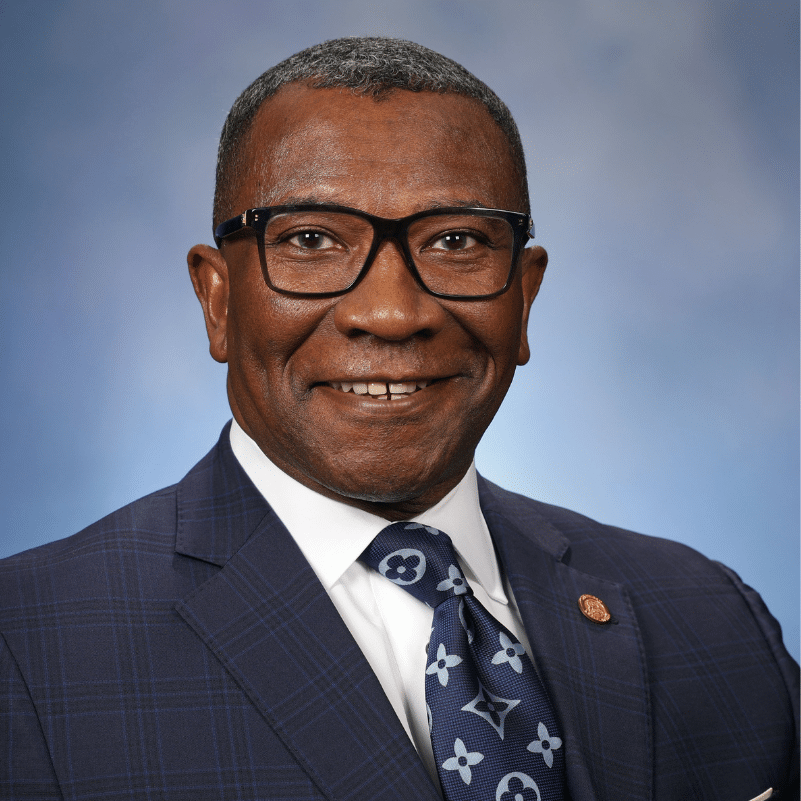
Rep. Amos O'Neal
Sponsored bills
Maddy summaryThis House resolution (HR 152) opposes the Trump administration's actions that would terminate federal workers without just cause and eliminate their right to collectively bargain. It specifically targets executive orders from March 2025 that banned collective bargaining for nearly a million federal employees. The resolution, introduced by Rep. Weiss and referred to the Government Operations Committee, is a symbolic statement urging the administration to cease these actions. It does not create new law but expresses legislative disapproval of policies affecting federal workers' job security and labor rights.
Maddy summaryHB 4758 requires Michigan Works agencies to create teams providing job transition services to two groups: individuals who lost federal jobs involuntarily between January 2025 and January 2027 (dislocated federal employees), and veterans. The bill mandates these teams to analyze job matches with public employers, assess transferable skills, and refer individuals to both public and private employers needing staff. It also requires assistance with filing for unemployment benefits under Michigan’s existing employment security system. The law applies specifically to Michigan Works agencies and public employers like state/local governments, schools, and community colleges. This bill creates a new coordination framework but does not establish new benefits or funding.
Maddy summaryHB 4759 encourages public employers (like state agencies, cities, schools, and community colleges) to use an expedited hiring process for dislocated federal employees who are referred through the state's reemployment services program. The bill requires public employers receiving such referrals to prioritize these candidates, though it does not mandate hiring. Key provisions include defining "public employer" broadly and specifying that this process must follow existing constitutional hiring rules for state positions. It does not override other laws but depends on another bill (HB 4758) being enacted first. The measure directly affects dislocated federal workers seeking new jobs and public employers hiring for open positions.
Maddy summaryThis resolution urges the federal government to maintain funding and reinstate staff for the Low Income Home Energy Assistance Program (LIHEAP) while negotiating the "One Big Beautiful Bill Act." It directly affects Michigan residents who rely on the state's Home Heating Credit Program, which provided assistance to 248,765 Michiganders in 2022 - including low-income families, seniors, and people with disabilities - by helping cover heating costs. The resolution highlights that proposed federal budget cuts to LIHEAP and the recent firing of LIHEAP program staff threaten the program's continuation, potentially causing payment delays or termination. As a non-binding request, it asks federal leaders to prioritize LIHEAP funding to prevent disruption of this critical aid.
Maddy summaryHB 4742 amends Michigan's environmental permit process to address projects in communities disproportionately affected by pollution (environmentally overburdened communities). It adds a new section (Subpart 2) requiring state agencies to consider community impacts when denying permits or imposing additional conditions for such projects. The bill also repeals the Environmental Permit Review Commission, which previously reviewed permit decisions. This directly affects developers seeking permits in these communities and state agencies responsible for environmental permitting under the Natural Resources and Environmental Protection Act.
Maddy summaryHB 4712 creates a new program through which the Michigan Department of Military and Veterans Affairs will reimburse eligible Michigan National Guard members for premiums paid toward Tricare Reserve Select or Tricare Dental coverage. The program allows the department to award grants to qualifying members who apply using a department-provided form, covering premiums for these specific health plans. It directly affects Guard members who are not on active duty and lack other employer or private health insurance. The bill establishes the framework for administering these reimbursements but does not specify funding amounts or application deadlines.
Maddy summaryHB 4689 creates a Cultural History Advisory Board within Michigan's Department of Education. The board, appointed by the superintendent of public instruction, must include 2 members from each of 8 cultural communities (Asian-American/Pacific Islander, Latino/Hispanic, Black, Middle Eastern/North African/Chaldean, Indigenous, Caribbean-American, Jewish-American, European-American), plus educators, school administrators, labor representatives, and higher education members. The board must recommend a K-12 curriculum tool kit and professional development on cultural history within two years, collaborating with cultural organizations and schools. This bill establishes the framework for developing educational resources but does not mandate specific curriculum changes.
Maddy summaryHB 4687 requires all Michigan public school districts and public school academies to incorporate one unit of age-appropriate Black history and one unit of Indigenous People history into their history curriculum starting in the 2027-2028 school year. The bill mandates coverage of historical contributions, discriminatory policies, and civil rights advancements by these communities, while requiring instructional materials to align with state standards and include input from cultural centers and experts. Schools must ensure this instruction is inclusive for all students, including those with disabilities and English language learners, and avoid any bias or discrimination. The law allows flexibility for schools to integrate these units into existing lesson plans rather than creating new courses.
Maddy summaryHB 4688 requires Michigan public schools to provide cultural competency training for all educators and school staff starting in the 2027-2028 school year. The state must develop resources covering diversity, cultural identity, historic contributions of multiple cultural groups, and implicit bias (with expert input) by June 2027. Educators must complete this training as part of professional development, while non-educator staff must receive similar training but are exempt from history-focused content. This bill directly affects all public school districts, intermediate school districts, and public school academies in Michigan.