

Maddy summaryHB 5238 prohibits banks in Michigan from denying, restricting, or canceling financial services to agriculture producers based on their greenhouse gas emissions, fertilizer use, or machinery type. It specifically targets banks with environmental, social, and governance (ESG) commitments - like public statements or participation in green initiatives - by creating a presumption that such actions violate the law. Banks can rebut this presumption with clear evidence that the decision was based solely on ordinary business reasons unrelated to ESG goals. Violations could result in civil fines up to $10,000 per incident, covering services like loans, deposits, and financing. The bill directly affects Michigan farmers operating under the Right to Farm Act and aims to prevent financial discrimination tied to environmental practices.
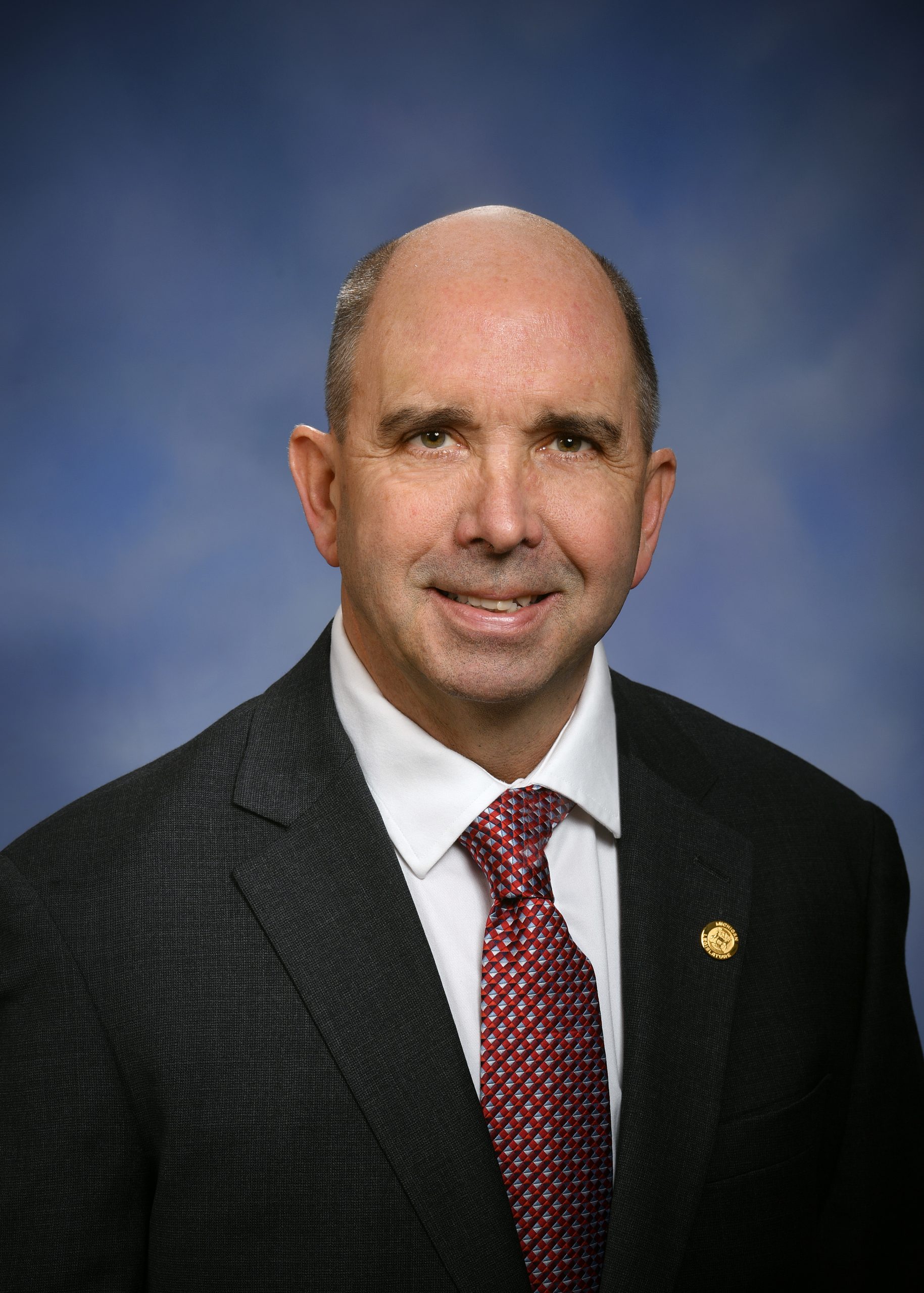
Rep. Jerry Neyer
Sponsored bills
Maddy summaryHB 5242 prohibits accrediting agencies from considering diversity, equity, and inclusion (DEI) policies, programs, or practices when making accreditation decisions for Michigan's public and private colleges and universities. The bill directly affects higher education institutions, accrediting agencies, and their students and employees by requiring accreditation decisions to focus solely on academic standards. Key provisions ban agencies from reviewing DEI-related information, collecting such data, or requiring diversity statements, with enforcement through lawsuits by students, employees, or the Attorney General. Violations could result in triple damages, attorney fees, and up to $1,000 per affected student in penalties.
Maddy summaryHB 5239 prohibits savings banks in Michigan from denying, restricting, or canceling financial services to agriculture producers based on their greenhouse gas emissions, fossil fuel fertilizer use, or fossil fuel-powered machinery. It directly affects savings banks (which must stop such restrictions) and agriculture producers (who gain protection from service denials tied to environmental factors). The bill creates a presumption of violation if a bank with an environmental/social commitment denies services, but allows banks to rebut this with evidence showing the decision was based solely on ordinary business reasons unrelated to environmental goals. Violations carry a civil fine of up to $10,000.
Maddy summaryHB 5237 prohibits Michigan public employee retirement systems from investing in environmental, social, and governance (ESG) funds unless those investments offer comparable financial returns to other options. The bill amends Section 13 of the Public Employee Retirement System Investment Act to require investment fiduciaries to consider *only* financial factors (like risk and return) when making decisions, explicitly excluding non-financial social, political, or ideological objectives. This directly affects retirement systems managing funds for state employees, including teachers and public workers, by restricting their ability to prioritize ESG criteria in investment choices. The key provision clarifies that ESG considerations cannot be used as a primary factor unless they demonstrably align with financial performance goals.
Maddy summaryThis resolution declares November 12-18, 2025, as "Community Foundation Week" in Michigan. It formally recognizes the work of Michigan’s 60+ community foundations, which support local communities through partnerships, crisis response, and addressing issues like poverty and disaster recovery. The resolution does not create new laws or funding but serves as a ceremonial acknowledgment of these organizations' role in strengthening communities across urban, suburban, and rural areas. It was introduced by multiple state representatives and adopted by the House on November 12, 2025.
Maddy summaryHB 4421 amends Michigan's Natural Resources and Environmental Protection Act to require Department of Environment, Great Lakes, and Energy (DEGLE) agents to obtain a warrant or the property owner's consent before entering private property for enforcement activities. It explicitly states that the "open fields doctrine" (which typically allows warrantless searches in open areas) does not apply to DEGLE searches. This change directly affects DEGLE enforcement officers and property owners/occupants by imposing standard warrant requirements for all searches on private land. The policy shift ensures DEGLE must follow similar procedural rules as law enforcement when conducting inspections or investigations on private property.
Maddy summaryHB 4073 modifies Michigan's criminal procedure law to require specific warrant procedures for investigations involving the Department of Natural Resources (DNR). It amends Section 1602 of the Michigan Compiled Laws (MCL 324.1602) and adds a new Section 1507 to clarify warrant requirements for DNR officers conducting searches or seizures under environmental enforcement. This change directly affects DNR law enforcement actions, ensuring they follow defined judicial authorization processes for certain investigations. The bill passed the House on November 4, 2025, with 63 yeas and 37 nays.
Maddy summaryThis resolution (HR 212) requests that the U.S. Congress adopt Section 143 from H.R. 3838 (the 2026 National Defense Authorization Act). Section 143 would require the Air Force to maintain at least 162 A-10 aircraft until 2029 and mandate reports to Congress about transition plans before retiring the fleet. It specifically aims to prevent an operational gap at Michigan's Selfridge Air National Guard Base, where A-10s were scheduled for retirement in 2026 but replacement F-15EX fighters won't arrive until 2028. The resolution does not change policy itself but urges Congress to incorporate these protections into law.
Maddy summaryThis resolution (HR 209) formally declares November 2025 as "National Alzheimer's Awareness Month" within Michigan. It recognizes Alzheimer's disease as a critical health issue affecting over 200,000 Michiganders and 385,000 caregivers, citing it as the seventh leading cause of death in the U.S. and the only top-10 cause with no cure or prevention. The resolution serves as a symbolic recognition - without creating new laws, funding, or mandates - to honor those impacted by Alzheimer's and support ongoing research and awareness efforts. It aligns with the national observance established since 1983 but applies specifically to Michigan's legislative recognition.
Maddy summaryHB 4427 requires counties to issue a "brown alert" when sewage or E. coli levels in waterways reach dangerous public health levels. This directly affects county officials responsible for environmental monitoring and residents who use or live near affected waterways. The bill amends existing law by adding a new section mandating this alert system, replacing previous voluntary protocols. It creates a specific, actionable requirement for counties to notify the public during hazardous conditions. The law passed the House with strong support (94-10) and is now under review by the Local Government Committee.