Maddy summaryThis bill designates euchre as the official game of the state of Michigan. It creates a new act to formally establish this title in state law. The legislation does not impose any regulations or restrictions on how the game is played, but rather serves as a symbolic designation for the state.

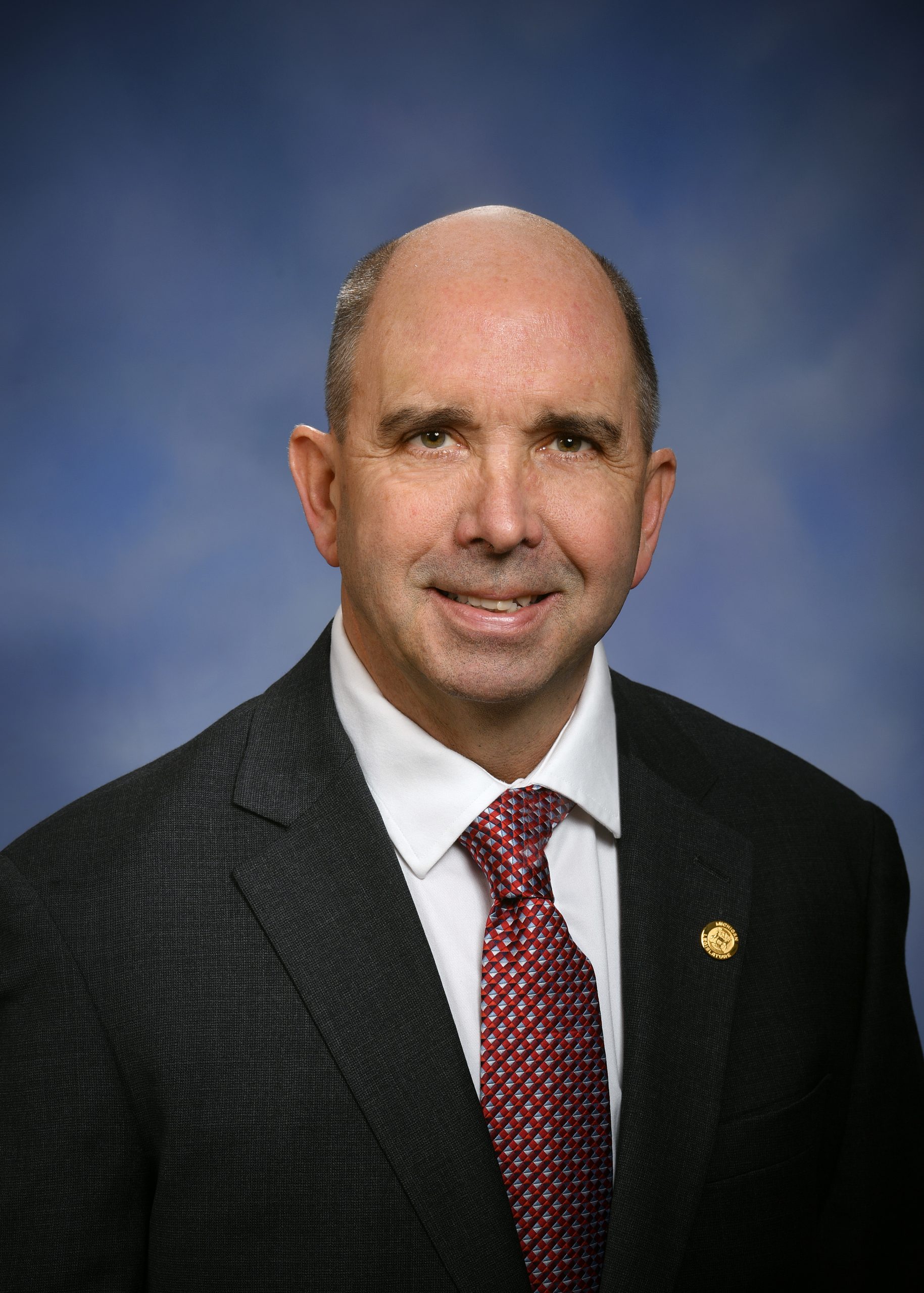
Rep. Jerry Neyer
Sponsored bills
Maddy summaryMichigan House Bill 6281 amends the Motor Fuels Quality Act to update regulations for gasoline and diesel fuel sold in the state. The bill directs the director of the Department of Environment, Great Lakes, and Energy to establish specific standards for fuel purity, additives, and octane ratings, while mandating a vapor pressure limit of 9.0 psi for most retail outlets during the summer months from June 1 to September 15. It also clarifies that certain counties with stricter air quality requirements must continue using lower vapor pressure fuels of 7.0 or 7.8 psi unless federal and state agencies determine those standards are no longer necessary. Additionally, the legislation permits the year-round sale of E15 fuel, which contains 10.5% to 15% ethanol, provided that dispensing pumps are clearly labeled in accordance with federal law.
Maddy summaryMichigan House Bill 6270 creates a temporary sales tax exemption for the purchase of building materials used to construct new single-family homes or small multi-family dwellings with up to four units. This two-year benefit applies to both homeowners and construction companies, provided that a valid building permit is in place at the time of the material sale. The bill requires state officials to submit annual reports to the legislature detailing how many new homes were built, jobs created, and the impact on state tax revenue due to this exemption.
Maddy summaryMichigan House Bill 6249 establishes that ownership of subsurface pore space, which can be used for storing carbon dioxide or other substances, is vested in the owner of the surface land unless it has been previously separated. The bill allows this pore space to be sold, leased, or otherwise transferred independently from the surface estate, provided that any such separation clearly describes the specific geological formation, depth, and scope of surface use rights involved. It clarifies that selling mineral rights does not automatically transfer pore space ownership, which must be explicitly stated in the agreement. This legislation takes effect only if two related companion bills are also enacted into law.

Maddy summaryMichigan House Bill 6271 creates a new individual income tax credit for taxpayers who pay local building permit fees to construct a new single-family home. Starting with the 2027 tax year, eligible individuals can claim a credit equal to their actual permit costs, up to a maximum of $2,500 per year. The bill requires taxpayers to provide reasonable proof of these expenses to the state department if requested. If the total credit amount is greater than the taxpayer's annual income tax liability, the excess portion must be refunded to the taxpayer rather than being lost.
Maddy summaryThis resolution declares August 2026 as National Filicide Awareness Month in Michigan to increase public understanding of cases where a parent or caregiver causes the death of a child. It aims to encourage collaboration among medical professionals, educators, law enforcement, and community organizations to better recognize risk factors and support child safety. The measure also seeks to honor the memory of children lost to filicide and promote education on prevention efforts across the state.
Maddy summaryHB 5803 amends Michigan's child care licensing law to update the definitions of various facilities and staff members, such as clarifying who counts as a "child care staff member" or what constitutes a "children's camp." The bill directly affects child care centers, group homes, and other organizations that provide care for minors by refining the rules used to classify them under state regulations. By revising these specific terms in the statute, the legislation aims to ensure that licensing standards apply consistently to different types of care settings. This change does not alter existing licensing requirements but rather clarifies the language used to describe the entities and individuals covered by the law.
Maddy summaryThis bill updates Michigan's Natural Resources and Environmental Protection Act to clarify definitions and procedures for commercial fishing in the state's Great Lakes waters. It directly affects licensed commercial fishermen, fish dealers, and the Department of Natural Resources by establishing precise meanings for terms like "abandoned gear," "quota," and various types of fishing nets. The legislation also adds new definitions to improve record-keeping requirements for fish production, storage, and sale, ensuring that all commercial activities are clearly regulated. By amending multiple existing sections and adding a new one, the bill aims to provide a more structured framework for managing allowable catch limits and enforcing fishing privileges.
Maddy summaryThis Michigan bill updates high school graduation requirements by allowing students to earn math credits through approved career and technical education programs in trades like welding, construction, and engineering. It adds a new section to the state school code that recognizes formal CTE programs as equivalent to traditional math courses when they cover the same content as state assessments. The legislation also clarifies how personal finance courses can count toward multiple subject requirements, including math, arts, and foreign language credits. These changes directly affect public school districts and academies in Michigan by providing more flexibility in how students meet graduation standards while maintaining core academic expectations.
Maddy summaryHB 5359 creates tax credits for Michigan retail dealers selling specific ethanol-blended fuels. It provides a $0.05 per gallon credit for E15 fuel (10-15% ethanol) and $0.085 per gallon for E85 fuel (50-83% ethanol) sold through metered pumps at their retail sites. The credit applies to tax years 2026-2030 and can be refunded if it exceeds the dealer's tax liability. This directly affects motor fuel retailers who sell these ethanol blends to the public, with eligibility defined under Michigan's motor fuel tax act.