

Maddy summaryHB 5206 creates a new "limited cosmetologist license" under Michigan's cosmetology law, allowing individuals to perform specific services like natural hair cultivation, manicuring, or skin care without needing a full cosmetologist license. This change streamlines licensing for professionals who specialize in these areas, eliminating the need for separate licenses (e.g., for manicuring or esthetics) while requiring them to limit their practice to the licensed services. The bill updates definitions to clarify terms like "natural hair cultivation" (techniques such as braiding or twisting without chemicals) and ensures license holders cannot perform unlicensed services like electrology. It directly affects cosmetology practitioners seeking to offer these focused services more efficiently.
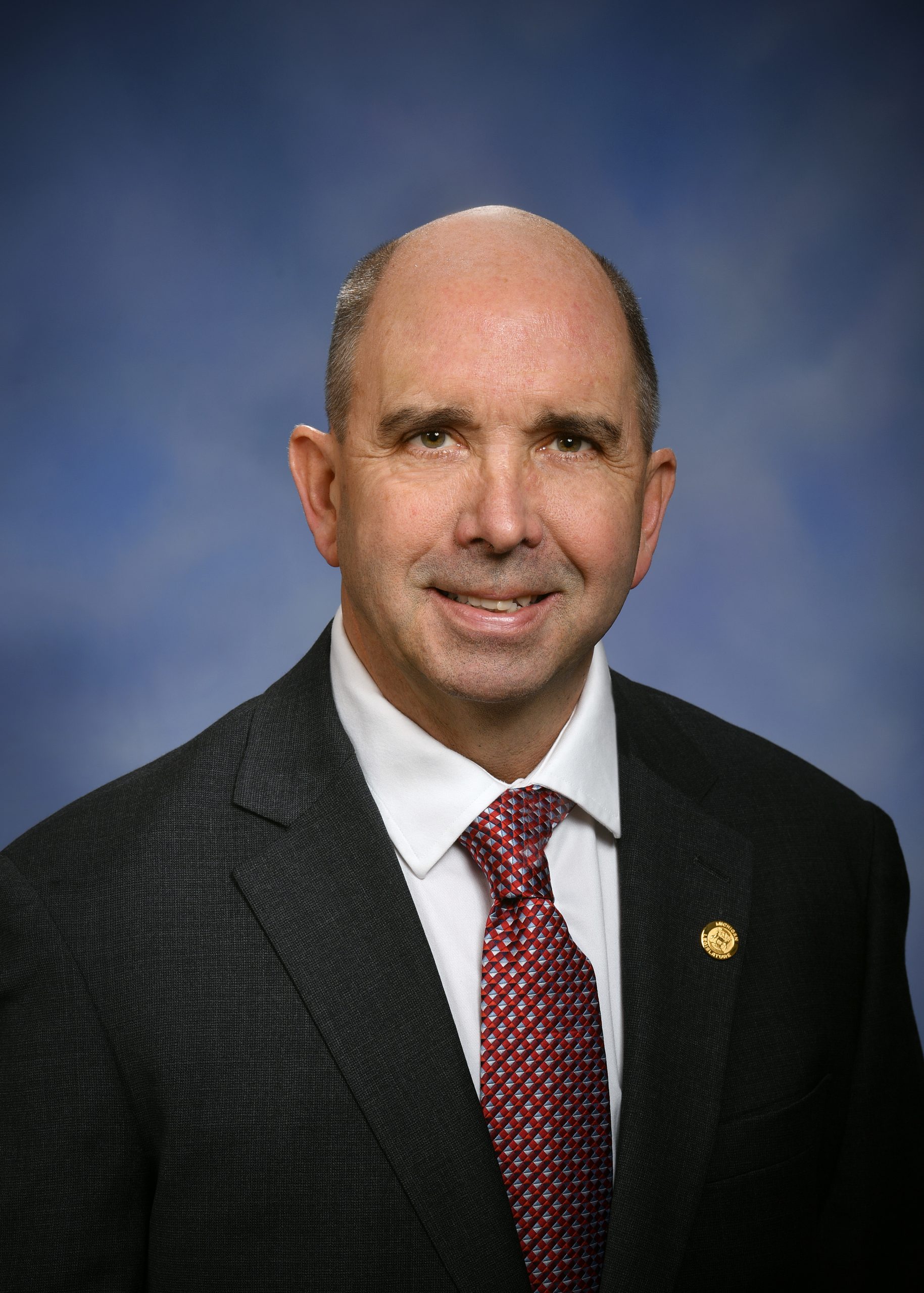
Rep. Jerry Neyer
Sponsored bills
Maddy summaryHB 5375 prohibits charging interest on unpaid restitution of overpaid unemployment benefits when the overpayment resulted from specific errors, such as agency mistakes, employer errors, or system issues - not the claimant's fault. It requires the unemployment agency to waive existing interest charges and refund payments made for those errors, with refunds due within 180 days of the law's effective date. The bill also stops interest from accruing during pending appeals and applies retroactively to overpayments from February 2020 through December 2026. This directly affects claimants who received overpayments due to errors beyond their control.
Maddy summaryHouse Bill 4425 creates the Sustainable Aviation Fuel Incentive Program in Michigan. This program aims to encourage companies to produce or blend sustainable aviation fuel (SAF) within the state by offering corporate income tax credits. The Department of Environment, Great Lakes, and Energy (EGLE) will administer the program, certifying SAF that meets specific criteria, including source materials, technical standards, and a minimum 50% reduction in life-cycle greenhouse gas emissions compared to traditional jet fuel. The bill sets an annual cap on the total amount of tax credits approved, starting at $4.5 million for the 2025-2026 fiscal year and increasing to $9 million annually thereafter.
Maddy summaryHouse Bill 4424 proposes a new corporate income tax credit for businesses that produce or blend sustainable aviation fuel (SAF) within Michigan. Qualified taxpayers can claim a credit of $1.50 per gallon for SAF produced or blended in the state and sold for use in aircraft departing from Michigan airports. This credit can increase up to $2.00 per gallon based on the SAF's life-cycle greenhouse gas emission reductions. If the credit amount exceeds a company's tax liability, the difference will be refunded.
Maddy summaryHB 4314 amends Michigan's environmental law to allow property owners and communities to remove free-floating debris and uprooted vegetation from shorelines without a permit. Specifically, it permits mechanical or manual removal between the ordinary high-water mark and the water's edge, as long as the activity doesn't impact the lakebed. This change directly affects residents, shoreline property managers, and local groups maintaining areas along Great Lakes and Lake St. Clair shorelines. The exemption does not apply to the St. Clair River delta area in Clay Township, St. Clair County, as defined in 1899 PA 175.
Maddy summaryHB 4881 updates Michigan's Food Law by modifying Section 4105 to correctly reference "wholesale potato dealers licensing" within the list of exempt food businesses. This change specifically affects potato dealers who previously operated under an outdated reference in the law. The bill updates the legal citation to align with current licensing requirements for potato dealers, ensuring they are properly included in the existing exemption list for food establishment licensing. This is a technical correction to the law's wording, not a substantive policy change to exemptions.
Maddy summaryHB 4882 repeals a 1964 law (1964 PA 158) that required potato dealers in Michigan to obtain a license. This bill eliminates the licensing requirement and associated provisions for potato dealers by removing the repealed statute (MCL 290.451-290.466). The repeal affects no current entities, as the law being removed was outdated and no longer enforced. No new rules or requirements are created by this bill.
Maddy summaryHouse Bill 4013 modifies the Recreational Trespass Act, primarily by changing the requirements for posting "no trespassing" signs on private property. For non-farm property, the bill specifies that signs must be placed at intervals of not more than 250 feet along the boundary, replacing the previous standard of being observable at any point of entry. It also clarifies that consent from the owner is always required to enter farm property or connected wooded areas for recreational activities or trapping, regardless of whether the property is fenced or posted. These changes affect property owners and individuals engaging in recreational activities or trapping on private land.
Maddy summaryHB 5312 amends Michigan's School Code to set new tuition limits for nonresident students attending public schools. It limits K-6 tuition to 25% above the district's average daily operation cost per student (excluding building costs), and grades 7-12 tuition to 12.5% above 115% of that same cost. The bill requires districts to use the previous fiscal year's operation costs and membership data for calculations. It also specifies that these rules expire after July 1, 2026, when schools must follow different rules under another law, and notes the bill only takes effect if two companion bills (HB 5310 and HB 5311) also pass. This directly affects school districts setting tuition rates and nonresident families paying those rates.