

Passed Dec 17, 2025
1 co-sponsor
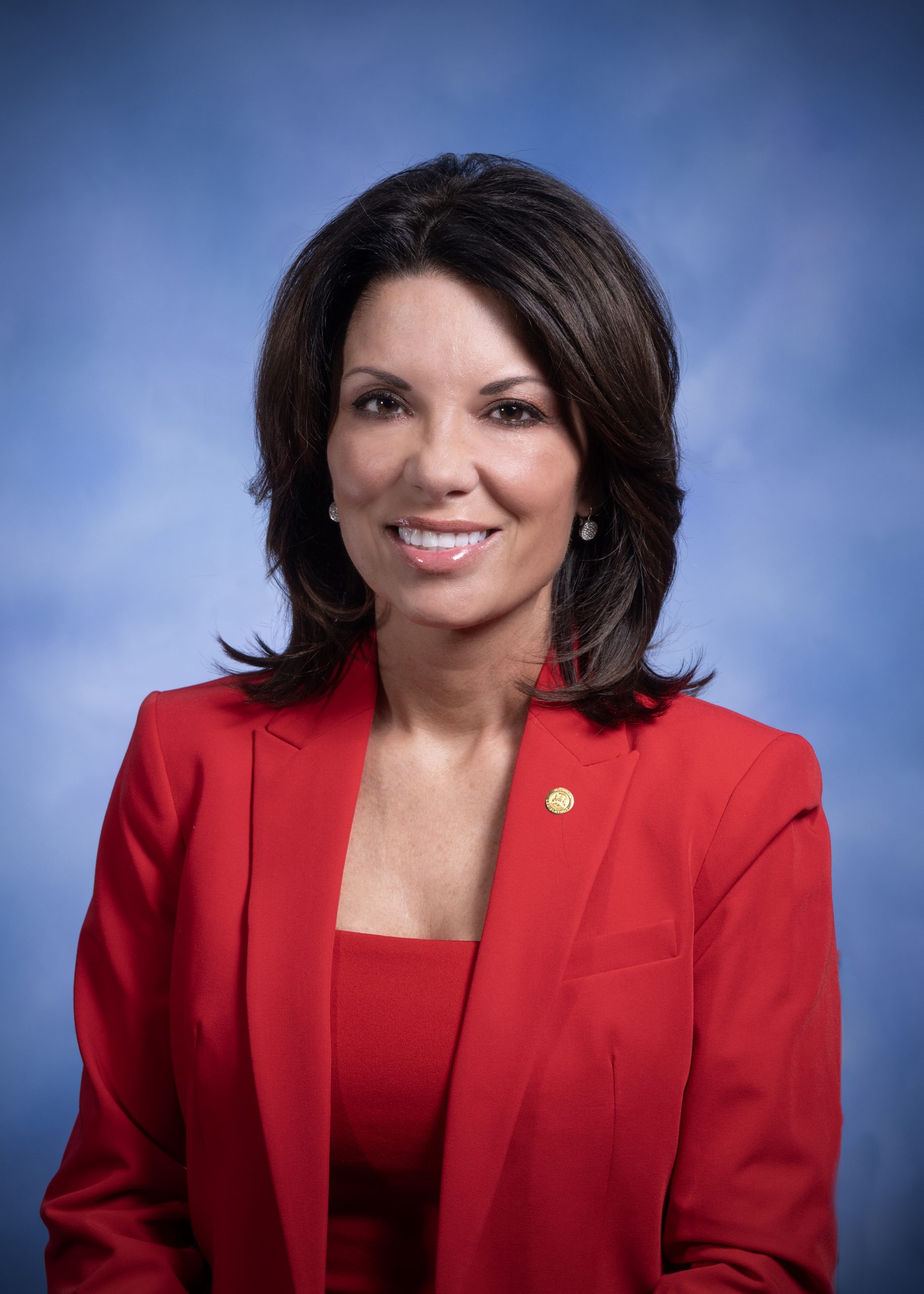
Rep. Angela Rigas
Total votes
1,750
all sessions
Attendance
99%
24 missed
Higher than 83% of chamber peers
With party
92%
of cast votes
Near the chamber average
Bipartisan score
4%
crosses aisle rarely
Near the chamber average
Sponsored
669
bills & resolutions
Near the chamber average
Committees
5
assignments
669 bills and resolutions
Sponsored bills
Total
669
Primary
43
Co-sponsor
626
This page
669
matching current filters
Appropriations: supplemental; certain funding designated to the University of Michigan; modify. Creates appropriation act.
Maddy summaryHB 5362 is a supplemental budget bill that allocates additional state funds to the University of Michigan for its operations during the 2024-2025 fiscal year. It modifies existing state appropriations by designating specific supplemental funding for the University of Michigan, without creating new programs or altering the university's structure. This bill directly affects the University of Michigan's budget, providing it with additional resources from the state's general fund for the upcoming fiscal year. The bill is procedural in nature, focusing solely on the allocation of existing state funds rather than establishing new policies.
Budget & TaxesSupports Budget & TaxesBill allocates supplemental state funds to University of Michigan for operations, increasing public institution funding per appropriations focus.
EducationSupports EducationAllocates supplemental state funds to University of Michigan for operations, directly increasing higher education funding without restrictions.
In committee Dec 16, 2025
1 co-sponsor
Environmental protection: water pollution; removal of surface debris without a permit; allow. Amends sec. 32512 of 1994 PA 451 (MCL 324.32512).
Maddy summaryHB 4314 amends Michigan's environmental law to allow property owners and communities to remove free-floating debris and uprooted vegetation from shorelines without a permit. Specifically, it permits mechanical or manual removal between the ordinary high-water mark and the water's edge, as long as the activity doesn't impact the lakebed. This change directly affects residents, shoreline property managers, and local groups maintaining areas along Great Lakes and Lake St. Clair shorelines. The exemption does not apply to the St. Clair River delta area in Clay Township, St. Clair County, as defined in 1899 PA 175.
Passed Dec 16, 2025
1 co-sponsor
Highways: bridges; Mackinac Bridge; designate as a key facility. Amends sec. 552c of 1931 PA 328 (MCL 750.552c).
Maddy summaryHB 4470 amends Michigan's penal code to designate specific portions of the Mackinac Bridge (those not open to or intended for public use) as a "key facility" under existing law. This means unauthorized entry onto these bridge sections - when enclosed by barriers like water and properly posted with signage - would become a felony punishable by up to 4 years in prison or a $2,500 fine. The bill adds the Mackinac Bridge to a list of protected critical infrastructure, including power plants, water facilities, and chemical plants, all requiring physical barriers and visible signage to enforce entry restrictions. It does not change current penalties or posting requirements but extends them specifically to the Mackinac Bridge's restricted areas.
Criminal JusticeOpposes Criminal JusticeBill creates new felony offense for unauthorized bridge entry, expanding criminalization and increasing penalties without reform context.
TransportationSupports TransportationBill designates Mackinac Bridge sections as protected critical infrastructure, enhancing security for transportation asset per highway bridge subject and penal code amendment.
Passed Dec 10, 2025
1 co-sponsor
Natural resources: other; natural resources commission; require to live stream all meetings. Amends sec. 501 of 1994 PA 451 (MCL 324.501).
Maddy summaryHB 4822 requires the Natural Resources Commission to live stream all its meetings publicly online. This bill amends Michigan's natural resources law (MCL 324.501) to mandate real-time video streaming of Commission sessions. The change directly affects the Commission's operations and ensures public access to its proceedings without requiring physical attendance. The bill is currently pending in committee review after being referred for second reading.
Passed Dec 10, 2025
1 co-sponsor
Health: abortion; abortion reporting requirements; provide for. Amends 1978 PA 368 (MCL 333.1101 - 333.25211) by adding sec. 2835. TIE BAR WITH: HB 5202'25
Maddy summaryHB 5201 requires healthcare professionals performing abortions in Michigan to submit detailed, anonymized reports to the state health department within 7 days. The reports must include specific data points like patient age, gestation period, reason for the abortion (e.g., health risks, rape, economic factors), facility details, and medical method, but exclude all personal identifiers. Strict confidentiality rules prohibit disclosing any information that could identify individuals or facilities, with reports destroyed after 5 years and only aggregated statistical data published annually. This policy applies directly to abortion providers and the state health department, focusing solely on data collection for public health monitoring, not individual records or enforcement.
In committee Dec 10, 2025
1 co-sponsor
Criminal procedure: sentencing guidelines; sentencing guidelines for releasing confidential information related to an abortion; provide for. Amends sec. 13k, ch. XVII of 1927 PA 175 (MCL 777.13k). TIE BAR WITH: HB 5201'25
Maddy summaryHB 5203 amends Michigan's sentencing guidelines (MCL 777.13k) to establish specific penalties for disclosing private medical information related to abortions. It directly affects healthcare providers, clinics, or others who share confidential abortion-related details without authorization. The bill creates new sentencing parameters for such disclosures within the criminal code, requiring judges to consider these guidelines when determining penalties. The legislation is currently under review by the Health Policy Committee after its November 2025 introduction.
Criminal JusticeOpposes Criminal JusticeCreates new criminal penalties for disclosing abortion-related medical info, expanding criminalization under sentencing guidelines per MCL 777.13k.
HealthcareSupports HealthcareBill protects patient confidentiality for abortion-related medical information, directly advancing healthcare privacy rights under patient protection indicators.
In committee Dec 10, 2025
1 co-sponsor
Health: abortion; abortion reporting requirements; provide for. Amends 1978 PA 368 (MCL 333.1101 - 333.25211) by adding sec. 2837. TIE BAR WITH: HB 5201'25
Maddy summaryHB 5202 requires healthcare professionals to submit written reports to Michigan's Department of Health for any patient experiencing a physical complication or death directly linked to an abortion. The reports must be anonymized (removing patient identifiers), aggregated into the state's annual abortion statistics, and destroyed after five years. The bill mandates the department to create a standardized reporting form for urgent care facilities and emergency departments, which must be distributed and posted online. This bill, tied to companion legislation HB 5201, focuses solely on data collection requirements without changing abortion access or medical standards.
In committee Dec 10, 2025
1 co-sponsor
Education: school choice; enrollment of nonresident pupils; modify. Amends sec. 1401 of 1976 PA 451 (MCL 380.1401). TIE BAR WITH: HB 5310'25, HB 5311'25
Maddy summaryHB 5312 amends Michigan's School Code to set new tuition limits for nonresident students attending public schools. It limits K-6 tuition to 25% above the district's average daily operation cost per student (excluding building costs), and grades 7-12 tuition to 12.5% above 115% of that same cost. The bill requires districts to use the previous fiscal year's operation costs and membership data for calculations. It also specifies that these rules expire after July 1, 2026, when schools must follow different rules under another law, and notes the bill only takes effect if two companion bills (HB 5310 and HB 5311) also pass. This directly affects school districts setting tuition rates and nonresident families paying those rates.
In committee Dec 9, 2025
0 co-sponsors
Torts: liability; immunity for individuals rendering emergency services who apply bleeding control; provide for. Amends 1963 PA 17 (MCL 691.1501 - 681.1507) by adding sec. 8. TIE BAR WITH: HB 4109'25
Maddy summaryHB 4108 amends Michigan's tort law to grant legal immunity to individuals who provide emergency bleeding control during medical crises. It directly protects ordinary citizens (not just professionals) who act in good faith to stop severe bleeding, such as at accident scenes or public events. The key provision shields these helpers from lawsuits for unintentional harm caused while applying bleeding control techniques, like using tourniquets or pressure dressings. This change applies specifically to bleeding control efforts during emergencies, not general emergency assistance.
Passed Dec 4, 2025
1 co-sponsor
Ask Maddy
·
AI policy assistant
Ask Maddy about Angela Rigas
Scope: michigan
Hi! I can help you understand Angela Rigas's legislative record. What would you like to know?
Try one of these
i
Maddy answers using official bill text and legislative records. Always verify before sharing.
Sources cited inline