

Maddy summaryHB 5492, the "regulating automatic license plate readers act," sets rules for private entities operating automatic license plate reader (ALPR) systems, requiring them to preserve captured license plate data for 14 days when law enforcement or a criminal defendant requests it with a specific written statement. The bill prohibits using the data as evidence in court if disclosure would violate the act, mandates data destruction after 14 days if not used, and allows individuals to sue for violations and recover at least $1,000 in damages or actual damages plus legal fees. Vehicle owners' data is protected from public disclosure without consent, except under a court order or warrant, and cannot be accessed by law enforcement without a warrant or specific preservation request.
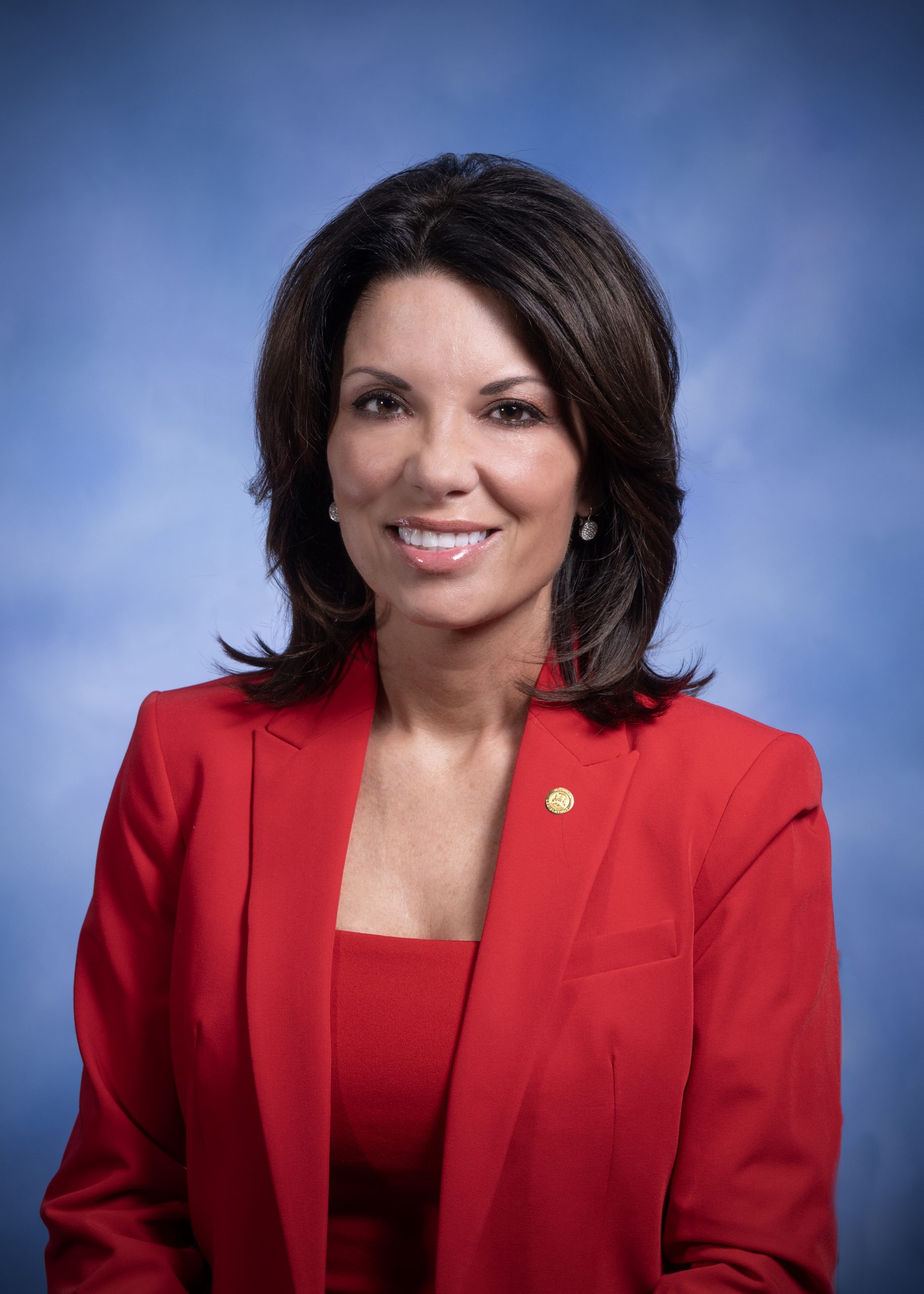
Rep. Angela Rigas
Sponsored bills
Maddy summaryHB 5315 amends Michigan law to clarify when the Attorney General must intervene in court cases involving the state. It changes Section 28 of the Revised Statutes to require the Attorney General to intervene in state court cases when specifically requested by the Governor or either legislative chamber, rather than having discretion. This directly affects the Attorney General's office and state entities involved in civil or criminal cases where the state has an interest. The bill modifies existing procedure by making intervention mandatory upon request, streamlining the process for state representation in court. (Procedural bill; summary concise per guidelines.)
Maddy summaryHB 4418 updates Michigan's probate law to clarify how patients can designate a healthcare surrogate when they cannot make decisions themselves. It adds a new process for formally naming a surrogate (replacing the previous method) and removes an outdated section from older law. This directly affects patients without existing advance directives and their families by providing a clearer, more modern way to appoint someone to make medical decisions for them.
Maddy summaryHB 4419 adds legal protections to Michigan's health care decision-making framework. It shields health care providers and facilities from liability when following decisions made by a legally designated patient surrogate or advocate, as long as they act in good faith. The bill also protects surrogates and advocates from liability for good-faith health care decisions they make. Providers who intentionally violate these rules face minimum damages of $1,000, while those who falsify or tamper with a patient's health care directive designation face minimum damages of $2,500. This directly affects patients with advance directives, their designated surrogates, and medical providers.
Maddy summaryThis resolution declares January 25-31, 2026, as Catholic Schools Week in Michigan. It symbolically recognizes Catholic schools' role in the state, highlighting their enrollment (50,421 students across 207 schools), compliance with public school regulations, and contributions to community values. The resolution does not create new laws, allocate funds, or change policies - it is a ceremonial acknowledgment supporting Catholic schools' educational and community impact.
Maddy summaryHB 5314 repeals a specific section (MCL 14.102) from an old 1919 law that required certain lawsuits brought by the Michigan Attorney General on behalf of the state to be filed in Ingham County circuit court. This procedural change eliminates the requirement for those cases to be filed in a specific county, allowing the Attorney General to file such lawsuits in appropriate courts as needed. The bill does not create new legal requirements or affect who can bring lawsuits; it only removes a historical jurisdictional rule. This is a straightforward procedural update with no direct impact on public employees, officers, or state operations.
Maddy summaryHB 5316 modifies Michigan's court venue rules for cases brought by the state's attorney general. It requires that lawsuits filed by the attorney general "in the name of the state" must be filed and tried in the county where the state government is headquartered (typically Ingham County, where Lansing is located). This change specifically applies to cases seeking relief for the state or its citizens, such as enforcement actions against businesses or public officials. The bill does not alter the substance of the cases but clarifies where they must be heard.
Maddy summaryHB 4980 amends Michigan's concealed pistol licensing law to allow applicants to file their license applications with *any* county clerk in the state where they reside, rather than requiring filing only in their county of residence. This change directly affects Michigan residents seeking concealed carry permits, simplifying the initial application process. The bill modifies Section 5b of the state's firearms licensing act (MCL 28.425b) to remove the residency county restriction, while maintaining all other requirements like fingerprinting, background checks, fees ($100), and training documentation. It does not alter eligibility criteria, fees, or processing timelines - only the location where applications must be submitted. The bill is pending in the Judiciary Committee as introduced on September 18, 2025.
Maddy summaryHB 5459 clarifies how utility companies collect the 2% additional sales tax on residential electricity, gas, and heating fuels in Michigan. It directly affects utility companies serving residential customers, requiring them to calculate the tax based on specific rules depending on their customer size. Companies with 100,000+ Michigan customers must prorate the tax starting from May 1, 1994, based on days after April 30, 1994. Smaller companies (under 100,000 customers) can either use this proration method or apply the tax starting with the first bill after April 30, 1994. The bill amends existing tax collection rules to provide clear, practical guidelines for utilities.
Maddy summaryHB 5460 prohibits Michigan state agencies from purchasing electric motor vehicles or components unless manufacturers provide a sworn declaration confirming no forced labor or oppressive child labor was used in their production, mining, or sourcing. This applies directly to all state agencies acquiring such vehicles, requiring verification of supply chain labor practices before contracts are signed. The bill defines "forced labor" broadly to include coercion, threats, abuse of legal processes, and child labor exploitation. It amends existing procurement laws to enforce this requirement, with no exceptions for state agencies under the transportation department's jurisdiction.