

Maddy summaryHB 4120 exempts certain aircraft purchases and maintenance from Michigan's use tax. It applies to domestic air carriers using aircraft over 6,000 pounds for cargo, passenger, or combined transport, and to parts/materials affixed to such aircraft under specific conditions (e.g., aircraft not based in Michigan). The bill also exempts temporary aircraft in Michigan for maintenance or sales if they leave within 15 days, and extends tax exemptions to interstate trucking equipment used across state lines. These changes reduce tax burdens for airlines, aircraft maintenance providers, and interstate trucking companies operating in Michigan.
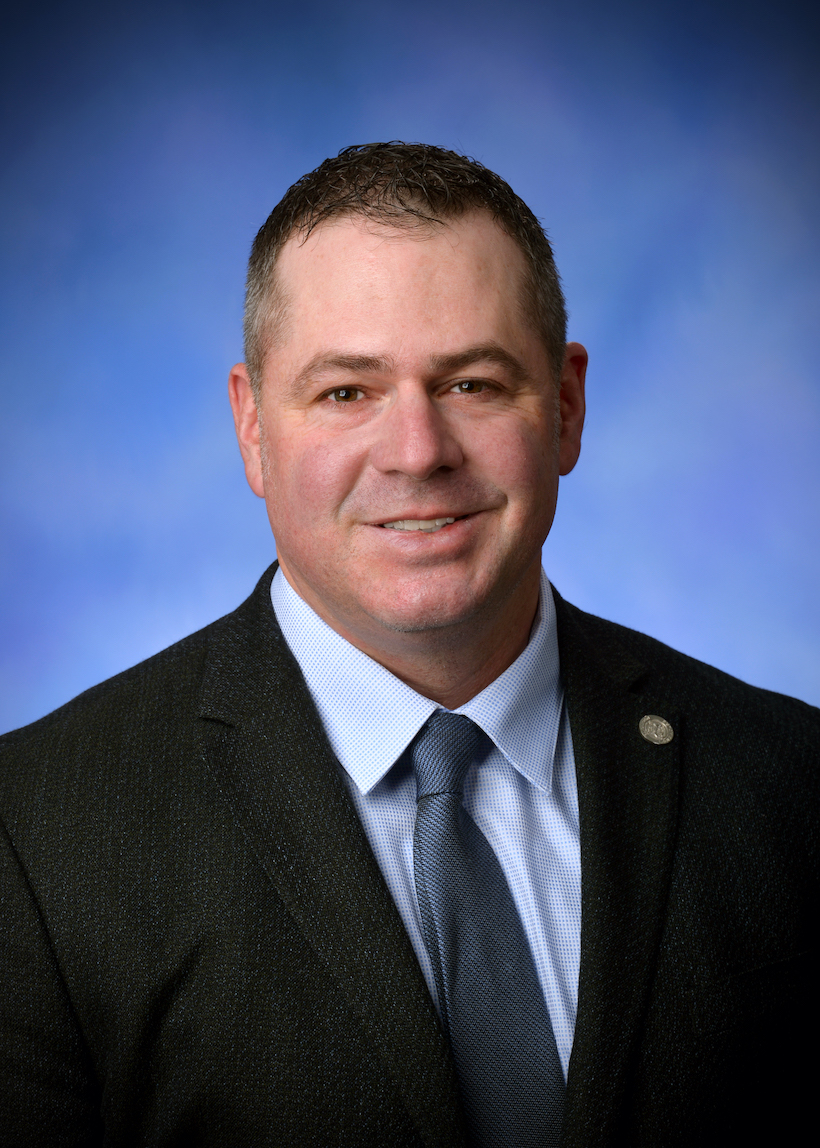
Rep. Mike Mueller
Sponsored bills
Maddy summaryHB 5124 modifies Michigan's Uniform Video Services Local Franchise Act to clarify reporting requirements for video service providers. It requires providers to submit specific information (name, service description, contact details) to the commission within 60 days of the law's effective date or 30 days after starting service in Michigan, using data they already collect. The bill also mandates that providers notify the commission 30 days in advance of name changes, closures, or mergers. Additionally, the commission must file an annual report by April 1st to the governor and legislature, detailing video service competition status and suggesting legislative changes. These provisions directly affect all video service providers operating in Michigan.
Maddy summaryHB 5123 amends Michigan's Uniform Video Services Local Franchise Act by clarifying the definition of "video service" to explicitly include cable, IPTV (internet protocol television), and OVS (open video systems), while excluding mobile streaming services, direct satellite TV, and internet-based video access. This definition directly affects video service providers (like cable companies and IPTV providers) who must operate under franchise agreements with local governments. The bill ensures these providers pay required fees for using public rights-of-way, without changing existing franchise obligations for current providers. It is a technical clarification of existing law, not a new policy change.
Maddy summaryHB 5574 prohibits approaching within 25 feet of a first responder who is lawfully performing their duties after being verbally warned not to approach, if the person intends to interfere, threaten, or harass them. It directly affects individuals who target first responders (like police, firefighters, or EMTs) during emergency operations. Violations are misdemeanors punishable by up to 60 days in jail or $500 fines, but become felonies causing injury (up to 2 years) or death (up to 15 years), with fines up to $7,500. The law focuses on preventing direct obstruction or harm during critical incidents, not general public behavior.
Maddy summaryHB 5576 amends Michigan's sentencing guidelines to specifically address crimes targeting first responders. It adds intimidation or harassment of individuals based on their actual or perceived employment as a first responder (like police, firefighters, or EMTs) to the list of offenses that warrant enhanced sentencing. The bill changes Section 16t of the Michigan Code of Criminal Procedure (MCL 777.16t) to require courts to consider this factor when determining sentences for such crimes. This directly affects individuals convicted of threatening or harassing first responders, ensuring their actions are treated with greater severity under sentencing rules.
Maddy summaryHB 5575 defines specific terms related to harassment of first responders in Michigan law. It adds a new section to the penal code clarifying that "first responder" includes law enforcement officers, corrections officers, firefighters, and emergency medical personnel. The bill defines "harass" as intentionally causing substantial emotional distress through a course of conduct with no legitimate purpose. This creates a clear legal standard for prosecuting harassment against these public safety workers, directly affecting their protection under state law.
Maddy summaryThis bill creates a new regulatory framework for kratom products in the state. It establishes rules governing the distribution, sale, and manufacturing of kratom, though the specific provisions (like licensing requirements, labeling standards, or product restrictions) are not detailed in the provided context. The bill directly affects kratom manufacturers, distributors, retailers, and consumers by subjecting these activities to new state regulations. As the bill is in early committee review (referred to Regulatory Reform after a substitute amendment), its final content and scope remain pending. The context does not provide details on the specific mechanisms or who is directly affected beyond the general regulatory intent.
Maddy summaryThis bill amends Michigan's Public Health Code to create a legal framework for clinical trials involving ibogaine, a substance used to treat substance use disorders. It directly affects researchers, healthcare providers, and participants by establishing specific rules for how these studies can be conducted within the state. The legislation adds new sections to the code that define the requirements for obtaining approval, ensuring participant safety, and reporting data for these trials. By updating existing laws and adding new provisions, the bill aims to facilitate regulated medical research on ibogaine while maintaining oversight by state health authorities.
Maddy summaryThis resolution officially designates June 2026 as Dairy Month in Michigan to recognize the state's significant dairy industry. The measure highlights the sector's economic contributions, including its role in food production, job creation, and public health through nutritious dairy products. By adopting this symbolic declaration, the legislature aims to celebrate the achievements of local dairy farmers and processors while promoting awareness of the nutritional benefits of dairy consumption.
Maddy summaryThis bill proposes renaming a specific section of Interstate 75 in Wayne County to honor Motor Carrier Officer Daniel M. Kerstetter. The designated stretch of road runs from Northline Road northward to London Avenue. By amending the Michigan Memorial Highway Act, the legislation formally establishes this new name for the roadway. The change directly affects the state's transportation records and signage along that portion of the highway.