

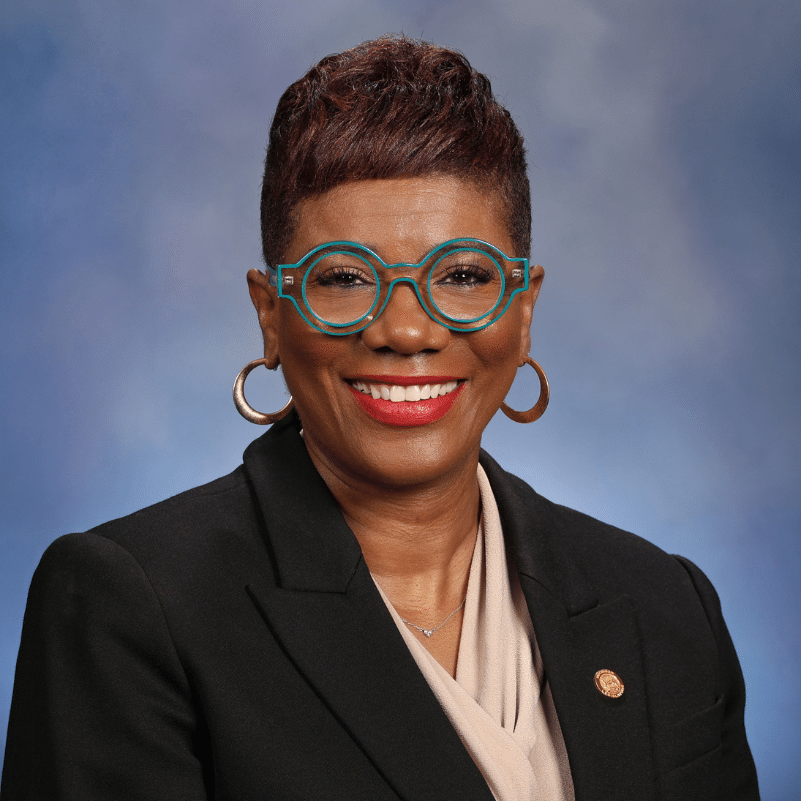
Photo of Cynthia Neeley
D Michigan House · District 70 On the 2026 ballot

Rep. Cynthia Neeley

Compare
Total votes
2,967
all sessions
Attendance
86%
466 missed
Lower than 98% of chamber peers
With party
97%
of cast votes
Near the chamber average
Bipartisan score
2%
crosses aisle rarely
Near the chamber average
Sponsored
1,056
bills & resolutions
Near the chamber average
Committees
3
assignments
1,056 bills and resolutions

Sponsored bills

Total
1,056
Primary
50
Co-sponsor
1,006
This page
1,056
matching current filters
Co-sponsor HB 5585
In committee · Michigan House · Co-sponsor
Land use: zoning and growth management; zoning restrictions related to accessory dwelling units and mobile homes; modify. Amends sec. 102 of 2006 PA 110 (MCL 125.3102) & adds secs. 207a & 516.

Maddy summaryHB 5585 modifies Michigan's zoning laws to make it easier to add secondary housing units and mobile homes. It prohibits local zoning rules from implicitly excluding mobile homes based on aesthetics or materials not tied to public safety, directly affecting mobile home residents and developers. For accessory dwelling units (ADUs) - secondary housing units like backyard cottages - the bill automatically allows them in residential zones if they meet size limits (max 800 sq ft or 75% of the main house), maintain 5-foot setbacks, and are attached to or near an existing single-family home. ADUs under these rules no longer require public hearings or discretionary approval, and they do not count toward local density limits.

In committee May 14, 2026 1 co-sponsor
Co-sponsor HB 5582
In committee · Michigan House · Co-sponsor
Land use: zoning and growth management; minimum residential parking space requirements and limitations on mobile homes; limit. Amends 2006 PA 110 (MCL 125.3101 - 125.3702) by adding sec. 205b.

Maddy summaryHB 5582 limits local zoning rules for multifamily housing and mobile homes in Michigan. It prohibits municipalities from requiring more than one parking space per dwelling unit (including guest spaces) in multifamily residential developments, except where required by the Americans with Disabilities Act. The bill also prevents residential zoning from excluding mobile homes - defined under state law - through aesthetic or material restrictions not tied to public safety. These changes directly affect developers building multifamily housing and mobile home residents in communities governed by Michigan's zoning laws.

In committee May 14, 2026 1 co-sponsor
Co-sponsor HB 5583
In committee · Michigan House · Co-sponsor
Land use: zoning and growth management; setback requirement greater than 25 feet; prohibit. Amends 2006 PA 110 (MCL 125.3101 - 125.3702) by adding sec. 205c.

Maddy summaryHB 5583 would limit local zoning rules in metro areas by prohibiting minimum setbacks for homes or outbuildings that exceed 15 feet from the front property line or 5 feet from rear/side lines. It allows up to 25 feet of setback only near specific environmental features: wetlands, lakes/streams, or the Great Lakes shoreline as defined by state law. The bill applies to all local governments located within or adjacent to a federally designated metropolitan statistical area. This change aims to simplify zoning for residential development in urban and suburban regions while maintaining environmental protections.

In committee May 14, 2026 1 co-sponsor
Co-sponsor HB 5584
In committee · Michigan House · Co-sponsor
Land use: zoning and growth management; duplexes; permit in single-family residential zones. Amends sec. 102 of 2006 PA 110 (MCL 125.3102) & adds sec. 517.

Maddy summaryHB 5584 allows duplexes to be built in any zoning district where single-family homes are permitted, directly affecting homeowners, developers, and local governments in Michigan. The bill requires local governments to treat duplexes the same as single-family homes for permitting and prohibits them from imposing restrictions that would prevent duplex construction - such as minimum unit size requirements, excessive parking mandates, or stricter design rules. It specifically bans requirements like lot coverage limits, setbacks, or height restrictions that would make duplexes impractical, while allowing reasonable, non-discriminatory rules. This policy change aims to increase housing options by making duplex development more accessible in single-family neighborhoods.

In committee May 14, 2026 1 co-sponsor
Co-sponsor HR 306
Passed · Michigan House · Co-sponsor
A resolution to declare May 10-16, 2026, as Skilled Nursing Care Week in the state of Michigan.

Maddy summaryThis resolution declares May 10-16, 2026, as Skilled Nursing Care Week in Michigan to honor residents, staff, and volunteers in skilled nursing facilities. The measure aligns with the national observance established by the American Health Care Association and encourages the state to participate in related events under the theme 'Moments in Bloom!' By officially recognizing this week, the bill aims to promote awareness and community engagement with nursing care services without altering any laws or funding.

Passed May 12, 2026 1 co-sponsor
Co-sponsor HR 293
Passed · Michigan House · Co-sponsor
A resolution to declare April 24, 2026, as Armenian Genocide Remembrance Day in the state of Michigan.

Maddy summaryThis bill declares April 24, 2026, as Armenian Genocide Remembrance Day in the state of Michigan. It is a commemorative resolution that does not change laws or affect daily operations, but instead formally recognizes the date to honor victims of the 1915-1923 Armenian Genocide. The measure builds on Michigan's existing 2002 recognition of the genocide and aims to promote awareness and remembrance within the state.

Passed Apr 30, 2026 1 co-sponsor
Co-sponsor HB 5897
In committee · Michigan House · Co-sponsor
Environmental protection: hazardous waste; Michigan PFAS action response team; establish. Creates new act.

Maddy summaryThis bill creates the Michigan PFAS action response team (MPART), a new state entity dedicated to addressing contamination from PFAS chemicals, commonly known as 'forever chemicals.' The team will be composed of directors from various state departments, including environmental protection and health services, who will work together to identify affected sites, develop cleanup plans, and coordinate public health responses. MPART is authorized to conduct investigations, hire experts, share information with local and federal agencies, and recommend changes to existing laws to better manage environmental and public safety threats related to PFAS.

In committee Apr 28, 2026 1 co-sponsor
Co-sponsor HB 5898
In committee · Michigan House · Co-sponsor
Environmental protection: hazardous products; citizen's advisory working group; establish. Creates new act. TIE BAR WITH: HB 5897'26

Maddy summaryThis bill creates a new Citizen's Advisory Working Group within the Michigan Department of Environment, Great Lakes, and Energy to assist with PFAS contamination efforts. The group will be made up of current or former residents from communities affected by PFAS contamination, and its members will serve without pay but can receive reimbursement for necessary expenses. The group's main duties include advising the Michigan PFAS Action Response Team on community outreach, reviewing existing strategies, and making recommendations to improve public awareness of health risks related to PFAS.

In committee Apr 28, 2026 1 co-sponsor
Co-sponsor HB 5890
In committee · Michigan House · Co-sponsor
Trade: consumer goods and services; use of PFAS in household products; prohibit. Creates new act.

Maddy summaryThis bill, known as the Hazardous Products Act, would ban the sale and manufacture of household items containing intentionally added PFAS chemicals starting in 2027. The legislation specifically targets a wide range of consumer goods, including clothing, carpets, cookware, cosmetics, baby products, and upholstery, while explicitly excluding military equipment and personal protective gear. To enforce these restrictions, the bill establishes penalties for violations, ranging from misdemeanor fines for first offenses to felony charges for repeat offenders, and grants individuals the right to sue for damages or seek court orders to stop non-compliant production.

In committee Apr 28, 2026 1 co-sponsor
Co-sponsor HB 5893
In committee · Michigan House · Co-sponsor
Environmental protection: other; grant program for farmers affected by polyfluoroalkyl (PFAS); create. Amends 1994 PA 451 (MCL 324.101 - 324.90106) by adding pt. 4. TIE BAR WITH: HB 5894'26

Maddy summaryThis bill creates a grant program within Michigan's Natural Resources and Environmental Protection Act to assist farmers whose land, crops, or water are contaminated with PFAS chemicals. The program would provide financial aid for medical testing, purchasing or selling land, cleaning up contamination, and replacing lost income or mortgage payments. Funding for these grants would come from a new state fund, potentially financed by increased fines on large corporations that violate environmental laws. Farmers applying for assistance would need to submit detailed financial records and a plan explaining how they intend to use the funds. The bill also defines specific criteria for what constitutes PFAS contamination and outlines the process for the state department to administer the program.

In committee Apr 28, 2026 1 co-sponsor
Showing 51 to 60 of 1,056 bills
Previous 1 … 5 6 7 … 106 Next