

Maddy summaryHB 4758 requires Michigan Works agencies to create teams providing job transition services to two groups: individuals who lost federal jobs involuntarily between January 2025 and January 2027 (dislocated federal employees), and veterans. The bill mandates these teams to analyze job matches with public employers, assess transferable skills, and refer individuals to both public and private employers needing staff. It also requires assistance with filing for unemployment benefits under Michigan’s existing employment security system. The law applies specifically to Michigan Works agencies and public employers like state/local governments, schools, and community colleges. This bill creates a new coordination framework but does not establish new benefits or funding.
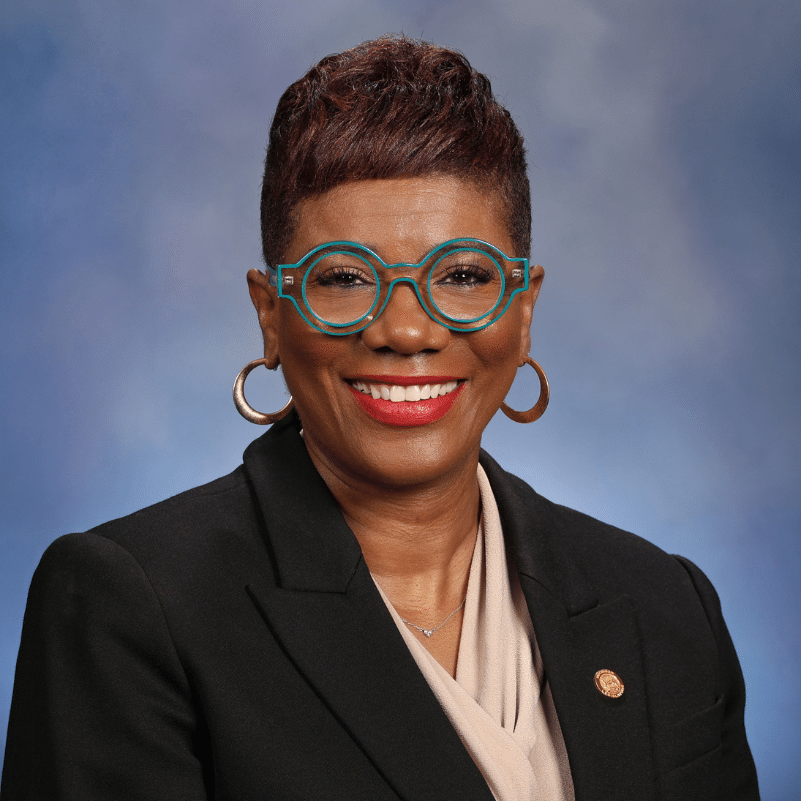
Rep. Cynthia Neeley
Sponsored bills
Maddy summaryHB 4759 encourages public employers (like state agencies, cities, schools, and community colleges) to use an expedited hiring process for dislocated federal employees who are referred through the state's reemployment services program. The bill requires public employers receiving such referrals to prioritize these candidates, though it does not mandate hiring. Key provisions include defining "public employer" broadly and specifying that this process must follow existing constitutional hiring rules for state positions. It does not override other laws but depends on another bill (HB 4758) being enacted first. The measure directly affects dislocated federal workers seeking new jobs and public employers hiring for open positions.
Maddy summaryThis resolution urges the federal government to maintain funding and reinstate staff for the Low Income Home Energy Assistance Program (LIHEAP) while negotiating the "One Big Beautiful Bill Act." It directly affects Michigan residents who rely on the state's Home Heating Credit Program, which provided assistance to 248,765 Michiganders in 2022 - including low-income families, seniors, and people with disabilities - by helping cover heating costs. The resolution highlights that proposed federal budget cuts to LIHEAP and the recent firing of LIHEAP program staff threaten the program's continuation, potentially causing payment delays or termination. As a non-binding request, it asks federal leaders to prioritize LIHEAP funding to prevent disruption of this critical aid.
Maddy summaryHB 4741 modifies Michigan's property tax law by ending certain programs that reduced delinquent tax payments or prevented foreclosure. It adds a $175 fee for properties forfeited to county treasurers due to unpaid taxes (after 12+ months delinquent), changes interest calculations for residential properties under foreclosure avoidance agreements, and updates redemption rules. Homeowners with delinquent taxes, particularly those in residential properties covered by existing tax foreclosure avoidance agreements, will be directly affected by these changes. The bill sunsets specific programs that previously offered payment reductions, requiring property owners to pay full delinquent amounts plus fees to avoid losing their homes.
Maddy summaryHB 4689 creates a Cultural History Advisory Board within Michigan's Department of Education. The board, appointed by the superintendent of public instruction, must include 2 members from each of 8 cultural communities (Asian-American/Pacific Islander, Latino/Hispanic, Black, Middle Eastern/North African/Chaldean, Indigenous, Caribbean-American, Jewish-American, European-American), plus educators, school administrators, labor representatives, and higher education members. The board must recommend a K-12 curriculum tool kit and professional development on cultural history within two years, collaborating with cultural organizations and schools. This bill establishes the framework for developing educational resources but does not mandate specific curriculum changes.
Maddy summaryHB 4687 requires all Michigan public school districts and public school academies to incorporate one unit of age-appropriate Black history and one unit of Indigenous People history into their history curriculum starting in the 2027-2028 school year. The bill mandates coverage of historical contributions, discriminatory policies, and civil rights advancements by these communities, while requiring instructional materials to align with state standards and include input from cultural centers and experts. Schools must ensure this instruction is inclusive for all students, including those with disabilities and English language learners, and avoid any bias or discrimination. The law allows flexibility for schools to integrate these units into existing lesson plans rather than creating new courses.
Maddy summaryHB 4688 requires Michigan public schools to provide cultural competency training for all educators and school staff starting in the 2027-2028 school year. The state must develop resources covering diversity, cultural identity, historic contributions of multiple cultural groups, and implicit bias (with expert input) by June 2027. Educators must complete this training as part of professional development, while non-educator staff must receive similar training but are exempt from history-focused content. This bill directly affects all public school districts, intermediate school districts, and public school academies in Michigan.
Maddy summaryHB 4675 requires Michigan's education department to develop and share a list of optional cursive handwriting instruction programs for public schools by June 2027. Starting in the 2026-2027 or 2027-2028 school year, school districts and public school academies are encouraged - but not required - to incorporate one of these model programs into their curriculum. The bill aims to support schools in meeting existing credit requirements under Michigan’s merit standards by offering cursive instruction as a voluntary option. It directly affects Michigan public schools by providing resources for optional handwriting education, without mandating changes to current standards.
Maddy summaryThis resolution officially designates June 27, 2025, as National PTSD Awareness Day in Michigan. It encourages Michigan residents to learn about PTSD, reduce stigma, and support those affected - including veterans, first responders, and trauma survivors - while aligning with the existing U.S. Senate observance honoring Staff Sergeant Joe Biel. The bill has no new funding or legal requirements; it is a symbolic gesture to promote awareness and compassion.
Maddy summaryThis House resolution (HR 132) urges the federal government to reinstate the U.S. Refugee Admissions Program (USRAP), which was suspended indefinitely by President Trump's January 2025 executive order. It directly affects refugees currently blocked from entering the U.S. due to the suspension, citing court challenges and a 2024 report noting refugees undergo the most rigorous screening of any immigrant group. The resolution does not create new law but formally requests federal action to resume refugee admissions. It was introduced on June 12, 2025, and referred to the Committee on Government Operations.