

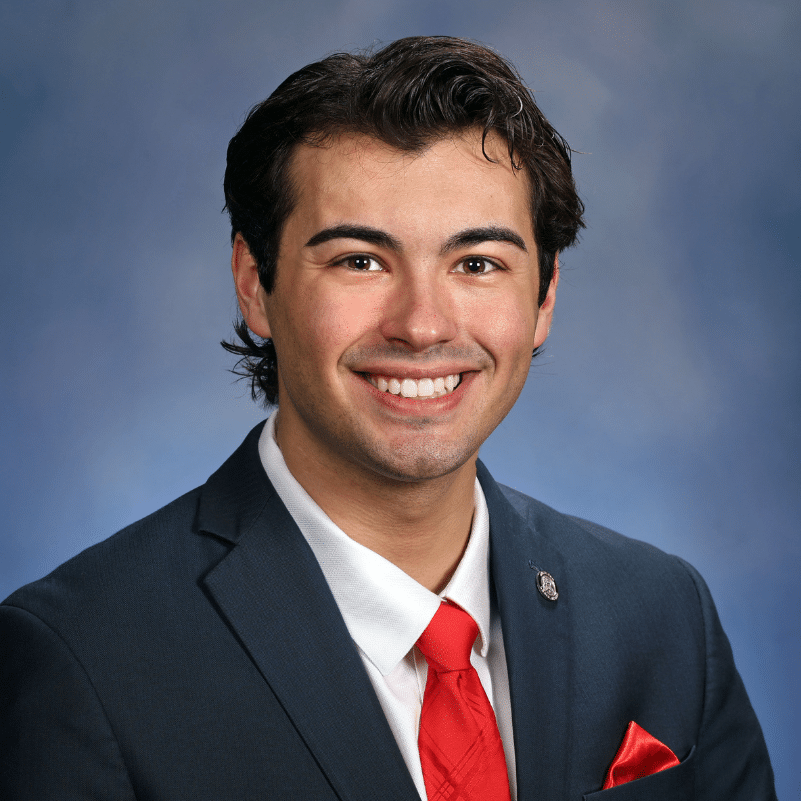
Photo of Jaz Martus
D Michigan House · District 69 On the 2026 ballot

Rep. Jaz Martus

Compare
Total votes
1,815
all sessions
Attendance
99%
10 missed
Higher than 83% of chamber peers
With party
98%
of cast votes
Near the chamber average
Bipartisan score
1%
crosses aisle rarely
Near the chamber average
Sponsored
741
bills & resolutions
Near the chamber average
Committees
1
assignment
741 bills and resolutions

Sponsored bills

Total
741
Primary
36
Co-sponsor
705
This page
741
matching current filters
Co-sponsor HB 5583
In committee · Michigan House · Co-sponsor
Land use: zoning and growth management; setback requirement greater than 25 feet; prohibit. Amends 2006 PA 110 (MCL 125.3101 - 125.3702) by adding sec. 205c.

Maddy summaryHB 5583 would limit local zoning rules in metro areas by prohibiting minimum setbacks for homes or outbuildings that exceed 15 feet from the front property line or 5 feet from rear/side lines. It allows up to 25 feet of setback only near specific environmental features: wetlands, lakes/streams, or the Great Lakes shoreline as defined by state law. The bill applies to all local governments located within or adjacent to a federally designated metropolitan statistical area. This change aims to simplify zoning for residential development in urban and suburban regions while maintaining environmental protections.

In committee May 14, 2026 1 co-sponsor
Co-sponsor HB 5584
In committee · Michigan House · Co-sponsor
Land use: zoning and growth management; duplexes; permit in single-family residential zones. Amends sec. 102 of 2006 PA 110 (MCL 125.3102) & adds sec. 517.

Maddy summaryHB 5584 allows duplexes to be built in any zoning district where single-family homes are permitted, directly affecting homeowners, developers, and local governments in Michigan. The bill requires local governments to treat duplexes the same as single-family homes for permitting and prohibits them from imposing restrictions that would prevent duplex construction - such as minimum unit size requirements, excessive parking mandates, or stricter design rules. It specifically bans requirements like lot coverage limits, setbacks, or height restrictions that would make duplexes impractical, while allowing reasonable, non-discriminatory rules. This policy change aims to increase housing options by making duplex development more accessible in single-family neighborhoods.

In committee May 14, 2026 1 co-sponsor
Co-sponsor HB 5953
In committee · Michigan House · Co-sponsor
Worker's compensation: disabilities; presumption of causation of post-traumatic stress disorder; provide for certain occupations and allow for claims against post-traumatic stress injury fund. Amends 1969 PA 317 (MCL 418.101 - 418.941) by adding sec. 407. TIE BAR WITH: HB 5952'26

Maddy summaryThis bill creates a new Post-Traumatic Stress Injury Fund to provide disability benefits to specific first responders and public safety workers who develop PTSD from work-related traumatic events. It allows eligible individuals, such as firefighters, police officers, and 911 dispatchers with at least five years of service, to suspend claims against their employers and instead seek compensation from the fund if they meet the criteria. The legislation establishes a legal presumption that the PTSD arose from employment, which can only be overturned by clear and convincing medical evidence proving non-work-related causes or an incorrect diagnosis. Additionally, the bill sets strict timelines for processing claims, requiring hearings within 90 days and decisions within 30 days, while also defining which high-stress situations qualify as traumatic events.

In committee May 13, 2026 1 co-sponsor
Co-sponsor HB 5955
In committee · Michigan House · Co-sponsor
Labor: fair employment practices; labor service agencies; regulate. Creates new act.

Maddy summaryThis bill, known as the Temporary Laborer Rights Act, establishes new regulations for temporary labor agencies, their clients, and the workers they employ in Michigan. It requires agencies to provide workers with clear written notices detailing job duties, pay rates, and meal or equipment costs before they start work. The law also mandates that agencies keep detailed records of transactions for seven years and makes these records available to workers upon request. Additionally, the bill prohibits agencies and clients from charging workers for meals they do not eat or for transportation to and from job sites. Finally, it includes provisions to prevent retaliation against workers who exercise their rights under the new rules.

In committee May 13, 2026 1 co-sponsor
Co-sponsor HB 5954
In committee · Michigan House · Co-sponsor
Labor: hours and wages; scheduling standards for certain employers; provide for. Creates new act.

Maddy summaryThis Michigan bill, known as the Employee Fair Scheduling Act, establishes new rules for larger employers in retail, hospitality, and food service industries to provide more predictable work schedules. It requires companies with at least 20 employees to give new hires a written estimate of their expected hours and to post detailed work schedules at least 14 days in advance. The legislation also mandates compensation for certain last-minute schedule changes, allows employees to request schedule adjustments, and prohibits retaliation against workers who exercise these rights.

In committee May 13, 2026 1 co-sponsor
Co-sponsor HB 5952
In committee · Michigan House · Co-sponsor
Worker's compensation: benefits; post-traumatic stress disorder injury fund; create. Amends 1969 PA 317 (MCL 418.101 - 418.941) by adding sec. 409.

Maddy summaryThis bill creates a new Post-Traumatic Stress Injury Fund within the state treasury to provide financial support for workers' compensation claims related to PTSD. The legislation establishes the fund's management structure, allowing the state treasurer to invest assets and the director to oversee audits and expenditures for approved claims and administrative costs. It mandates that any unpaid claims be prioritized for payment if the fund runs low and requires the director to notify the legislature if the money is projected to be insufficient within 60 days. Additionally, the bill mandates annual and quarterly reports to the legislature detailing claim statistics, payment amounts, and future cost estimates.

In committee May 13, 2026 1 co-sponsor
Co-sponsor HB 5320
Passed · Michigan House · Co-sponsor
Criminal procedure: sentencing guidelines; sentencing guidelines for flying over or trespassing on a key facility or critical infrastructure with an unmanned aircraft or vehicle; provide for. Amends 16b, ch. XVII of 1927 PA 175 (MCL 777.16b). TIE BAR WITH: HB 5319'25

Maddy summaryHB 5320 amends Michigan's criminal sentencing guidelines to specifically address unauthorized drone flights over or trespassing on critical infrastructure, such as power plants or bridges. It would establish new sentencing standards for individuals operating unmanned aircraft or vehicles near these facilities, directly affecting drone operators who violate these restrictions. The bill modifies Section 16b of the Michigan Code of Criminal Procedure (MCL 777.16b) to create clear penalties for such offenses, moving beyond general trespass laws. This change aims to strengthen legal consequences for drone-related threats to public safety infrastructure.

Passed May 12, 2026 1 co-sponsor
Co-sponsor HB 5319
Passed · Michigan House · Co-sponsor
Aeronautics: unmanned aircraft systems; flying over or trespassing on a key facility or critical infrastructure with an unmanned aircraft or vehicle; prohibit. Amends sec. 45a of 1931 PA 328 (MCL 750.45a).

Maddy summaryHB 5319 prohibits using unmanned aircraft (drones) to fly over or trespass on key facilities, correctional facilities, law enforcement facilities, or critical infrastructure. It directly affects drone operators who might fly near these locations without authorization. The bill creates criminal penalties (up to 4 years in prison or $2,500 fine) for violations, while exempting public safety agencies and commercial operators complying with federal FAA rules. Key provisions include a 90-day delay before restrictions apply and definitions of "key facility" (per §552c) and "critical infrastructure" (aligned with federal designations).

Passed May 12, 2026 1 co-sponsor
Co-sponsor HB 5321
Passed · Michigan House · Co-sponsor
Aeronautics: unmanned aircraft systems; database of restricted zones and flight paths for unmanned vehicles; create and provide penalties for using unmanned vehicles in a restricted zone or flight path. Creates new act. TIE BAR WITH: HB 5321'25

Maddy summaryHB 5321 creates a state geofencing database managed by Michigan's transportation department to list restricted zones where unmanned vehicles (including drones, ground vehicles, and watercraft) cannot operate. The bill requires the department to develop a public website and a mobile app that warns operators when approaching restricted areas like critical infrastructure, airports, or key facilities. Operating an unmanned vehicle in a restricted zone is a felony punishable by up to 4 years in prison or a $2,500 fine. This law directly affects anyone using unmanned vehicles in Michigan, establishing a new enforcement system to prevent unauthorized flights or operations in sensitive areas.

Passed May 12, 2026 1 co-sponsor
Co-sponsor HB 5322
In committee · Michigan House · Co-sponsor
Criminal procedure: sentencing guidelines; sentencing guidelines for using an unmanned vehicles in a restricted zone or flight path; provide for. Amends sec. 12k, ch. XVII of 1927 PA 175 (MCL 777.12k). TIE BAR WITH: HB 5330'25

Maddy summaryHB 5322 proposes to update Michigan's sentencing guidelines for crimes involving the unauthorized use of unmanned vehicles (like drones) in restricted zones or flight paths, such as near airports or government facilities. If passed, it would create specific sentencing rules for these offenses, directly affecting drone operators who violate such restrictions. The bill amends existing criminal procedure code section 777.12k to establish these new sentencing parameters for this specific violation. This is a policy change focused on clarifying penalties for drone misuse in sensitive areas, not a procedural or commemorative measure.

In committee May 12, 2026 1 co-sponsor
Showing 81 to 90 of 741 bills
Previous 1 … 8 9 10 … 75 Next