

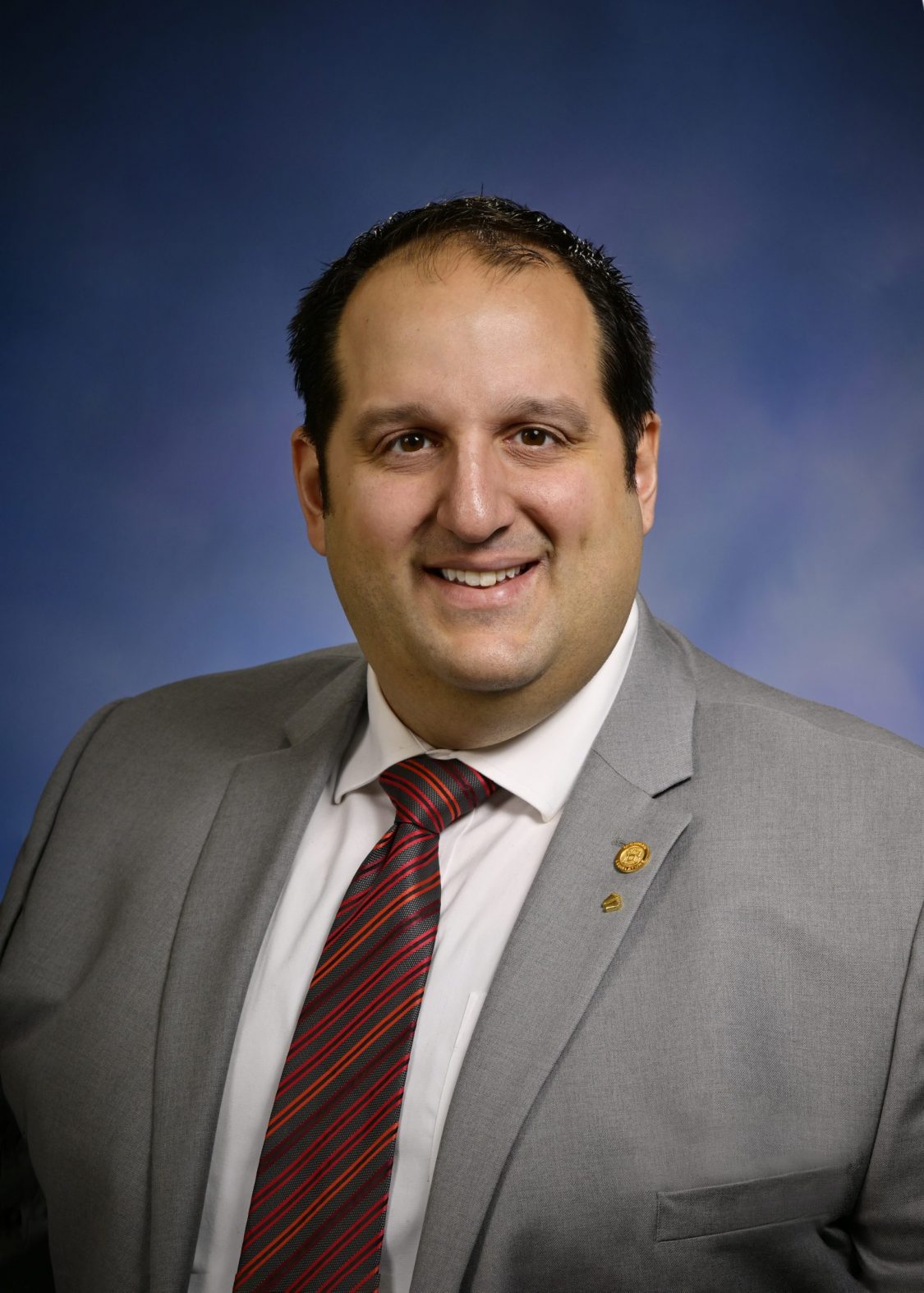
Photo of Joe Aragona
R Michigan House · District 60 On the 2026 ballot

Rep. Joe Aragona

Compare
Total votes
1,761
all sessions
Attendance
99%
13 missed
Higher than 83% of chamber peers
With party
93%
of cast votes
Higher than 94% of chamber peers
Bipartisan score
3%
crosses aisle rarely
Lower than 95% of chamber peers
Sponsored
584
bills & resolutions
Near the chamber average
Committees
4
assignments
584 bills and resolutions

Sponsored bills

Total
584
Primary
80
Co-sponsor
504
This page
584
matching current filters
Co-sponsor HB 4124
Passed · Michigan House · Co-sponsor
Corporate income tax: credits; credit for advanced small modular reactors research and development expenses; provide for. Amends 1967 PA 281 (MCL 206.1 - 206.847) by adding secs. 677a & 717a. TIE BAR WITH: HB 4127'25, HB 4129'25, HB 4125'25, HB 4126'25, HB 4128'25

Maddy summaryHB 4124 creates a tax credit for Michigan corporations that spend money on research and development for advanced small modular nuclear reactors (SMRs). It directly affects companies developing this specific type of nuclear technology within the state. The bill adds new sections to Michigan's tax code, allowing businesses to claim a credit against their corporate income tax for qualifying R&D expenses related to SMRs. This policy change aims to incentivize investment in emerging nuclear energy technology within Michigan. The bill passed the House on October 28, 2025, with 78 yeas and 26 nays.

Passed Oct 30, 2025 1 co-sponsor
Co-sponsor HB 4128
Passed · Michigan House · Co-sponsor
Corporate income tax: credits; credit for advanced small modular reactor generated power; provide for. Amends 1967 PA 281 (MCL 206.1 - 206.847) by adding sec. 678. TIE BAR WITH: HB 4127'25, HB 4129'25, HB 4125'25, HB 4126'25, HB 4124'25

Maddy summaryHB 4128 creates a new corporate income tax credit for businesses generating power from advanced small modular reactors (SMRs) in Michigan. It directly affects utility companies and energy developers investing in SMR technology by providing a financial incentive to offset project costs. The key provision adds Section 678 to Michigan's tax code, allowing qualifying entities to claim a credit against their state corporate income tax liability for SMR-generated electricity. This policy change aims to support clean energy development without specifying expected outcomes or endorsing particular technologies. The bill passed the House on October 28, 2025, and is now pending final approval in the Senate.

Passed Oct 30, 2025 1 co-sponsor
Co-sponsor HB 4127
Passed · Michigan House · Co-sponsor
Energy: nuclear; definition of advanced nuclear reactors; provide for. Amends sec. 10h of 1939 PA 3 (MCL 460.10h). TIE BAR WITH: HB 4129'25, HB 4125'25, HB 4126'25, HB 4128'25, HB 4124'25

Maddy summaryHB 4127 adds a specific definition for "advanced nuclear reactor technologies" to Michigan's energy law. The bill defines these as nuclear reactors with significant safety improvements over pre-2016 U.S. models, including federally defined advanced reactors and existing Michigan nuclear facilities that completed life cycle management. This definition will directly affect the Michigan Public Service Commission and electric utilities when evaluating nuclear energy projects and regulatory approvals. It creates a clear standard for identifying qualifying nuclear technologies under state law, ensuring consistent application of energy regulations.

Passed Oct 30, 2025 1 co-sponsor
Co-sponsor HB 4126
Passed · Michigan House · Co-sponsor
Higher education: education programs; fund for nuclear and hydrogen education grant program; create. Creates new act. TIE BAR WITH: HB 4127'25, HB 4129'25, HB 4125'25, HB 4128'25, HB 4124'25

Maddy summaryHB 4126 creates a dedicated fund in the Michigan state treasury to provide grants to colleges and universities that establish or expand educational programs leading to degrees or credentials in the nuclear and hydrogen energy sectors. The fund, administered by the state Department of Education, will support institutions developing training programs aligned with these industries' workforce needs. Money in the fund does not expire annually and must be used solely for awarding these grants through state appropriations. This bill directly affects Michigan higher education institutions seeking to build or expand programs in nuclear and hydrogen energy fields.

Passed Oct 30, 2025 1 co-sponsor
Co-sponsor HB 4745
In committee · Michigan House · Co-sponsor
Businesses: charitable organizations; exemptions from registration and reporting requirements; modify. Amends sec. 13 of 1975 PA 169 (MCL 400.283).

Maddy summaryHB 4745 modifies Michigan's Charitable Organizations and Solicitations Act to expand exemptions from registration and reporting requirements. It exempts small charitable groups that raise under $25,000 annually through unpaid volunteers, individual relief efforts (like community fundraisers for named people), educational institutions, hospitals, veterans' organizations, and certain non-profits with specific tax statuses. The bill also adds requirements for some exempt groups, such as filing financial statements or using funds solely for stated charitable purposes. These changes directly affect local charities, community groups, and hospitals that previously faced registration burdens for smaller-scale fundraising.

In committee Oct 30, 2025 1 co-sponsor
Co-sponsor HB 4642
Passed · Michigan House · Co-sponsor
Campaign finance: violations; authority of the attorney general's office to resolve violations involving the secretary of state; provide for. Amends sec. 15 of 1976 PA 388 (MCL 169.215).

Maddy summaryHB 4642 amends Michigan's campaign finance law to require the secretary of state to refer violations involving themselves, their immediate family, or a connected campaign to the attorney general for resolution. This change ensures that cases where the secretary of state is a party are handled by an independent office, avoiding potential conflicts of interest. The bill does not alter the secretary of state's authority over other campaign finance matters. It specifically clarifies the process for referring such cases to the attorney general under the existing law.

Passed Oct 30, 2025 1 co-sponsor
Co-sponsor HB 4125
Passed · Michigan House · Co-sponsor
Higher education: education programs; nuclear and hydrogen education grant program; create. Creates new act. TIE BAR WITH: HB 4127'25, HB 4129'25, HB 4126'25, HB 4128'25, HB 4124'25

Maddy summaryHB 4125 creates the "nuclear and hydrogen education grant program" to fund colleges and universities in Michigan that establish or expand educational programs leading to degrees or credentials in nuclear or hydrogen energy fields. The program requires participating schools to offer scholarships or tax credits to students who commit to working for at least three years at a nuclear or hydrogen energy facility in the state after graduation. Grants are awarded competitively by the Department of Labor and Economic Opportunity, targeting programs that directly support workforce development for these industries. This bill directly affects postsecondary institutions, students in qualifying programs, and the nuclear/hydrogen energy sector by creating a pipeline for trained workers.

Passed Oct 30, 2025 1 co-sponsor
Co-sponsor HB 4663
Passed · Michigan House · Co-sponsor
Liquor: licenses; certain donations to nonprofits; allow. Amends 1998 PA 58 (MCL 436.1101 - 436.2303) by adding sec. 1016.

Maddy summaryHB 4663 allows liquor license holders in Michigan to donate a portion of their profits to tax-exempt nonprofits (501(c)(3) organizations) after recording those profits on their financial records. Licensees must report these profits to the Liquor Control Commission upon request. The bill specifically prohibits nonprofits that receive a special license for an event from using donated funds to cover costs for that same event. This change directly affects licensed liquor businesses and qualifying nonprofits by creating a new, regulated pathway for charitable giving.

Passed Oct 30, 2025 1 co-sponsor
Co-sponsor HB 5117
In committee · Michigan House · Co-sponsor
Liquor: licenses; quota for certain on-premises licenses; remove. Amends sec. 533 of 1998 PA 58 (MCL 436.1533).

Maddy summaryHB 5117 removes population-based quotas for "specially designated merchant" liquor licenses in Michigan. It eliminates the requirement that only one such license may be issued per 1,000 residents (or fraction thereof) for certain applicants, including large grocery stores meeting size/sales criteria, pharmacies, and gas station retailers with motor fuel licenses. The bill also clarifies that licenses issued under these exemptions cannot be transferred to new locations. This change directly affects businesses seeking new licenses or renewing existing ones, particularly those operating large retail food establishments or combining alcohol sales with other services.

In committee Oct 28, 2025 1 co-sponsor
Co-sponsor HB 5122
In committee · Michigan House · Co-sponsor
Liquor: other; Identification allowed to verify age to purchase alcohol; expand. Amends 1998 PA 58 (MCL 436.1101 - 436.2303) by adding sec. 202.

Maddy summaryHB 5122 expands the types of photo identification consumers can use to verify their age when purchasing or consuming alcohol in Michigan. The bill adds Section 202 to the Liquor Control Code, allowing any current government-issued photo ID - including driver's licenses, passports, military IDs, state ID cards, or student IDs from accredited institutions - to be accepted by retailers. This directly affects consumers seeking to buy alcohol and retailers who must verify age under the law. The change updates existing age verification requirements without altering alcohol sales rules or creating new restrictions.

In committee Oct 28, 2025 1 co-sponsor
Showing 221 to 230 of 584 bills
Previous 1 … 22 23 24 … 59 Next