

Maddy summaryHB 4481 requires Michigan's Attorney General to create and maintain a website listing states that recognize Michigan concealed pistol licenses and detailing each state's specific rules for out-of-state license holders. This website will help Michigan license holders understand where they can legally carry concealed firearms and what restrictions apply when traveling. The bill directly affects Michigan residents with concealed carry permits who travel to other states. It is a procedural measure focused on providing clear, accessible information to license holders, not changing gun laws or restrictions.
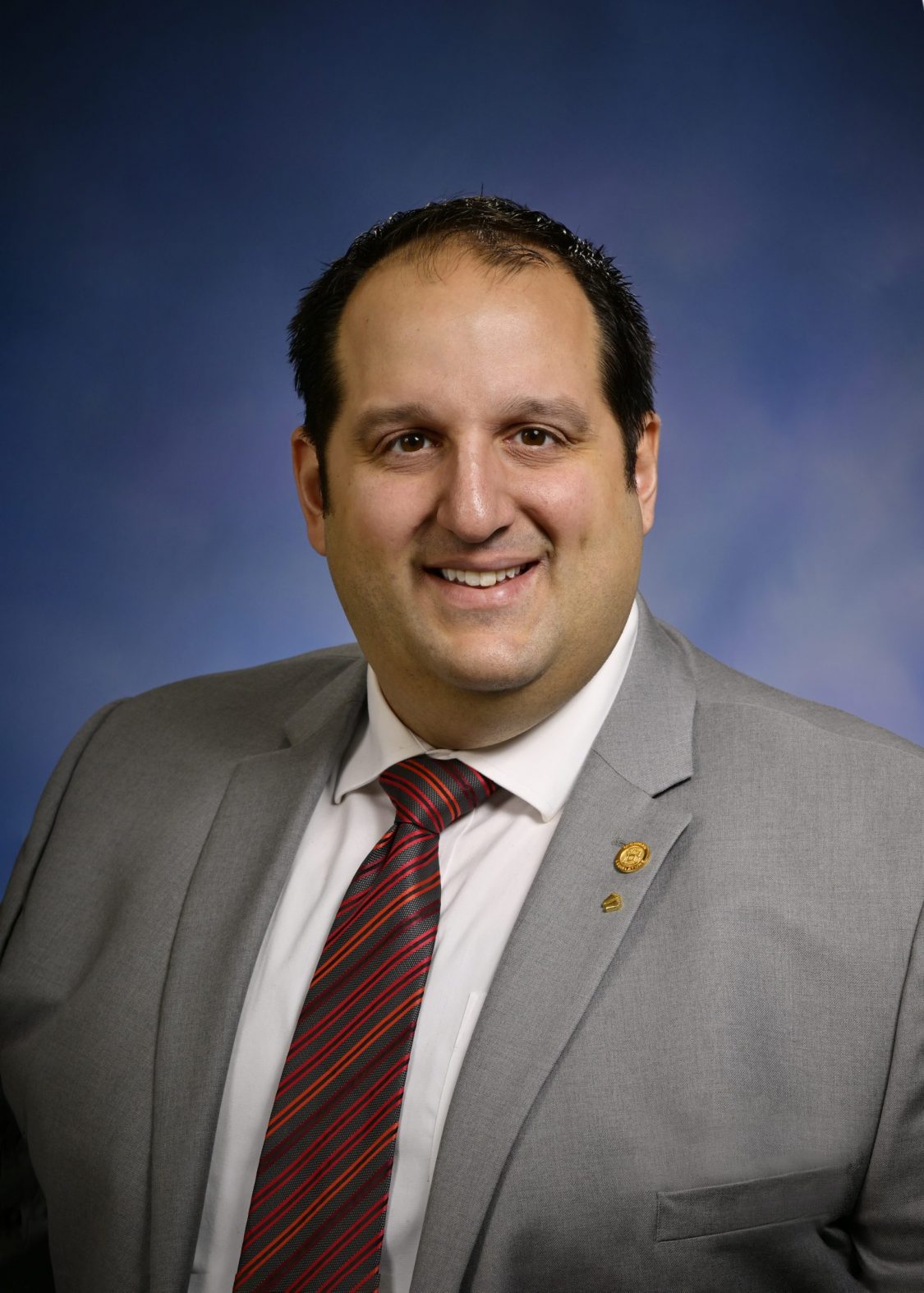
Rep. Joe Aragona
Sponsored bills
Maddy summaryHB 5282 creates a new program to provide financial bonuses to Michigan veterans who served during the Vietnam-era period from September 1, 1973, to May 7, 1975, and met specific residency and service requirements. Combat veterans (those missing in action or eligible for the Vietnam Service Medal) receive a one-time $600 payment, while non-combat veterans receive $15 per month (capped at $450 total). Surviving spouses, children, or dependent parents of deceased or missing veterans can apply for these benefits through the Department of Military and Veterans Affairs. The program is funded by a newly created "Vietnam veteran era bonus extension fund" administered by the state, with application requirements including proof of honorable service and Michigan residency.
Maddy summaryHB 5240 prohibits Michigan credit unions from denying, restricting, or canceling financial services to agriculture producers based on their greenhouse gas emissions, fertilizer use, or machinery type. It specifically targets credit unions that have made environmental, social, and governance (ESG) commitments, presuming such restrictions violate the law unless the credit union proves the decision was based solely on ordinary business reasons unrelated to ESG goals. Violations carry a civil fine of up to $10,000 per incident. The bill directly affects domestic credit unions and agriculture producers (defined as farm owners/operators under Michigan law), covering services like loans, deposits, and other financial products.
Maddy summaryHB 5241 prohibits Michigan state departments and agencies from entering contracts with businesses that boycott certain entities. Starting October 1, 2017, contracts for state building projects require a representation that the business is not boycotting "strategic partners" (as defined in the law). A new provision, effective January 1, 2026, extends this to ban contracts with businesses boycotting entities in conventional energy, mining, agriculture, timber, or firearms industries. The law directly affects state contractors by requiring written assurances they are not engaging in these boycotts.
Maddy summaryHB 5238 prohibits banks in Michigan from denying, restricting, or canceling financial services to agriculture producers based on their greenhouse gas emissions, fertilizer use, or machinery type. It specifically targets banks with environmental, social, and governance (ESG) commitments - like public statements or participation in green initiatives - by creating a presumption that such actions violate the law. Banks can rebut this presumption with clear evidence that the decision was based solely on ordinary business reasons unrelated to ESG goals. Violations could result in civil fines up to $10,000 per incident, covering services like loans, deposits, and financing. The bill directly affects Michigan farmers operating under the Right to Farm Act and aims to prevent financial discrimination tied to environmental practices.
Maddy summaryHB 5242 prohibits accrediting agencies from considering diversity, equity, and inclusion (DEI) policies, programs, or practices when making accreditation decisions for Michigan's public and private colleges and universities. The bill directly affects higher education institutions, accrediting agencies, and their students and employees by requiring accreditation decisions to focus solely on academic standards. Key provisions ban agencies from reviewing DEI-related information, collecting such data, or requiring diversity statements, with enforcement through lawsuits by students, employees, or the Attorney General. Violations could result in triple damages, attorney fees, and up to $1,000 per affected student in penalties.
Maddy summaryHB 5239 prohibits savings banks in Michigan from denying, restricting, or canceling financial services to agriculture producers based on their greenhouse gas emissions, fossil fuel fertilizer use, or fossil fuel-powered machinery. It directly affects savings banks (which must stop such restrictions) and agriculture producers (who gain protection from service denials tied to environmental factors). The bill creates a presumption of violation if a bank with an environmental/social commitment denies services, but allows banks to rebut this with evidence showing the decision was based solely on ordinary business reasons unrelated to environmental goals. Violations carry a civil fine of up to $10,000.
Maddy summaryHB 5237 prohibits Michigan public employee retirement systems from investing in environmental, social, and governance (ESG) funds unless those investments offer comparable financial returns to other options. The bill amends Section 13 of the Public Employee Retirement System Investment Act to require investment fiduciaries to consider *only* financial factors (like risk and return) when making decisions, explicitly excluding non-financial social, political, or ideological objectives. This directly affects retirement systems managing funds for state employees, including teachers and public workers, by restricting their ability to prioritize ESG criteria in investment choices. The key provision clarifies that ESG considerations cannot be used as a primary factor unless they demonstrably align with financial performance goals.
Maddy summaryHB 4276 modifies Michigan's liquor control law to allow certain licensees to own and operate motor fuel pumps on or near their licensed premises under specific conditions. It primarily affects liquor retailers (specially designated distributor and merchant license holders) in smaller communities, requiring them to maintain minimum inventory levels ($250,000 for most, $12,500 for rural areas) and ensure a 5-foot separation between fuel dispensing and alcohol service points. The bill also adds provisions for secondary locations (like satellite stores) and clarifies transfer rules for licenses involving existing fuel pump operations. These changes relax prior restrictions but impose clear, measurable requirements for compliance.
Maddy summaryThis resolution declares November 12-18, 2025, as "Community Foundation Week" in Michigan. It formally recognizes the work of Michigan’s 60+ community foundations, which support local communities through partnerships, crisis response, and addressing issues like poverty and disaster recovery. The resolution does not create new laws or funding but serves as a ceremonial acknowledgment of these organizations' role in strengthening communities across urban, suburban, and rural areas. It was introduced by multiple state representatives and adopted by the House on November 12, 2025.