

Passed Dec 17, 2025
1 co-sponsor
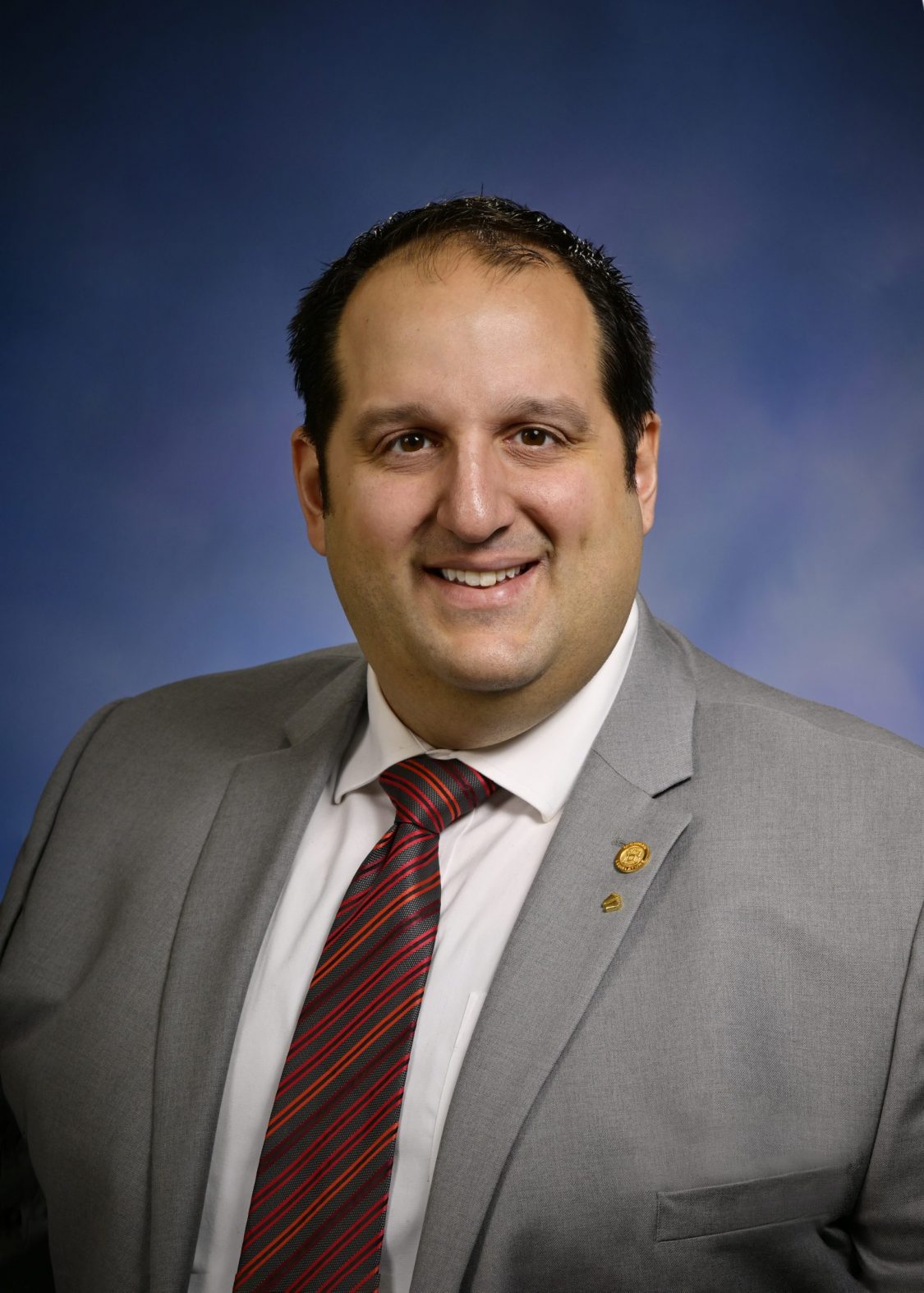
Rep. Joe Aragona
Total votes
1,761
all sessions
Attendance
99%
13 missed
Higher than 83% of chamber peers
With party
93%
of cast votes
Higher than 94% of chamber peers
Bipartisan score
3%
crosses aisle rarely
Lower than 95% of chamber peers
Sponsored
584
bills & resolutions
Near the chamber average
Committees
4
assignments
584 bills and resolutions
Sponsored bills
Total
584
Primary
80
Co-sponsor
504
This page
584
matching current filters
Animals: care and treatment; restitution for care and treatment of certain forfeited animals; impose penalties upon owner. Amends sec. 50 of 1931 PA 328 (MCL 750.50).
Maddy summaryHB 5360 amends Michigan's penal code to clarify standards for animal care and define neglect. It requires owners, breeders, and pet shops to provide adequate food, water, shelter, and veterinary care to prevent health harm, while specifically prohibiting tethering dogs with chains shorter than three times their length (except for safety during training or events). The bill also defines "abandonment" to exclude cases where owners make reasonable efforts to locate lost animals during travel. These changes directly affect anyone responsible for animals in Michigan, imposing penalties for violations like failing to meet care standards or causing unnecessary suffering.
In committee Dec 16, 2025
0 co-sponsors
Crimes: animals; restitution for care and treatment of certain forfeited animals; impose penalty on ownership of animal to person convicted of certain crimes against animal. Amends sec. 50b of 1931 PA 328 (MCL 750.50b).
Maddy summaryHB 5361 strengthens penalties for animal cruelty in Michigan by requiring courts to order convicted offenders to pay restitution for the care, housing, and veterinary treatment of seized companion animals (like pets or service animals). It clarifies that companion animals receive enhanced protections, with stricter penalties for intentional harm (e.g., killing or torturing a pet). The bill mandates restitution covering investigation, prosecution, and animal care costs - not previously required - and prohibits convicted individuals from owning animals during probation or permanently. It excludes lawful activities like hunting, farming, or veterinary care from these provisions.
In committee Dec 16, 2025
0 co-sponsors
Appropriations: supplemental; certain funding designated to the University of Michigan; modify. Creates appropriation act.
Maddy summaryHB 5362 is a supplemental budget bill that allocates additional state funds to the University of Michigan for its operations during the 2024-2025 fiscal year. It modifies existing state appropriations by designating specific supplemental funding for the University of Michigan, without creating new programs or altering the university's structure. This bill directly affects the University of Michigan's budget, providing it with additional resources from the state's general fund for the upcoming fiscal year. The bill is procedural in nature, focusing solely on the allocation of existing state funds rather than establishing new policies.
Budget & TaxesSupports Budget & TaxesBill allocates supplemental state funds to University of Michigan for operations, increasing public institution funding per appropriations focus.
EducationSupports EducationAllocates supplemental state funds to University of Michigan for operations, directly increasing higher education funding without restrictions.
In committee Dec 16, 2025
1 co-sponsor
Environmental protection: water pollution; removal of surface debris without a permit; allow. Amends sec. 32512 of 1994 PA 451 (MCL 324.32512).
Maddy summaryHB 4314 amends Michigan's environmental law to allow property owners and communities to remove free-floating debris and uprooted vegetation from shorelines without a permit. Specifically, it permits mechanical or manual removal between the ordinary high-water mark and the water's edge, as long as the activity doesn't impact the lakebed. This change directly affects residents, shoreline property managers, and local groups maintaining areas along Great Lakes and Lake St. Clair shorelines. The exemption does not apply to the St. Clair River delta area in Clay Township, St. Clair County, as defined in 1899 PA 175.
Passed Dec 16, 2025
1 co-sponsor
Health: confidentiality; critical incident stress management services; modify. Amends secs. 20981 & 20982 of 1978 PA 368 (MCL 333.20981 & 333.20982).
Maddy summaryHB 4857 amends Michigan’s Public Health Code to strengthen confidentiality protections for emergency service providers receiving critical incident stress management (CISM) services. The bill ensures conversations between first responders (such as police, firefighters, EMTs, and dispatchers) and CISM teams remain private, preventing disclosure in court, investigations, or other proceedings. Exceptions include situations where a provider poses an imminent threat to themselves or others, reports abuse, or explicitly waives confidentiality. This change directly affects emergency workers accessing mental health support after traumatic incidents, ensuring they can seek help without fear of their disclosures being used against them. The law applies to all CISM services provided under the existing framework, including peer support, debriefings, and referrals.
Passed Dec 2, 2025
1 co-sponsor
Health occupations: veterinarians; veterinarian-client-patient relationship; require. Amends 1978 PA 368 (MCL 333.1101 - 333.25211) by adding sec. 18818. TIE BAR WITH: HB 4221'25
Maddy summaryHB 4220 amends Michigan's veterinary practice law (MCL 333.1101 - 333.25211) by adding a new section (18818) that establishes requirements for the veterinarian-client-patient relationship. The bill directly affects veterinarians and pet owners by defining the legal obligations within this relationship. Key provisions require veterinarians to maintain clear communication and documentation when providing care, ensuring patient welfare and professional accountability. The bill passed the House overwhelmingly (84-17) and was transmitted to the Regulatory Affairs Committee for further review.
Passed Dec 2, 2025
0 co-sponsors
Health occupations: veterinarians; veterinarian-client-patient relationship; require. Amends secs. 16287 & 18811 of 1978 PA 368 (MCL 333.16287 & 333.18811). TIE BAR WITH: HB 4221'25
Maddy summaryHB 4221 amends Michigan's Public Health Code to clarify and strengthen regulations for veterinarians and veterinary technicians. It specifically restricts the use of titles like "veterinarian," "DVM," or "veterinary surgeon" to only licensed professionals, and prohibits veterinary technicians from diagnosing diseases, prescribing treatments, or performing surgery. The bill ensures that only authorized individuals may use protected titles or practice within their licensed scope. These changes directly affect licensed veterinarians, veterinary technicians, and the public by maintaining clear standards for veterinary care.
Passed Dec 2, 2025
1 co-sponsor
Weapons: concealed; QR code on concealed pistol licenses; provide for. Amends sec. 5c of 1927 PA 372 (MCL 28.425c). TIE BAR WITH: HB 4481'25
Maddy summaryHB 4483 requires Michigan concealed pistol license holders to have a QR code printed on their license. This QR code links directly to a reciprocity website maintained by the Michigan Attorney General, which shows which states recognize Michigan licenses. The bill amends existing law to add this QR code as a standard feature on all concealed pistol licenses issued under Michigan's licensing system. It affects all current and future concealed carry license holders by providing a quick digital reference for out-of-state reciprocity.
Passed Dec 2, 2025
0 co-sponsors
Weapons: concealed; requirements for concealed pistol license reciprocity website; provide for. Amends 1927 PA 372 (MCL 28.421 - 28.435) by adding sec. 5q. TIE BAR WITH: HB 4481'25
Maddy summaryHB 4482 requires Michigan's Department of Attorney General to update a website every 60 days showing which states recognize Michigan concealed pistol license holders' permits. This directly affects Michigan residents who hold concealed carry licenses and wish to carry firearms in other states. The bill adds a new provision (Section 5q) to existing law, mandating regular website updates to display current reciprocity agreements. It does not change licensing requirements or permit holders' rights, only ensuring accurate, up-to-date information is publicly available. The bill is procedural, focusing solely on information transparency for license holders.
Passed Dec 2, 2025
1 co-sponsor
Ask Maddy
·
AI policy assistant
Ask Maddy about Joe Aragona
Scope: michigan
Hi! I can help you understand Joe Aragona's legislative record. What would you like to know?
Try one of these
i
Maddy answers using official bill text and legislative records. Always verify before sharing.
Sources cited inline