

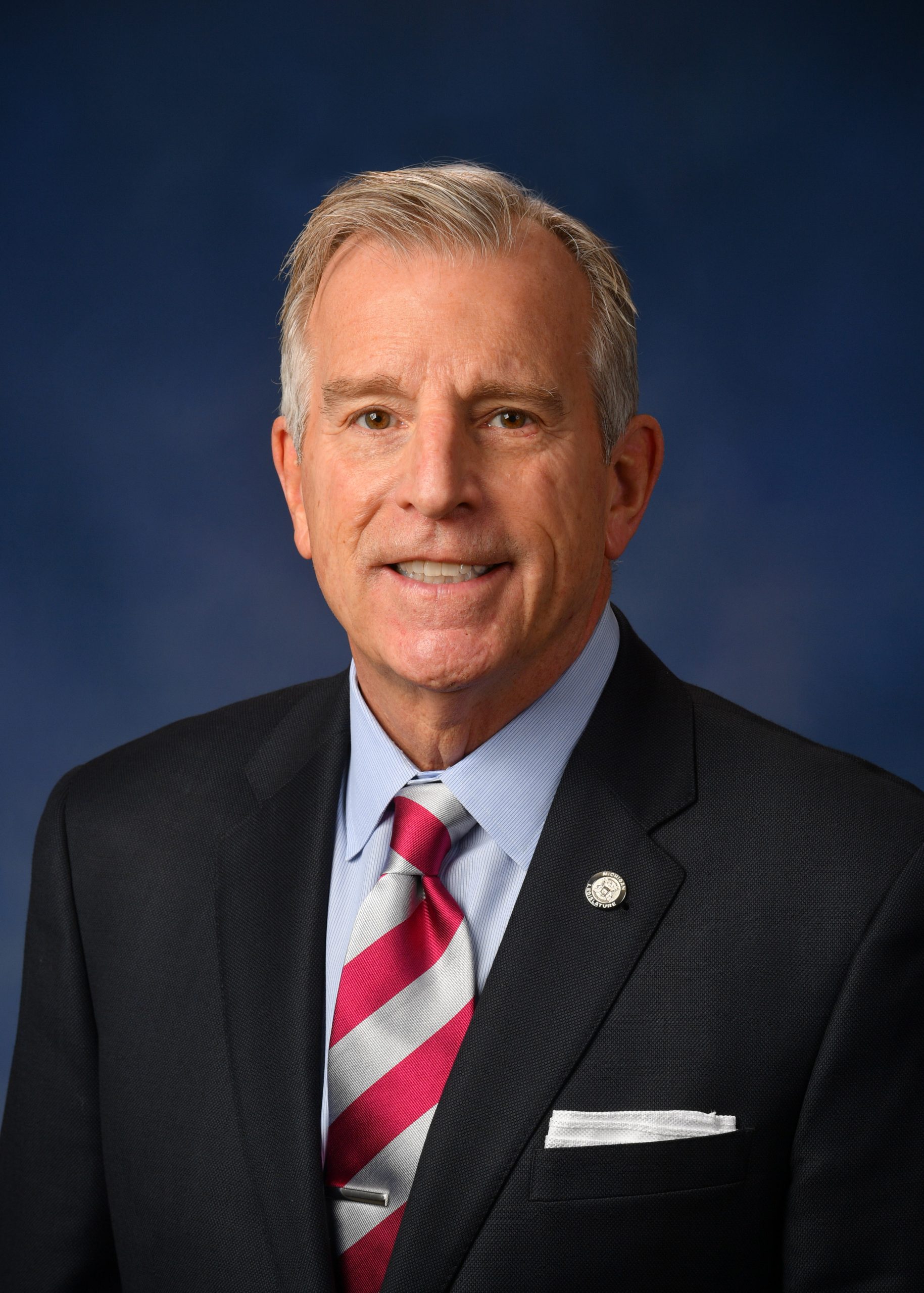
Photo of Mark Tisdel
R Michigan House · District 55 On the 2026 ballot

Rep. Mark Tisdel

Compare
Total votes
2,891
all sessions
Attendance
100%
1 missed
Higher than 83% of chamber peers
With party
94%
of cast votes
Higher than 89% of chamber peers
Bipartisan score
3%
crosses aisle rarely
Lower than 91% of chamber peers
Sponsored
495
bills & resolutions
Near the chamber average
Committees
4
assignments
495 bills and resolutions

Sponsored bills

Total
495
Primary
92
Co-sponsor
403
This page
495
matching current filters
Co-sponsor HB 5944
In committee · Michigan House · Co-sponsor
Human services: medical services; coverage for behavioral health transportation; provide for. Amends 1939 PA 280 (MCL 400.1 - 400.119b) by adding sec. 109y. TIE BAR WITH: HB 5943'26

Maddy summaryThis bill proposes to expand Michigan's medical assistance program to cover transportation services for individuals with behavioral health needs. It requires the state department to pay for these transport costs for eligible people and mandates that transport providers follow existing mental health code regulations. The legislation defines behavioral health transport as travel to and from treatment facilities and specifies that only approved agencies can provide this service. Importantly, the bill will not become law unless it is passed together with a companion bill, HB 5943.

In committee Jun 24, 2026 1 co-sponsor
Co-sponsor HB 5943
Passed · Michigan House · Co-sponsor
Health: licensing; behavioral health transportation licensing requirements; provide for. Amends 1974 PA 258 (MCL 330.1001 - 330.2106) by adding ch. 9B. TIE BAR WITH: HB 5944'26

Maddy summaryThis bill establishes a new licensing framework in Michigan for agencies that provide specialized transportation services for individuals experiencing mental health crises. It creates specific definitions for these services, which are designed to move medically stable people who do not require physical or chemical restraints to the nearest facility capable of meeting their needs. The legislation mandates that licensed agencies operate under medical supervision, maintain detailed logs of every trip, and implement strict safety and hygiene protocols for their vehicles and staff. Additionally, the bill requires agencies to submit annual reports to the legislature detailing the number of transports, police interventions, and any investigations into staff misconduct.

Passed Jun 24, 2026 1 co-sponsor
Co-sponsor HB 5681
In committee · Michigan House · Co-sponsor
Health: medical records; medical record fees; modify. Amends sec. 9 of 2004 PA 47 (MCL 333.26269).

Maddy summaryThis bill updates the fees that healthcare providers and medical records companies can charge patients for accessing their medical records in Michigan. It raises the initial request fee from $20 to $31.54 and adjusts per-page copying costs based on the number of pages, with higher rates for pages beyond 20. The law also requires annual fee adjustments starting in 2028 based on the Detroit consumer price index and maintains fee waivers for medically indigent individuals who receive one free set of copies per provider.

In committee Jun 24, 2026 1 co-sponsor
Co-sponsor HB 5734
In committee · Michigan House · Co-sponsor
Health: licensing; references to licenses for certain substance use disorder services programs in the nonprofit health care corporation reform act; modify to include those exempt from licensure. Amends sec. 414a of 1980 PA 350 (MCL 550.1414a). TIE BAR WITH: HB 5729'26

Maddy summaryThis bill modifies the Nonprofit Health Care Corporation Reform Act to clarify that substance use disorder services programs exempt from licensure under the Public Health Code are eligible to contract with health care corporations for inpatient treatment. The amendment updates language in Section 414a to explicitly include these exempt programs alongside licensed facilities, ensuring they can participate in state-regulated health care contracts for substance abuse treatment. The bill does not create new programs or change existing coverage requirements but rather aligns the licensing references to reflect current exemptions under Michigan law. It affects health care corporations, providers of substance use disorder services, and the regulatory framework governing their contracting relationships.

In committee Jun 24, 2026 1 co-sponsor
Co-sponsor HB 5732
In committee · Michigan House · Co-sponsor
Health: licensing; references to licenses for certain substance use disorder services programs in the Michigan zoning enabling act; modify to include those exempt from licensure. Amends sec. 206 of 2006 PA 110 (MCL 125.3206). TIE BAR WITH: HB 5729'26

Maddy summaryThis bill modifies Michigan's zoning enabling act to update how certain substance use disorder services programs are classified for zoning purposes. It specifically adjusts the language to include facilities that are exempt from licensure under state public health regulations, ensuring they are treated consistently with other licensed substance use disorder programs in zoning decisions. The change affects local governments and zoning boards that review residential property uses, particularly those evaluating the placement of group child care homes near substance use disorder treatment facilities. By aligning the zoning language with current licensing exemptions, the bill ensures that facilities not required to hold a license are still properly recognized in zoning determinations.

In committee Jun 24, 2026 1 co-sponsor
Co-sponsor HB 5733
In committee · Michigan House · Co-sponsor
Health: licensing; references to licenses for certain substance use disorder services programs in the motor vehicle code; modify to include those exempt from licensure. Amends sec. 625b of 1949 PA 300 (MCL 257.625b). TIE BAR WITH: HB 5729'26

Maddy summaryThis bill amends the Michigan Vehicle Code to update time limits for court proceedings related to certain traffic violations, specifically those involving substance use disorder services. It requires courts to schedule initial court appearances within 14 days of arrest, hold pretrial conferences within 35 to 42 days, and finalize cases within 77 days, with specific exceptions for felony charges. The changes apply to individuals charged with misdemeanor traffic violations and ensure consistent timelines for moving cases through the court system. The bill does not alter existing licensing requirements for substance use disorder programs but clarifies how these programs are referenced in vehicle code sections.

In committee Jun 24, 2026 1 co-sponsor
Co-sponsor HB 5736
In committee · Michigan House · Co-sponsor
Health: licensing; references to licenses for certain substance use disorder services programs in the patient’s right to independent review act; modify to include those exempt from licensure. Amends sec. 3 of 2000 PA 251 (MCL 550.1903). TIE BAR WITH: HB 5729'26

Maddy summaryThis bill amends Michigan's Patient's Right to Independent Review Act to clarify which substance use disorder services programs qualify as facilities under the law. It specifically updates the definition of "facility" to include programs that are exempt from licensure under state public health regulations, alongside those that are currently licensed. The change ensures that patients receiving care from both licensed and exempt substance use disorder programs have the same access to external review processes when their health care services are denied or terminated. This update applies to health carriers and their designated review organizations, expanding the scope of facilities eligible for independent review protections.

In committee Jun 24, 2026 1 co-sponsor
Co-sponsor HB 5728
In committee · Michigan House · Co-sponsor
Health: licensing; references to licenses for certain substance use disorder services programs in the prudent purchaser act; modify to include those exempt from licensure. Amends sec. 2 of 1984 PA 233 (MCL 550.52). TIE BAR WITH: HB 5729'26

Maddy summaryThis bill modifies the Prudent Purchaser Act in Michigan to clarify that substance use disorder treatment programs exempt from licensure are still considered health facilities under the law. The change updates the definition of "health facility" in the statute to explicitly include programs that are either licensed or exempt from licensure under specific public health codes. This adjustment ensures these programs are recognized within the legal framework governing health care provider agreements and purchasing arrangements. The bill is tied to companion legislation HB 5729 and would take effect only if that related bill is also enacted.

In committee Jun 24, 2026 1 co-sponsor
Co-sponsor HB 5729
Passed · Michigan House · Co-sponsor
Health: substance use disorder; persons required to hold a substance use disorder services program license; modify and require uniform rules as is reasonable. Amends secs. 6230, 6233, 6234 & 6238 of 1978 PA 368 (MCL 333.6230 et seq.).

Maddy summaryThis bill requires most programs offering substance use disorder prevention, treatment, or rehabilitation services in Michigan to obtain a license from the Department of Licensing and Regulatory Affairs, with exceptions for hospitals, psychiatric facilities, crisis stabilization units, and certain long-standing nonprofit organizations. It directs the department to create a licensing unit and establish uniform rules covering program organization, staffing, facilities, financial audits, and quality control measures. The legislation also sets a one-year license term, mandates department inspections every three years, and allows waivers for programs accredited by recognized health facility accrediting bodies.

Passed Jun 24, 2026 1 co-sponsor
Co-sponsor HB 5735
In committee · Michigan House · Co-sponsor
Health: licensing; references to licenses for certain substance use disorder services programs in the overdose fatality review act; modify to include those exempt from licensure. Amends sec. 3 of 2023 PA 313 (MCL 330.3023). TIE BAR WITH: HB 5729'26

Maddy summaryThis bill amends Michigan's Overdose Fatality Review Act to update the definition of "substance use disorder treatment provider" to include organizations that are exempt from licensure requirements. The change ensures that programs providing FDA-approved medications for substance use disorders are recognized under the law even if they do not hold a traditional state license. The bill directly affects public health officials and organizations involved in reviewing drug overdose deaths and implementing prevention strategies. It does not create new programs or change how reviews are conducted, but rather clarifies which entities qualify as treatment providers within the existing framework. The legislation is tied to another bill (HB 5729) and will not take effect until that companion bill is also enacted.

In committee Jun 24, 2026 1 co-sponsor
Showing 61 to 70 of 495 bills
Previous 1 6 7 8 50 Next