

Maddy summaryHB 4139 removes references to "extreme risk protection orders" from Michigan's firearm licensing requirements. Specifically, it amends sections of the state's firearms law (MCL 28.422, 28.422b, 28.425b, and 28.428) by deleting the provision that previously required applicants to disclose if they were subject to such orders. This change directly affects individuals applying for firearm licenses, as they will no longer need to certify whether they are under an extreme risk protection order. The bill does not repeal extreme risk protection orders themselves but modifies the licensing process to exclude this specific requirement. The change reflects the repeal of the Extreme Risk Protection Order Act as noted in the bill's title.
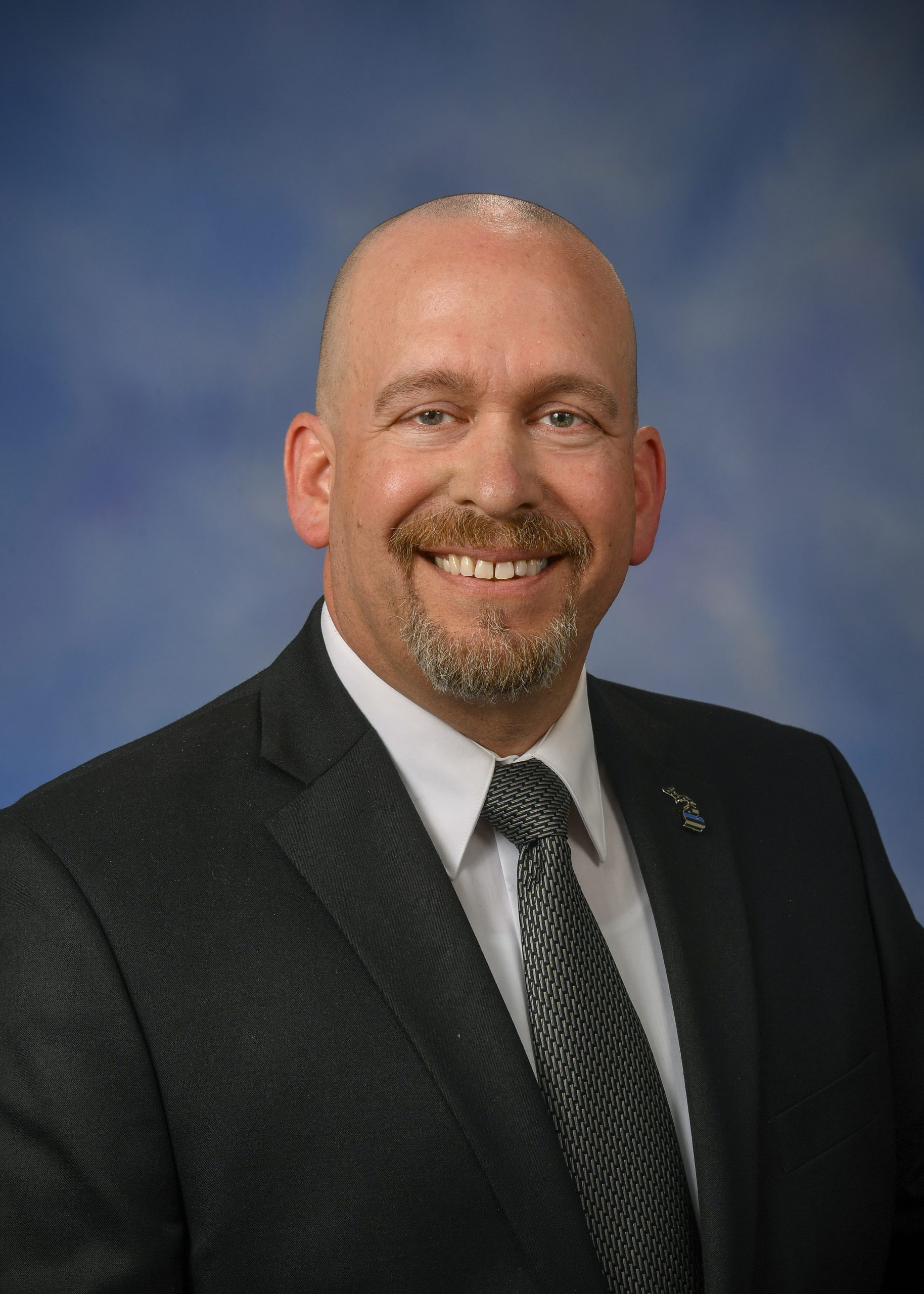
Rep. Mike Harris
Sponsored bills
Maddy summaryHB 4140 repeals the 2023 "Extreme risk protection order act" (2023 PA 38, MCL 691.1801-691.1821), which established a legal process for temporarily removing firearms from individuals deemed a risk to themselves or others. The bill does not create new provisions or directly affect any individuals or groups, as it solely removes an existing law. This repeal is contingent on two other bills (HB 4138 and HB 4139) also being enacted into law. The bill was introduced on February 26, 2025, and referred to the Judiciary Committee.
Maddy summaryHB 4109 clarifies that health club staff (including owners and employees) have no legal obligation to provide emergency medical assistance using on-site AEDs during health club incidents. It explicitly states this does not override Michigan's existing Good Samaritan law (1963 PA 17), which protects people who assist in emergencies. The bill requires companion bill HB 4108 to pass first before taking effect. This directly affects health club operations regarding medical emergency response protocols.
Maddy summaryHB 4002 amends Michigan's Earned Sick Time Act to clarify eligibility and usage rules for workers. It expands the definition of "family member" to include domestic partners and specifies that employees must work at least 25 hours weekly (averaged over a benefit year) to qualify for sick time. The bill also defines key terms like "benefit year" (a 12-month period for calculating leave) and clarifies that employers with 50+ employees must provide sick time for health, family, or safety needs. These changes aim to make the law's implementation more consistent while maintaining existing requirements for covered workers.
Maddy summaryThis is a ceremonial resolution, not a policy bill. It declares February 14, 2025, as "Frederick Douglass Day" in Michigan to honor the abolitionist's legacy. The resolution commemorates Douglass' life and contributions, including his birth date adoption and work for civil rights, but has no legal effect or impact on state laws or residents. It serves solely as a symbolic recognition.
Maddy summaryThis resolution declares February 15-22, 2025, as National FFA Week in Michigan. It encourages Michigan citizens to recognize the National FFA Organization's role in supporting agricultural education, youth leadership development, and career preparation for students in grades 7-12. As a symbolic resolution, it does not create new laws or allocate funds but formally acknowledges FFA's contributions to agricultural education programs across the state.
Maddy summaryHB 4061 requires state public employers and contractors (with 10+ employees) to verify the U.S. work authorization of all new hires using the federal E-Verify system or Form I-9. It mandates that contractors cannot bid on state contracts unless they participate in E-Verify, and public employers must verify all new employees' legal presence. Violations result in a one-year ban from state contracts, and false statements on verification forms are punishable as perjury. The law applies to all state and local government contracts involving services performed within Michigan.
Maddy summaryHB 4001 updates Michigan's minimum wage schedule, setting new rates that increase to $12.00 per hour starting February 21, 2025, and reaching $15.00 by 2029. It replaces the previous 2018 law (PA 337) and adds an annual adjustment mechanism: starting in 2019, the wage will rise each January based on Midwest-region inflation data, capped at 3.5% per year. The bill also modifies youth wage rules, allowing employers to pay new workers under 20 a training rate of 75% of the minimum wage for their first 90 days, while prohibiting displacement of existing workers to hire at this lower rate. This directly affects all hourly workers in Michigan covered by state minimum wage laws, including young workers and employers subject to wage requirements.
Maddy summaryThis Michigan House resolution (HR 14) establishes a procedure for publicly disclosing details about "enhancement grants" (legislatively directed spending items) before they can be included in budget bills. It requires sponsors to make specific information publicly available online by April 1 each year (May 1 for 2025), including the sponsor’s name, recipient details, project purpose, funding amount, and verification for nonprofit recipients. The resolution also prohibits for-profit entities from receiving such grants and mandates a 14-day public posting period before a bill’s final vote. This rule implements transparency requirements under Rule 52 of the House’s Standing Rules.
Maddy summaryHB 4006 amends Michigan's zoning law to prevent local governments from banning weddings or similar events in barns or farm facilities located in agricultural zones. It directly affects farmers and rural property owners who host commercial events, allowing them to use agricultural land for this purpose without zoning restrictions. The bill permits reasonable regulations like noise limits, traffic management, or operating hours but prohibits outright bans on the event use. This change would apply to existing zoning ordinances under Michigan's zoning enabling act (MCL 125.3101-125.3702). The bill is currently in committee review after its January 2025 introduction.