

Maddy summaryHouse Bill 4370 proposes a new individual income tax credit for Michigan taxpayers, directly affecting eligible students and their families. Beginning in tax year 2026, taxpayers could claim a credit equal to the sales or use tax paid on textbooks purchased for themselves or their dependents. To qualify, the student must be enrolled in an eligible Michigan institution and meet specific financial aid criteria, such as being a Federal Pell Grant recipient or a professional/graduate student who would have been Pell-eligible based on financial need. Any portion of the credit that exceeds a taxpayer's liability would be refunded.
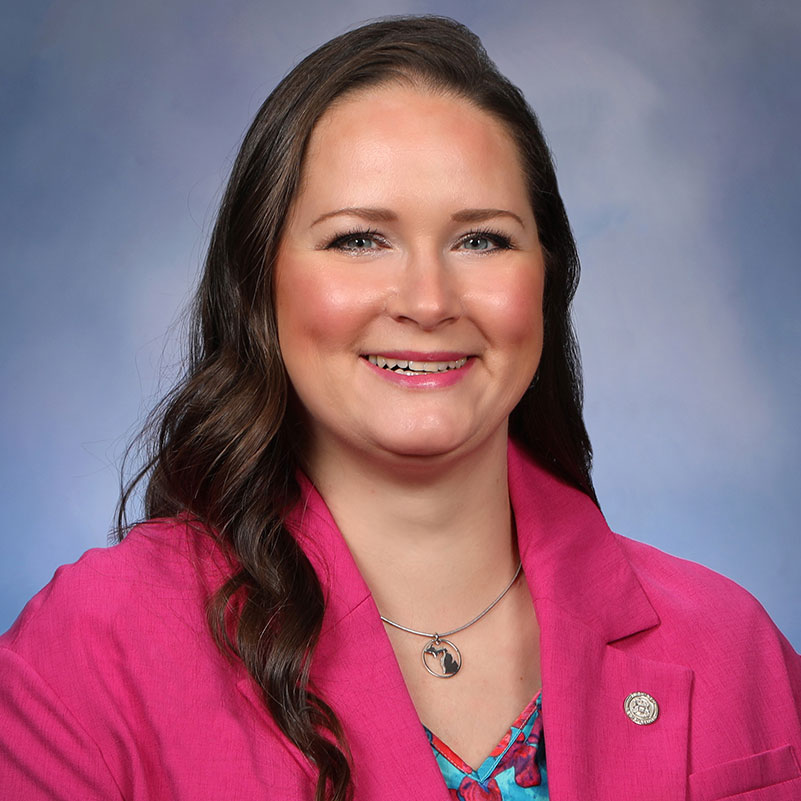
Rep. Carrie Rheingans
Sponsored bills
Maddy summaryHouse Bill 4371, known as the "Safe Youth Sports Act," aims to establish safety standards for youth sports programs in Michigan, directly affecting youth athletes, coaches, and organizations that run these programs. It tasks the Institute for the Study of Youth Sports at Michigan State University, under the oversight of the Department of Health and Human Services, to approve and promote these safety standards and associated training programs. The bill outlines "basic standards" that mandate annual criminal background checks for adults with significant contact with youth, and requires coaches to complete training in CPR, AED, and concussion protocols. Additionally, it details "advanced standards" that include designating a safety manager and further training for coaches on topics like inclusivity, and establishes grant programs to help organizations, especially those serving low-income families, meet these safety requirements.
Maddy summaryHouse Resolution 69 declares April 2025 as Arab-American Heritage Month in the state of Michigan. This resolution officially recognizes the contributions of Arab-Americans to the state's culture, economy, and overall prosperity.
Maddy summaryHouse Bill 4331 establishes an "Ebony alert" system in Michigan to aid in locating missing women between the ages of 18 and 65, referred to as "qualifying individuals." This system is activated when a qualifying individual is reported missing under suspicious circumstances and is believed to be at risk, developmentally disabled, cognitively impaired, or abducted. The Department of State Police will create and maintain a plan to rapidly disseminate information to radio and television stations statewide. The bill also creates an Ebony Alert Fund to support the system's operation and prohibits intentionally making false reports, imposing penalties for violations.
Maddy summaryHouse Bill 4329, titled the "medical debt act," aims to regulate how medical debt information is handled for Michigan residents. The bill prohibits consumer reporting agencies from including adverse medical debt information in consumer reports, with an exception for large credit transactions exceeding a specified principal amount. It also requires collection agencies to avoid misrepresenting that medical debt will be reported and to include a specific disclosure statement about these reporting limitations in their initial communications. Individuals can bring a civil action to seek remedies for alleged violations of the act.
Maddy summaryHouse Resolution No. 68 declares April 22, 2025, as Earth Day in the state of Michigan. This resolution encourages all Michiganders to reflect on the importance of environmental stewardship and participate in activities that protect the state's natural resources.
Maddy summaryHB 4335 aims to increase the penalties for drivers who commit moving violations that cause physical injury or death to a "vulnerable roadway user." This legislation amends a section of the state's code of criminal procedure. The bill seeks to enhance legal consequences for drivers involved in such incidents, thereby affecting individuals found responsible for these violations and aiming to provide greater protection for vulnerable individuals using roadways.
Maddy summaryHB 4325 proposes to adjust and supplement state appropriations for various state departments and agencies for the fiscal year ending September 30, 2025. A key provision within this bill is to provide specific funding for the purpose of marketing the attorney general's payroll fraud division. The bill also establishes conditions on how these appropriations can be used and spent.
Maddy summaryHouse Bill 4318 increases the penalties for employers who intentionally fail to pay wages and fringe benefits owed to their employees. It establishes a tiered system where the severity of the punishment depends on the total value of the unpaid wages and benefits. For smaller amounts, employers could face misdemeanor charges with fines and imprisonment. However, for larger unpaid amounts or repeat offenses, employers could face felony charges, with significantly higher fines up to three times the unpaid amount and potential imprisonment for up to 20 years. This bill directly affects employers and their employees and will take effect 90 days after enactment.
Maddy summaryHB 4319 proposes to amend Michigan's code of criminal procedure. The bill aims to establish new sentencing guidelines specifically for violations related to the payment of wages and fringe benefits. If enacted, this would provide courts with specific guidance when sentencing individuals or entities found guilty of these types of offenses. The bill is tied to HB 4318'25, indicating it is part of a broader legislative package.