

Maddy summaryHB 4393 proposes amendments to Michigan's Natural Resources and Environmental Protection Act. The bill aims to increase disposal fees for hazardous waste and landfills. Additionally, it seeks to introduce limitations on certain types of disposal wells and the disposal of Technologically Enhanced Naturally Occurring Radioactive Material (TENORM). These changes would directly impact entities involved in hazardous waste management, landfill operations, and specific disposal well activities within the state.
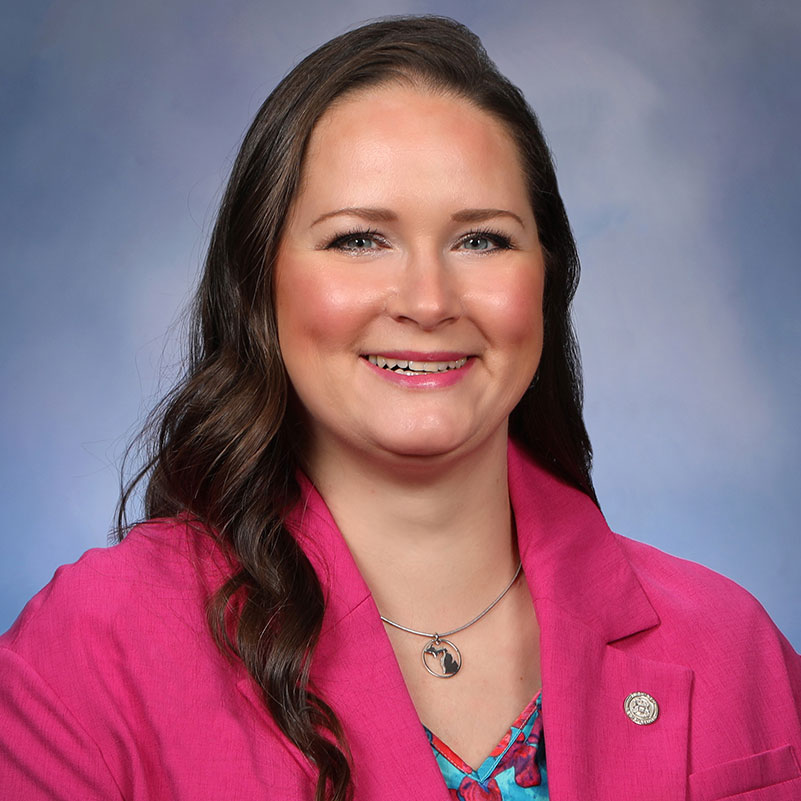
Rep. Carrie Rheingans
Sponsored bills
Maddy summaryHouse Bill 4245 amends the state's Food Law to change licensure requirements for certain maple syrup and honey producers. The bill exempts both the retail outlet and the processing facility of these producers from needing a license under the act. This exemption applies to producers whose annual gross sales of honey or maple syrup are $15,001.00 or less. However, products sold under this exemption must still carry labels similar to those required for cottage food products.
Maddy summaryHouse Bill 4383 prohibits principals of contractors and prospective contractors from making certain political donations. This applies to individuals associated with businesses seeking or holding state or local government contracts valued at $250,000 or more. The bill bans contributions to candidate committees, political party committees, 527 committees, and specific 501(c)(4) committees. This restriction is active for 18 months before seeking a contract until 18 months after the contract ends. Violations may result in contract cancellation or disqualification from future government contracts for three years.
Maddy summaryHouse Bill 4382 amends Michigan's campaign finance act to prohibit specific contributions from regulated natural gas and electric utilities, as well as associated individuals and entities. These "covered persons" are forbidden from making donations to candidate committees, political party committees, political committees, independent committees, separate segregated funds, and certain 501(c)(4) or 527 organizations linked to state officials or candidates. A "covered person" includes principals of regulated utilities, their holding companies, and related individuals like executives, board members, and certain lobbying firms contracted by utilities. Violations of these prohibitions would result in civil fines ranging from 5 to 10 times the amount of the unlawful contribution.
Maddy summaryHouse Bill 4384 proposes to prohibit Michigan state agencies from awarding contracts to entities whose "principals" have made certain political donations or contributions. Specifically, it bans contracts if these principals contributed to candidate committees, party committees, or certain 527 or 501(c)(4) committees within 18 months before the contract is signed, or during and after the contract term. Contractors would be required to attest to this policy. Violations could result in the contract being voided and the entity being barred from state contracts for three years, though donations returned promptly would not count as a violation. This bill includes exceptions for smaller contractors and certain types of agreements like loans or collective bargaining.
Maddy summaryHouse Bill 4381 prohibits electric and natural gas utilities, along with individuals and entities closely associated with them ("covered persons"), from making donations or contributions to specific political organizations. These prohibited recipients include 501(c)(4) and 527 organizations that are controlled by or employ state officials, candidates, or their affiliates, as well as various candidate and political party committees. The bill requires utilities to attest to their compliance in general rate case applications. Violations can result in civil fines ranging from 5 to 10 times the amount of the unlawful contribution, and potentially additional penalties for utilities, such as the denial of rate increase requests.
Maddy summaryHouse Bill 4357 amends Michigan's election law concerning township officers. The bill modifies the official start date for the terms of office for these elected officials. Specifically, for township officers elected after December 31, 2024, their terms will commence at 12 noon on December 1 following their election, rather than the current November 20 start date. This change affects township officers and the administrative timing of their transition into office.
Maddy summaryHouse Bill 4377 proposes changes to the Michigan Reconnect Grant and the Reconnect Short-Term Training Program. It would allow the minimum age requirement for both programs to be reduced from 25 to 21 years old, specifically for individuals seeking associate degrees, industry-recognized certificates, or qualified occupational training. This age reduction is contingent on the appropriation of sufficient funds and would not apply after September 30, 2032. The bill is tie-barred with HB 4378, meaning both must be enacted for these changes to take effect.
Maddy summaryHouse Bill 4378 proposes to amend the Michigan Reconnect Grant Act, which provides last-dollar financial assistance for higher education. The bill modifies the eligibility requirements for the Michigan Reconnect program. Specifically, it lowers the minimum age for participants to receive this financial aid from 25 to 21 years old. This change would expand access to associate degrees or industry-recognized certificates for a broader range of adult learners in Michigan.
Maddy summaryHB 4360 modifies the start dates for terms of office for elected officials in Michigan's home rule villages. For village officers elected after December 31, 2024, their terms will begin at 12 noon on December 1 following their election, overriding any conflicting village charter provisions. The bill also specifies that individuals elected to fill a vacancy cannot take the oath of office until the election results have been certified.