

Maddy summaryHB 4202 amends Michigan's income tax code to update deductions for retirement benefits and education-related payments. It specifically adjusts the maximum deductible amount for retirement/pension benefits (currently $42,240 for singles/$84,480 for couples) to automatically increase annually based on the Consumer Price Index, and clarifies rules for deducting payments made to Michigan's education trust for tuition. The bill affects Michigan taxpayers who claim these deductions, particularly retirees and those using education trust programs. It does not create a new "fetus exemption" (a misstatement in the bill title), but refines existing tax code provisions for retirement income and education savings. The bill is currently in committee after its March 2025 introduction.
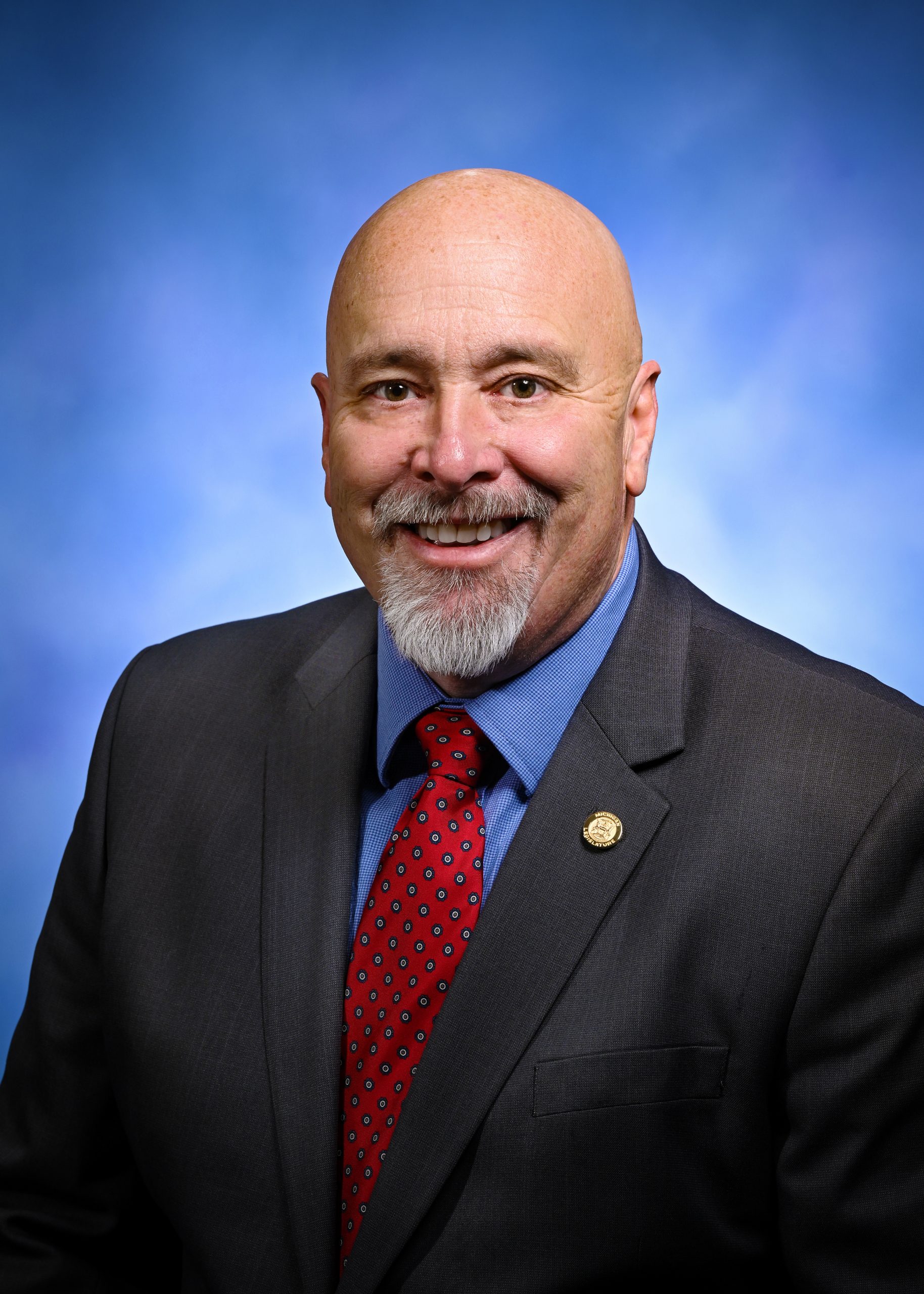
Rep. Steve Frisbie
Sponsored bills
Maddy summaryThis bill requires K-5 teachers and literacy support staff in Michigan to complete specific professional training focused on reading and literacy instruction by the 2029-2030 school year. The legislation designates a single state-approved provider to deliver the training, which must cover evidence-based reading methods, assessment strategies, and a multitiered system of supports for addressing learning difficulties. School districts must report annual compliance data to the state department, which will publish public reports on implementation progress and recommend funding adjustments as needed. The training includes mandatory components on phonics, vocabulary, comprehension, and data-driven decision-making, with phased implementation beginning in the 2026-2027 school year.
Maddy summaryHB 5482 requires Michigan state agencies to submit a corrective action plan within 60 days after an audit completes, detailing how they will address audit findings. The bill amends sections 462 and 487 of the Management and Budget Act (MCL 18.1462 & 18.1487) to mandate this plan and specify that if an agency fails to submit it, the state budget director must notify relevant legislative committees. It also clarifies that agencies must report serious issues (like suspected criminal activity) to the governor and attorney general within 60 days, with corrective plans then submitted to the state budget director. The law directly affects all state agencies subject to audits and aims to improve accountability through structured reporting.
Maddy summaryHouse Bill 4471 proposes to allow retired county employees to be employed in a county sheriff's office. The key provision is that these individuals would be able to work in such a role without forfeiting their existing retirement allowance or pension benefits. This bill directly affects county retirees who may wish to return to employment within a sheriff's department. It amends section 12a of 1851 PA 156, which concerns the powers and duties of county boards of commissioners regarding employee benefits.
Maddy summaryHB 4100 designates a specific 2-mile segment of M-50 in Monroe County (from South Raisinville Road east to Herr Road) as the "Animal Control Officer Darrian Young Memorial Highway" under Michigan's Memorial Highway Act. This bill honors Officer Darrian Young by naming the highway portion after him, with no policy changes or funding impacts. It amends state law to add this memorial designation as a new section (6d) in the existing highway act. The bill passed unanimously in the Michigan House on May 20, 2025, with immediate effect.
Maddy summaryHB 4189 names a specific bridge on South Grand Avenue over I-96 in Fowlerville as the "LCpl Michael W. Hanks Memorial Bridge" to commemorate a fallen Marine. The bill requires the state transportation department and Livingston County road commission to install signs at both approaches of the bridge designating its new name. This is a purely commemorative measure with no policy changes or financial impact, directly affecting the bridge location and signage in Fowlerville. It amends Michigan's Memorial Highway Act to add this designation without altering transportation policies or funding.
Maddy summaryHB 4517 amends Michigan's Child Abduction Broadcast Act to update its title and expand how radio and TV stations can share missing child information. It specifically allows stations to broadcast alerts via social media (beyond traditional radio/TV) when sharing details from the Michigan Department of State Police under the Amber Alert system. The bill also maintains legal immunity for stations that accurately broadcast this information. This directly affects broadcasters, law enforcement, and the public by broadening the channels for urgent child safety alerts.
Maddy summaryHB 4518 modifies Michigan's Amber Alert Act to require law enforcement agencies to submit missing child alert reports to the National Center for Missing & Exploited Children within 24 hours of activating an alert. This change directly affects Michigan police departments and state agencies that use the Amber Alert system. The bill updates existing law by replacing prior reporting timelines with a specific 24-hour deadline for submissions. This policy adjustment aims to expedite information sharing during missing child cases.
Maddy summaryHB 4103 adds a new section to Michigan's health occupations law to implement an occupational therapy licensure compact. This bill allows occupational therapists licensed in Michigan to practice in other participating states without obtaining separate licenses, and vice versa for therapists from other compact states. It directly affects occupational therapists seeking to work across state lines, reducing barriers to practice. The compact mechanism establishes standardized licensing requirements among participating states, streamlining the process for therapists to provide services in multiple jurisdictions.
Maddy summaryHB 4104 updates Michigan's occupational therapy licensing rules to join a multi-state licensure compact. This would allow occupational therapists licensed in Michigan to practice in other participating states without obtaining separate licenses. The bill modifies existing law to align with the compact's standards and adds new sections for implementation. It directly affects occupational therapists seeking to work across state lines within the compact.