

Maddy summaryThis bill proposes an amendment to the Michigan state constitution to permanently extend a property tax relief measure for homeowners who sell their primary residences. Currently, selling a home triggers a full reassessment of its value, which often leads to a significant spike in property taxes for the new owner; this change would allow the new owner to keep the lower taxable value established under the existing cap rules. The relief applies only to homes that are continuously owned and used as a principal residence, meaning the tax advantage ends if the property is sold for investment purposes or converted to a non-residential use. By removing the automatic reset of taxable value upon transfer, the bill aims to reduce the financial burden on families moving between primary homes.
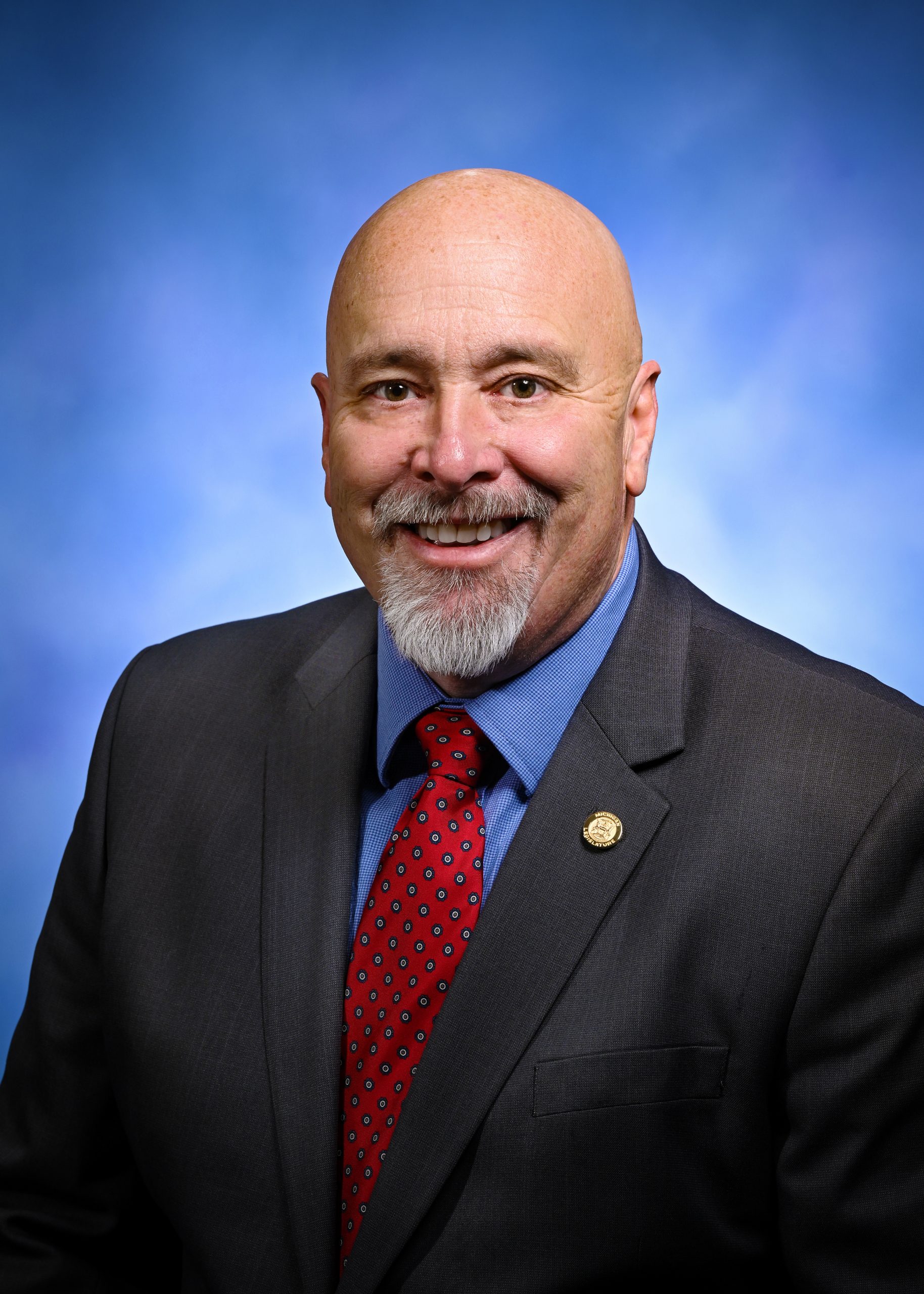
Rep. Steve Frisbie
Sponsored bills
Maddy summaryThis bill (HB 4599) amends Michigan's criminal code to address gift card fraud by adding Section 3a to existing statutes (MCL 752.1081-752.1087). It directly affects individuals who commit gift card fraud, such as stealing or selling stolen gift card numbers. The bill creates specific criminal penalties for these offenses but does not provide details on the exact penalties or scope in the given context. The bill passed the House on September 9, 2025, with strong support, and was referred to the Civil Rights, Judiciary, and Public Safety Committee. The context provided does not include the specific provisions or who is affected beyond the general fraud focus.
Maddy summaryHB 4598 expands Michigan's Organized Retail Crime Act to specifically address new tactics used in theft. It adds provisions criminalizing the acquisition, alteration, or use of stolen gift cards (subsections i(i)-(iii)), fraudulent wireless device purchases (subsections h), and manipulating fire exit alarms (subsections g) as organized retail crime. The bill makes these acts felonies punishable by up to 5 years in prison, $5,000 fines, or both, and requires offenders to pay restitution to retailers and forfeit stolen merchandise. This directly affects retailers (through enhanced protections) and individuals committing these expanded theft methods, while clarifying that property representation as stolen is sufficient for prosecution.
Maddy summaryThis bill designates April 18, 2026, as Champions Day in Michigan to honor the state's historic sports achievements from 1935 and recent successes. The resolution encourages citizens to celebrate the 1935 victories of Joe Louis, the Detroit Tigers, the Detroit Lions, and the Detroit Red Wings, while also acknowledging Olympic gold medalists and the University of Michigan men's basketball team's 2026 national championship. As a commemorative measure, the bill has no legal requirements or funding provisions and serves solely to recognize these athletic milestones.
Maddy summaryThis bill proposes to increase the penalties for trespassing in Michigan by raising the maximum jail time from 30 days to 90 days and the maximum fine from $250 to $500 for repeat offenders. It directly affects individuals who enter or remain on another person's property without permission after being asked to leave, as well as those who enter or stay on fenced or posted farm land without consent. The legislation maintains existing protections for process servers attempting to serve legal documents and clarifies that a request to leave is not required to be violated on farm property. These changes would apply to anyone previously convicted of a trespassing violation, making subsequent offenses more severe under current law.
Maddy summaryHB 5251 requires Michigan's medical assistance program (Medicaid for low-income residents) to cover prescribed pediatric extended care for children. This specifically affects low-income children in Michigan who need specialized, long-term medical care beyond standard hospital stays. The bill amends state law to mandate this coverage under existing rules for pediatric extended care (Part 219A of the Public Health Code). The coverage would apply to children receiving medically necessary care as prescribed by a doctor. The bill is contingent on the passage of companion legislation (HB 5252).
Maddy summaryHB 5252 amends Michigan's Public Health Code to create a new licensing category for "prescribed pediatric extended care facilities," which provide specialized long-term medical care for children with complex health needs. The bill establishes specific licensing requirements for these facilities, including standards for staffing, medical oversight, and facility operations, directly affecting providers seeking to operate such services. Key provisions include adding Part 219A to the code and revising existing sections (20106, 20109, 20115, 20161) to incorporate these new requirements. This change aims to ensure consistent safety and quality standards for pediatric extended care facilities across the state. The bill is currently pending in the House Health Policy Committee.
Maddy summaryHB 5455 enacts Michigan's participation in the Interstate Medical Licensure Compact, allowing physicians licensed in participating states to more easily obtain licenses in Michigan and other member states. This directly affects physicians seeking to practice across state lines, particularly through telehealth or in rural areas with healthcare shortages. The bill establishes a streamlined "expedited license" process for eligible physicians who meet specific criteria (like holding a full license in another member state and having no disciplinary history), while requiring physicians to follow the licensing rules of the state where the patient is located during care. It does not change Michigan's existing medical practice laws but creates a new pathway for multi-state licensure through a standardized compact process.
Maddy summaryThis bill grants immunity from nuisance lawsuits to owners and operators of racing facilities and racetracks in Michigan if the facility was built before the plaintiff purchased their property or began construction nearby. It protects these racing venues from legal claims filed by neighbors within a 5-mile radius who acquired their land or started building after the racetrack was established. The law applies to all claims filed after the bill takes effect, regardless of when the alleged nuisance occurred, but does not exempt racetracks from complying with environmental or health and safety regulations.
Maddy summaryHB 5537 prohibits the production, sale, or offering for sale of kratom (including all parts of the Mitragyna speciose plant and synthetic variants like 7-hydroxymitragynine) in Michigan. It directly affects businesses and individuals selling kratom products, imposing misdemeanor penalties that escalate based on severity: up to 90 days in jail and $5,000 fines for first offenses, with harsher penalties for repeat violations or sales to minors. Sales to anyone under 18 carry enhanced penalties, including up to one year in jail and $10,000 fines for first offenses. The law defines "kratom" broadly to cover all plant parts, extracts, and synthetic forms, making these activities illegal under Michigan's penal code.