

Maddy summaryHB 4760 requires Michigan law enforcement officers to wear visible identification (showing their name or badge number and agency) and not wear masks or disguises during public interactions while performing duties. Exceptions allow masks for health protection (e.g., airborne diseases), safety from toxins, or physical protection during high-risk incidents like shootouts. The law applies to all state and federal officers in Michigan during public engagements, with violations punishable as misdemeanors (up to 90 days in jail or $1,000 fine). It does not affect covert operations or officers wearing protective gear for legitimate safety reasons.
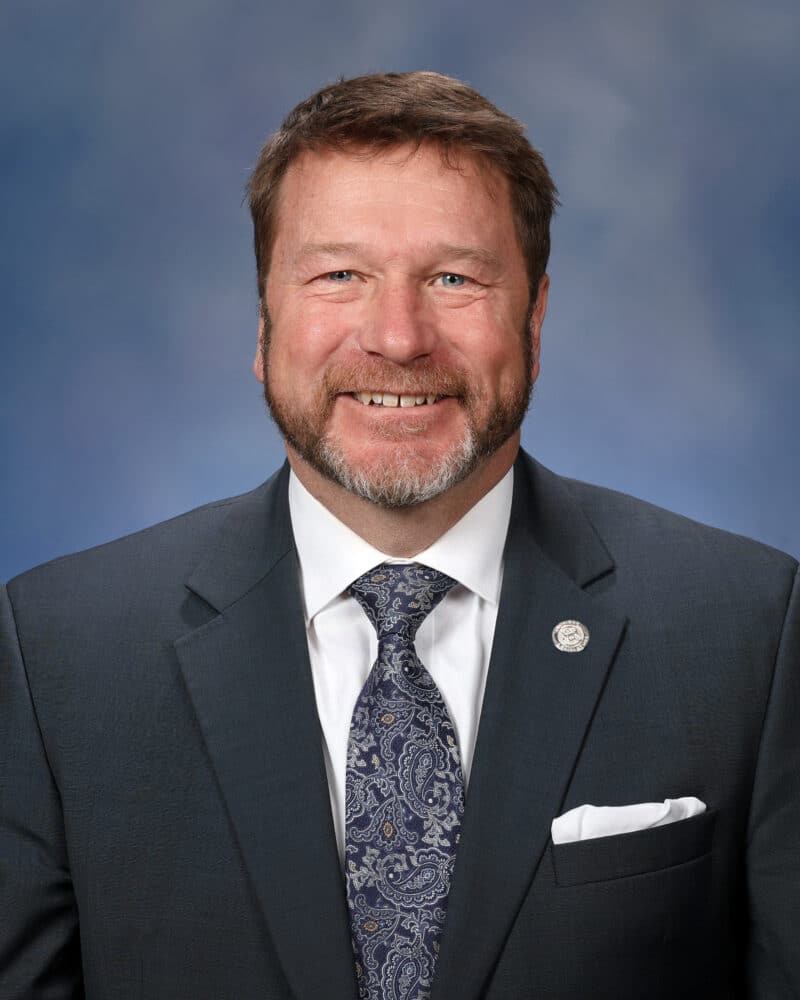
Rep. Matt Longjohn
Sponsored bills
Maddy summaryHB 4759 encourages public employers (like state agencies, cities, schools, and community colleges) to use an expedited hiring process for dislocated federal employees who are referred through the state's reemployment services program. The bill requires public employers receiving such referrals to prioritize these candidates, though it does not mandate hiring. Key provisions include defining "public employer" broadly and specifying that this process must follow existing constitutional hiring rules for state positions. It does not override other laws but depends on another bill (HB 4758) being enacted first. The measure directly affects dislocated federal workers seeking new jobs and public employers hiring for open positions.
Maddy summaryThis resolution urges the federal government to maintain funding and reinstate staff for the Low Income Home Energy Assistance Program (LIHEAP) while negotiating the "One Big Beautiful Bill Act." It directly affects Michigan residents who rely on the state's Home Heating Credit Program, which provided assistance to 248,765 Michiganders in 2022 - including low-income families, seniors, and people with disabilities - by helping cover heating costs. The resolution highlights that proposed federal budget cuts to LIHEAP and the recent firing of LIHEAP program staff threaten the program's continuation, potentially causing payment delays or termination. As a non-binding request, it asks federal leaders to prioritize LIHEAP funding to prevent disruption of this critical aid.
Maddy summaryThis House Resolution (HR 143) urges members of Congress to reject President Trump's proposed "One Big Beautiful Bill Act" and instead support policies that fully fund Medicaid, SNAP, and WIC. It directly affects millions of low-income Americans, including children, seniors, people with disabilities, and vulnerable communities who rely on these programs for healthcare, food assistance, and nutrition support. The resolution opposes cuts to Medicaid (which covers 1 in 4 Michiganders), SNAP (impacting 1.4 million Michiganders), and WIC, while criticizing tax breaks for wealthy households and reduced clean energy funding. It calls for expanding healthcare access, promoting clean energy, and ensuring a fair tax system as concrete policy alternatives.
Maddy summaryThis resolution (HR 146) symbolically declares August 3-9, 2025, as National Health Center Week in Michigan. It recognizes Michigan's community health centers, which serve over 675,000 residents across 450+ sites and provide primary care, behavioral health, and other services. The resolution honors these centers' role in improving health outcomes, supporting local economies ($1.7 billion impact), and addressing healthcare access barriers statewide. As a procedural resolution, it does not create new policy or alter existing law.
Maddy summaryThis resolution declares July 21-25, 2025, as Fibroids Awareness Week in Michigan. It symbolically recognizes uterine fibroids - noncancerous uterine tumors affecting many women, especially Black women - and aims to raise public awareness about their health impacts. The resolution has no policy or funding provisions; it simply encourages Michiganders to learn about fibroids and support affected individuals. It is a ceremonial measure introduced by Representative Morgan Foreman and adopted on July 24, 2025.
Maddy summaryThis resolution declares July 2025 as Cleft and Craniofacial Awareness Month in Michigan to raise public awareness about birth defects affecting the lip and mouth (cleft lip/palate). It does not create new laws, funding, or services but aims to highlight the needs of individuals and families affected by these conditions. The resolution cites that orofacial clefts impact 1-2 in 1,000 newborns and can cause feeding, speech, and health challenges requiring medical care. It was introduced and adopted by the Michigan House on July 24, 2025.
Maddy summaryHB 4742 amends Michigan's environmental permit process to address projects in communities disproportionately affected by pollution (environmentally overburdened communities). It adds a new section (Subpart 2) requiring state agencies to consider community impacts when denying permits or imposing additional conditions for such projects. The bill also repeals the Environmental Permit Review Commission, which previously reviewed permit decisions. This directly affects developers seeking permits in these communities and state agencies responsible for environmental permitting under the Natural Resources and Environmental Protection Act.
Maddy summaryHB 4731 amends Michigan's Fireworks Safety Act to allow local governments to regulate when and where residents can use consumer fireworks on specific holidays (like New Year's Eve, Memorial Day weekend, July 4, and Labor Day weekend), while prohibiting them from banning fireworks sales. It requires retailers to provide clear notices about permitted usage times and local rules with each purchase. The bill also permits local ordinances governing temporary structures (like tents) used for fireworks sales, but does not allow bans on retail sales or transportation. This directly affects local governments, retailers, and residents by clarifying permissible usage windows and retailer responsibilities.
Maddy summaryHB 4741 modifies Michigan's property tax law by ending certain programs that reduced delinquent tax payments or prevented foreclosure. It adds a $175 fee for properties forfeited to county treasurers due to unpaid taxes (after 12+ months delinquent), changes interest calculations for residential properties under foreclosure avoidance agreements, and updates redemption rules. Homeowners with delinquent taxes, particularly those in residential properties covered by existing tax foreclosure avoidance agreements, will be directly affected by these changes. The bill sunsets specific programs that previously offered payment reductions, requiring property owners to pay full delinquent amounts plus fees to avoid losing their homes.