

Maddy summaryHB 5160 modifies Michigan's rules for personalized vehicle registration plates. It updates fee structures for obtaining (a $8 initial fee plus $2/month for additional months) and renewing (a $15 fee) personalized plates, and clarifies that duplicate plates cost an extra $5. The bill affects Michigan vehicle owners who request personalized plates for eligible vehicles like passenger cars, trucks, or motorcycles. It also specifies how fees fund transportation programs and sets rules for plate expiration and duplicate requests.
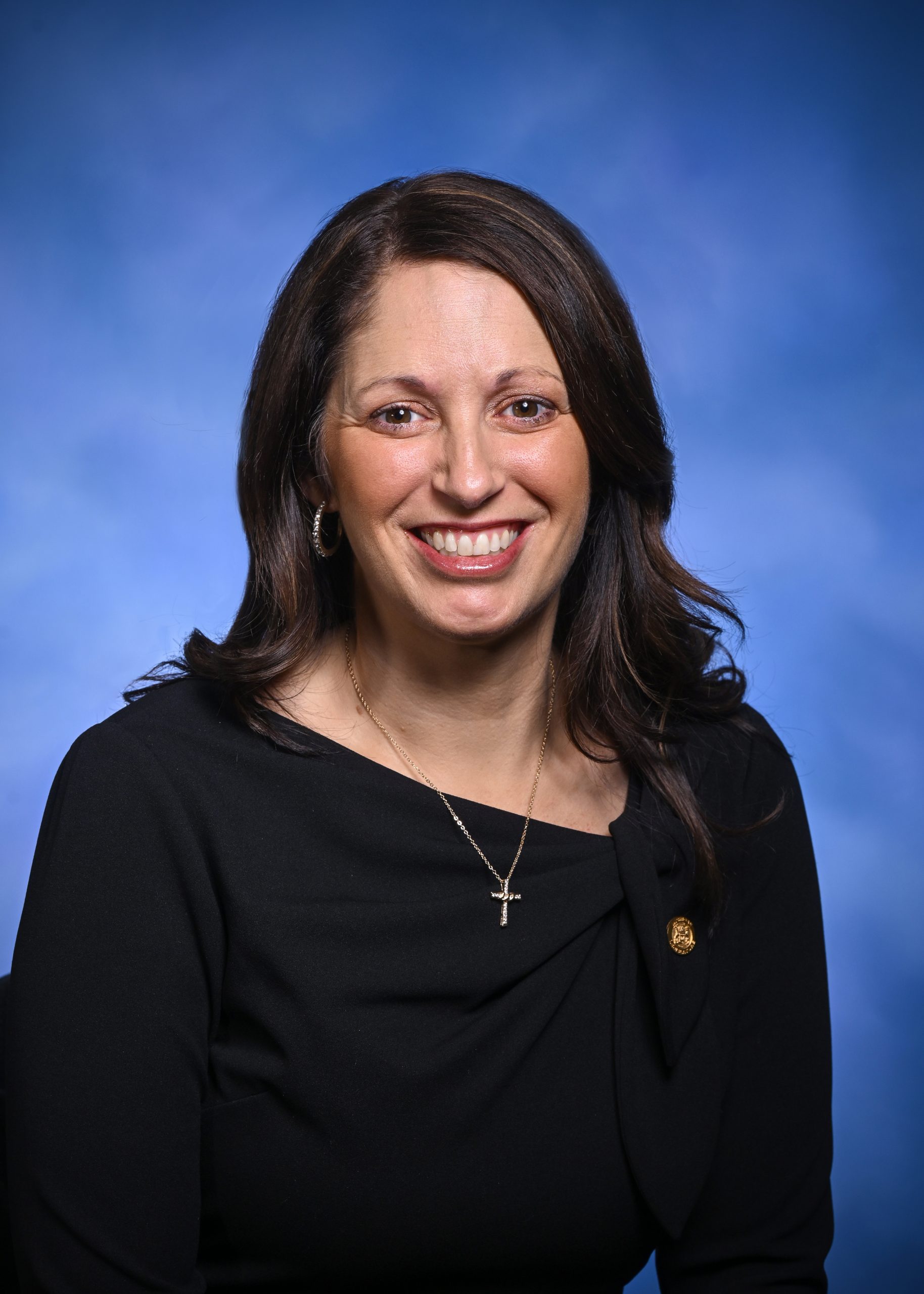
Rep. Jennifer Wortz
Sponsored bills
Maddy summaryHB 4432 creates a $2,500 refundable state income tax credit for qualified volunteer emergency medical services (EMS) personnel in Michigan, effective for tax years beginning January 1, 2025. To qualify, volunteers must serve at least 10 hours monthly with a life support agency (like EMS organizations), receive no hourly wage or salary, and only be reimbursed for reasonable expenses or receive customary benefits. The credit requires a signed verification statement from the agency confirming the volunteer’s service hours, compliance with training standards, and non-salary compensation. This directly affects unpaid EMS volunteers who meet these criteria, reducing their state tax liability or providing a refund if the credit exceeds their tax bill.
Maddy summaryHB 4431 creates a new $2,500 state income tax credit for qualified volunteer firefighters in Michigan, effective for tax years beginning January 1, 2025. To qualify, individuals must serve at least 10 hours per month as unpaid volunteers (reimbursed only for expenses or standard benefits) with an organized fire department, verified by a written statement from the department head. The credit reduces tax liability, with any excess amount refunded to the taxpayer. This applies specifically to volunteer firefighters meeting the defined criteria, not paid staff or other volunteer roles.
Maddy summaryHB 4484 amends Michigan's Social Welfare Act to allow licensed speech-language pathologists (SLPs) to seek reimbursement for audiological rehabilitation and speech-language therapy services, regardless of whether they hold a certificate of clinical competence. This change directly affects SLPs practicing in Michigan who previously faced potential barriers to reimbursement under existing department rules. The bill removes a prior requirement for the clinical certificate, ensuring reimbursement eligibility solely based on state licensure. It applies to all coverage policies under the Social Welfare Act (MCL 400.1-400.119b), streamlining access to payment for these healthcare services.
Maddy summaryThis resolution declares October 12-18, 2025, as "Homeschool Week" in Michigan. It symbolically recognizes homeschooling families and affirms parental rights to choose this educational path under Michigan law. The resolution has no legal effect - it does not create new laws, change funding, or alter school policies. It serves solely as a ceremonial acknowledgment of homeschooling families' contributions to education. The declaration directly affects homeschooling parents and guardians across the state.
Maddy summaryHB 4526 amends Michigan's condemnation law to clarify how courts review the "public necessity" of utility projects (like power lines) when property owners challenge them. It requires courts to hold hearings within 30 days of a challenge and decide within 60 days, prioritizing transmission line routes near public land, existing rights-of-way, or property boundaries. For private utility projects, courts must determine necessity based on evidence, while certificates from the Public Service Commission create a "prima facie" case for necessity. The bill also limits appeals of court rulings on necessity to require court permission, streamlining the process for utility companies and property owners.
Maddy summaryHB 4709 prohibits the construction of commercial wind turbines for electricity production in the Great Lakes or their connecting waters, and bans operating any such turbines built in violation of this rule. It directly affects commercial wind energy developers planning projects in these waters, preventing new installations. The bill also states that renewable energy credits cannot be issued for electricity generated by prohibited turbines, and allows the attorney general to seek court injunctions to stop violations. This amendment adds a specific environmental protection measure to Michigan's Clean Energy Act.
Maddy summaryHB 4590 adds Part 9 to Michigan's Clean and Renewable Energy Act, requiring the Michigan Public Service Commission (MPSC) to create rules for "Locally Distributed Shared Solar Facilities" (LDSS). This bill directly affects community solar projects and subscribers, mandating that LDSS facilities must use solar panels not made in China, North Korea, or Iran, have at least three subscribers, limit any single subscriber to 40% of output, and meet specific size caps (5 MW or 20 MW). Key provisions include requiring facilities to provide bill credits proportional to each subscriber's contribution and ensuring 60% of capacity is subscribed by small users (40 kW or less). The MPSC must establish these rules to govern community solar programs under this new framework.
Maddy summaryHB 4160 prevents Michigan state agencies from creating rules stricter than federal standards, unless they prove a "clear and convincing need" for stricter rules. It directly affects all state agencies that create regulations, requiring them to justify any rule exceeding federal benchmarks. The bill mandates that agencies must either cite specific state law authorizing stricter rules or provide detailed justification for exceptional circumstances. This applies whether federal rules exist or not, though it excludes special education rules from this restriction. The law aims to align state regulations with federal standards unless compelling state-specific reasons exist.
Maddy summaryHB 4596 clarifies the timeline for dismissing criminal charges against defendants deemed incompetent to stand trial in Michigan. It requires charges to be dismissed 15 months after the defendant was initially found incompetent or after they began treatment to become competent - whichever comes first. Prosecutors may refile charges for life felony offenses if the defendant later becomes competent, but only after a court hearing confirming competency. The bill also adds requirements for courts to notify attorneys and medical supervisors when dismissal orders expire or are voided.